




Intersect Communications Analyzes Visitor Experiences at Expo 2025 in Osaka
Analyzing Visitor Experiences at Expo 2025
Intersect Communications, a company specializing in inbound promotion and support for international tourists from regions like China and Taiwan, has released a detailed analysis comparing the experiences of Japanese and foreign visitors to the upcoming Osaka and Kansai Expo 2025. This analysis, based on 1,002 online reviews, aims to shed light on the differing perspectives of these visitor groups, offering insights for improving inbound strategies.
As part of its ongoing commitment to capturing the voices of visitors, particularly from the Chinese demographic, Intersect has continuously engaged in "on-the-ground" investigations. The current study utilized accumulated review data to analyze visitor feedback trends across various axes, highlighting the differences in preferences and evaluation criteria between Japanese and non-Japanese attendees.
Key Findings from the Analysis
The analysis revealed notable differences in visitor satisfaction based on language, timing of visits, and types of venues. Among foreign reviews, aspects such as architectural design and futuristic exhibits received high praise. However, there were also significant calls for improvement regarding multilingual support and the clarity of signage. Understanding these differing preferences is essential for developing effective inbound strategies.
The data was collected from reviews posted on Google Maps, focusing on facilities associated with Expo 2025. The detailed review spectrum included languages such as Japanese, English, Traditional Chinese, Spanish, and German, allowing for a multifaceted analysis of visitor feedback.
Study Overview
- - Coverage Period: March 1, 2025 - April 27, 2025
- - Total Reviews Analyzed: 1,002 (including various languages)
Facility Breakdown:
- - 2025 Japan International Expo venue: 624 reviews (Japanese: 457, foreign languages: 167)
- - East Gate: 135 reviews (Japanese: 106, foreign languages: 29)
- - Rooftop Ring: 130 reviews (Japanese: 91, foreign languages: 39)
- - Yumeshima Station: 113 reviews (Japanese: 92, foreign languages: 21)
Overall Review Composition
Although the predominant contributions came from Japanese speakers, foreign language reviews constituted about 25% of the total, reflecting a mix of both expatriates and international visitors. A significant amount of feedback from these groups provides valuable insights into the effectiveness of inbound marketing strategies and highlights areas for improvement.
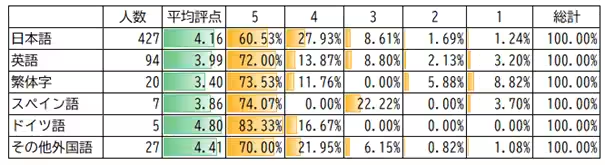
The foreign language reviews were primarily in English, followed by Traditional Chinese, Spanish, and German. This aligns with Google Maps' typical user demographics. When comparing evaluations based on language, Japanese reviews had a higher average score of 4.16, indicating a generally positive view. However, ratings of 5 points, indicating the highest satisfaction, comprised only over 60% of all responses, suggesting that there is a considerable number of mixed or moderate scores indicating some room for improvement.
In contrast, reviews in English and other foreign languages tended to average lower scores, but the proportion of 5-star evaluations was higher. This tendency indicates a stronger emotional response—whether positive or negative— to specific experiences, underscoring the importance of delivering memorable moments to all visitors.
Cultural Considerations for Improvement
Particularly, the reviews from Traditional Chinese speakers showed a below-average score, hinting at potential shortcomings in language assistance and informational signage, which could detract from the overall experience. This suggests that elevating the quality of multilingual support and considering cultural nuances could greatly enhance visitor satisfaction.
The Impact of First Impressions
Analysis indicated that crucial touchpoints, such as the East Gate, received the lowest ratings among foreign visitors. It is imperative to enhance the multilingual support mechanisms and improve wayfinding in this area to ensure that first impressions do not negatively impact overall satisfaction. Given that initial experiences can greatly influence brand perception, reviewing existing facilities may be necessary to prioritize improvements.
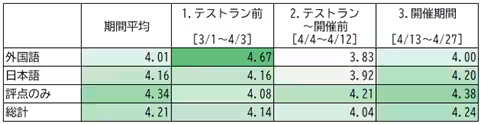
Moreover, significant drops in review scores during the testing phases suggest that foreign visitors are particularly sensitive to the gap between their expectations and real-time experiences. Ensuring a high-quality visitor experience from the start is vital for fostering ongoing positive perceptions.
Future Directions for Inbound Strategies
The Rooftop Ring emerged as a model of success, earning higher scores from foreign language reviews than from Japanese ones, showcasing how a strong visual appeal can engage audiences universally. This suggests that design elements with significant visual impact could enhance visitor satisfaction across various demographics in future facility designs and promotional strategies.
Furthermore, developing communication strategies that are tailored to different languages—going beyond traditional translation to incorporate cultural understandings and user experience design—will be critical in appealing to diverse groups. By enhancing the welcome experience at entry points and focusing on optimizing the operational aspects from the outset, facilities can significantly increase their attractiveness to international attendees.
Intersect Communications continues to prioritize research based on the authentic voices of users, aiming to contribute to building a sustainable inbound environment as the Expo approaches.
Company Overview
- - Name: Intersect Communications, Inc.
- - CEO: Yamafune Tan (譚 玉峰)
- - Location: 2F B・M Building, 3-1 Kanda Ogawamachi, Chiyoda-ku, Tokyo, 101-0052 Japan
- - Established: November 2000
- - Capital: 985.6 million yen
- - Website
Intersect Communications has been involved in various initiatives, from QR payment solutions to multilingual content creation, thereby becoming a significant player in both domestic and international markets. As of 2025, the company operates in over ten locations across Japan and China, employing around 1,000 team members.






Topics Business Technology)
【About Using Articles】
You can freely use the title and article content by linking to the page where the article is posted.
※ Images cannot be used.
【About Links】
Links are free to use.