



Education Sparks Hope for Displaced Children in Somalia After Devastating Floods
Education Sparks Hope for Displaced Children in Somalia After Devastating Floods
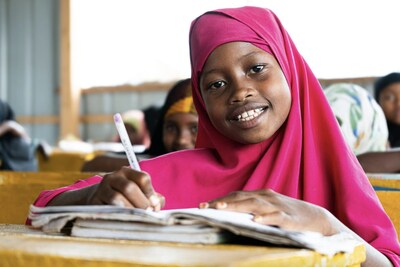
In the midst of sunny classrooms, where children once again gather to learn, stories of resilience and hope unfold, particularly for a young girl named Sundus. At just 10 years of age, Sundus has experienced the harsh realities of life, as she and her family faced the devastating impact of flooding that transformed their lives forever. Her journey from despair to hope is a remarkable testament to the power of education.
The Impact of Natural Disasters
When Sundus was only seven, her village was engulfed by floodwaters, leading to the destruction of her family's home and farmland. With the constant threat of survival looming, the school became an inaccessible dream. Sundus and her family fled to the Towfiq refugee camp, where they joined 17,000 others displaced by the floods and ongoing conflicts in Somalia. Here, life was a daily struggle marked by scarce food and water, and the absence of schooling persisted for three long years.
Despite the dire circumstances, Sundus held onto her love for learning. "I enjoyed going to school in my village,” she recalls. Her memories of education were filled with warmth and encouragement from her teachers, who believed in her potential.
A New Opportunity for Education
The tide began to turn when the Norwegian Refugee Council (NRC), with financial support from Education Cannot Wait (ECW), initiated temporary learning spaces in the camp. This initiative was part of an emergency response to the severe Super El Niño floods that devastated Somalia in 2023. With these efforts, children, including Sundus, were granted a second chance to regain their educational pathway.
"The floods took away my home, but education gives me a new life,” Sundus expresses, highlighting the profound impact of the initiative. The program not only constructed new classrooms but also focused on essential training for teachers and provided learning materials, psychosocial support, and supplies, all aimed at ensuring displaced children had access to safe and quality education.
Finding Safety and Stability
Today, Sundus beams with pride as she attends first grade in her new learning environment. She vividly remembers the moment she received her books and pencils, stating, "I was so happy. I told my mother, 'Now I can be a student again.'" Her experience at school has offered her more than just an education; it has created a sanctuary of safety and hope amidst the chaos of her reality.
"The school gives us security. When I am in class, I focus only on learning. If I learn, I can become anything I want. If I stop learning, I will lose everything. I don’t want to stop,” Sundus shares, with clarity and determination echoing in her voice.
The Broader Crisis in Somalia
Somalia currently faces one of the world's most complicated humanitarian crises, influenced by conflict, poverty, and the worsening effects of climate change. Destructive droughts and floods have displaced countless families and resulted in the destruction of infrastructure essential for education and livelihood.
An estimated 4.9 million children in Somalia are out of school, with only 21% of newly displaced children receiving an education compared to 39% of non-displaced children. Since the onset of the crisis, ECW has invested over $64 million to support children's continuing education amidst floods and conflict challenges.
Following the catastrophic floods from the Super El Niño events, ECW launched an emergency program that includes a pioneering proactive action framework for humanitarian assistance. This approach empowers communities to take preemptive measures to mitigate future climate-related impacts on children’s education.
The Importance of Continued Support
Despite advancements, greater support is crucial to ensure all affected children have access to education and communities are better prepared for future climate shocks. For Sundus, education bridges the gap between her upheaval and the future she envisions. "When I grow up, I want to be a doctor. I want to help people when they are sick,” she declares with ambition shared by many children in Somalia.
Access to education provides children, especially in crisis situations, not just knowledge, but stability, safety, and a pathway to healing. As Somalia faces ongoing challenges of flooding and drought, maintaining these educational opportunities is vital for the resilience of the next generation. "When I open my school bag, I see my future. I see a doctor, hope, and peace,” Sundus concludes, embodying the spirit of determination that defines these young learners.
Topics Other)
【About Using Articles】
You can freely use the title and article content by linking to the page where the article is posted.
※ Images cannot be used.
【About Links】
Links are free to use.