



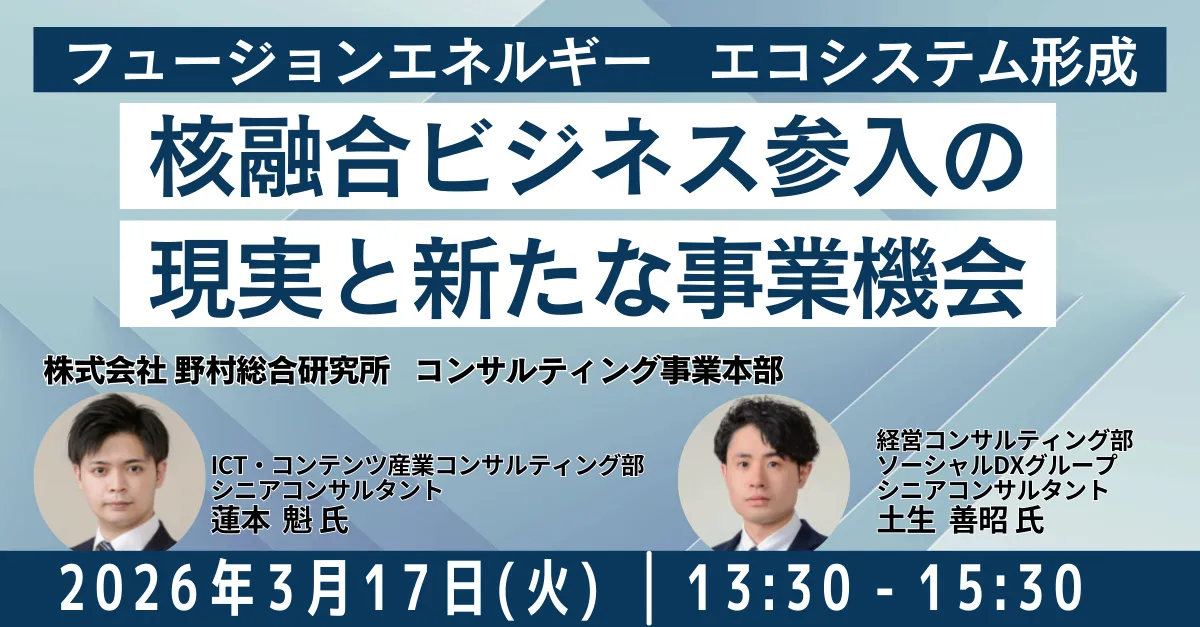
Exploring the Current Landscape of the Fusion Energy Market and Business Opportunities
Introduction to Fusion Energy Seminar
On March 17, 2026, the Japan Planning Institute (JPI) will host a crucial seminar focusing on the burgeoning field of fusion energy. At the forefront of inviting expert insights into the realities and new business opportunities in fusion energy are senior consultants from Nomura Research Institute: Mr. Kai Hasumoto and Mr. Yoshihiro Habu. This event promises to unpack the complex landscape of fusion energy, a promising solution to global energy issues.
Timely Discussion of Fusion Energy
As the world grapples with energy challenges, fusion energy is drawing increasing attention as a potential remedy. The seminar will cover fundamental knowledge about fusion, global trends, innovative startup initiatives, and strategies for approaching fusion as a viable business opportunity. Key insights delivered by experienced management consultants will aid attendees in understanding the accelerating industrialization of fusion energy and its implications for future business landscapes.
Seminar Agenda
The seminar will be divided into several engaging sections:
1. Understanding Fusion Energy
- What is Fusion?
An exploration of the basic principles and definitions of fusion energy, paving the way for attendees to grasp its significance.
- Rising Interest in Fusion
An analysis of why fusion energy is gaining traction in today's energy discussions.
- Challenges Facing Fusion
A critical look at the obstacles that the field is currently dealing with.
- From Multilateral Cooperation to Competition
Insights into how cooperative international efforts are evolving into competitive markets among corporations.
2. Commercializing Fusion Energy
- Ecosystem and Future Landscape
Understanding the industrial ecosystem surrounding fusion and what it might look like in the future.
- Impact on Existing Businesses
Discussing the ripple effects of fusion energy on current industries and the pioneering initiatives in the sector.
- Facing Industrial Transformation
Strategies on how businesses can adapt to the transformative potential of fusion energy.
3. Q&A Session
A chance to engage with speakers and collect valuable insights directly from the experts.
4. Networking Opportunities
As a highlight, this seminar will provide a unique platform for interactive exchanges between participants and speakers, facilitating the formation of new professional connections that could lead to business collaborations.
Participation Options
Participants are offered flexibility in their attendance options:
- - On-site participation (Archive access not included)
- - Live-stream participation (Archive access not included)
- - Archive access following the event
Registration Fee
- - Individual: ¥37,530 (tax included)
- - Group (2 or more participants from the same institution): ¥32,530 (tax included)
- - Notably, public sector employees can register up to two participants at the exclusive rate of ¥11,000 per person (available for on-site and live-stream participation only).
For more detailed information and registration, please visit JPI Seminar Registration.
Closing Remarks
Post-seminar, attendees will be able to direct further questions to the lecturers, facilitating a richer learning and networking experience for all. The JPI seminar has established itself as an invaluable opportunity for forging connections and knowledge sharing among dedicated professionals striving to shape the future of the fusion energy sector.
Contact Information
Japan Planning Institute
Address: 5-2-32 Minami Azabu, Minato-ku, Tokyo 106-0047, Japan
Telephone: 03-5793-9761
Fax: 03-5793-9767
Website: JPI Official Website
About JPI
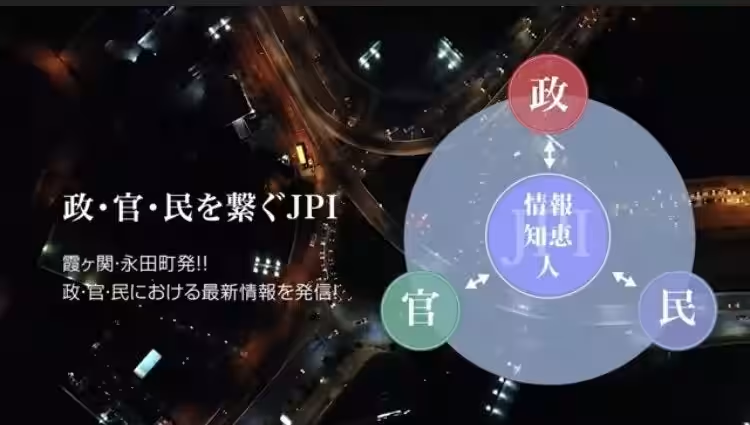
The Japan Planning Institute has been dedicated to knitting together knowledge across government, industry, and academia for over 50 years. Specializing in leveraging vital information for executives and senior management involved in national policy and projects, JPI continues to serve as a bridge in the pursuit of national knowledge creation.

Topics Energy)
【About Using Articles】
You can freely use the title and article content by linking to the page where the article is posted.
※ Images cannot be used.
【About Links】
Links are free to use.