



Innovative Research Turns Sewage Sludge into Energy Resources with Insects
Transforming Sewage Sludge into Valuable Energy Resources with Insects
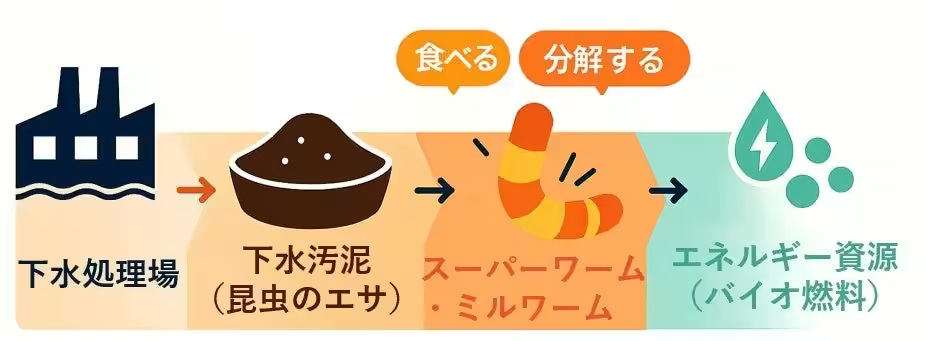
Two innovative companies, Watering Co., Ltd., led by President Masaki Yasuda, and Superworm Co., Ltd., headed by President Yutaro Koga, have embarked on an exciting joint research project since October 1, 2025. This collaboration aims to reduce and resource sewage sludge generated from wastewater treatment plants using insects. The focus insects, Superworms and Mealworms, are selected for their ability to consume sludge and potentially turn it into useful resources.
Background of the Research
The Japanese government has been proactive in promoting Sustainable Aviation Fuel (SAF), necessitating a large supply of raw materials by 2030. At present, there is a staggering shortfall of more than seven times the required amount of raw oil, making it imperative to secure sources of biofuel. Amid these challenges, insects have emerged as a promising solution, offering a low environmental impact and cost-effectiveness as organic waste resource converters.
Traditionally, sewage sludge is handled through techniques such as incineration and landfilling, both of which come with substantial environmental burdens. Incineration incurs high energy costs and emits greenhouse gases, while landfilling demands the continued use of limited land, raising long-term management concerns. This partnership seeks to overcome these issues by implementing sustainable sludge treatment technology that leverages insects to create an innovative energy resource.
Research Overview
Watering will gather dehydrated sludge from various wastewater treatment facilities, which will then be fed to the insects bred by Superworm Co., Ltd. The research aims to explore several critical areas:
1. Reduction Effect: Assessing the ability of insects to consume and decompose the sludge effectively.
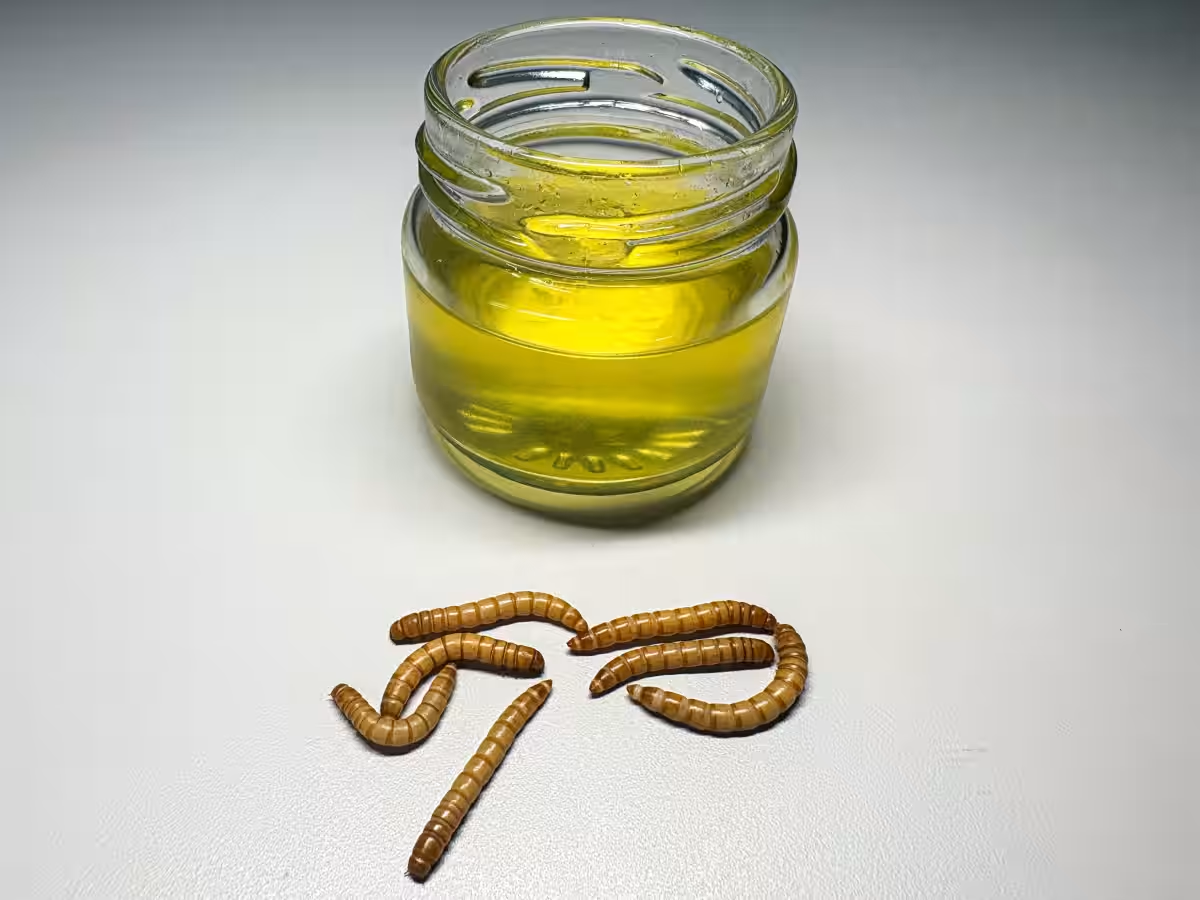
2. Resource Potential: Evaluating the quantities of fat (biofuel raw material) and protein (feed material) that can be accumulated within the insect bodies.
3. Practicality: Investigating the cost, space requirements, and operational conditions necessary for large-scale implementation.
This groundbreaking research has the potential to transform sludge, often regarded as waste, into valuable resources such as biofuel, animal feed, and fertilizers. The project is slated to continue until the end of March 2027.
Roles of the Companies
- - Superworm Co., Ltd.: Responsible for insect rearing experiments and assessing their growth, deconstruction effects, and fat accumulation.
- - Watering Co., Ltd.: Tasked with collecting dehydrated sludge from treatment facilities and coordinating the demonstration tests.
Expectations and Future Outlook
Yutaro Koga, CEO of Superworm Co., expressed enthusiasm about partnering with Watering on this project, emphasizing the synergy between insect and microbial capabilities to address significant waste management challenges. "Our goal is to create a new resource circulation model that contributes to decarbonization for municipalities and industries."
Kazunori Shimamura, Head of the Fundamental Technology Research Center at Watering, shared similar sentiments. He noted, "By harnessing the natural power of insects, we're pushing the envelope in converting organic waste into energy resources, thus providing a fresh alternative for waste management in municipalities and enterprises."
Additional Information
- - Superworm Co., Ltd. is a startup dedicated to researching and developing resource recycling technologies using insects to convert organic waste into oils (biofuel raw materials), protein meals (feed), and fertilizer materials. Their mission focuses on creating a global platform to convert waste into social value through collaborative research with major enterprises and municipalities.
- - Watering Group (Suing) adopts a philosophy of contributing to society through the essential resource of water. The company engages in the design, construction, operation, and management of water treatment facilities to address community concerns and contribute to a circular society.
Conclusion
The collaboration between Watering and Superworm Inc. represents a significant step towards a sustainable future by rethinking waste management and transforming sewage sludge through innovative approaches. This not only addresses pressing environmental issues but also contributes to the broader goals of a circular economy and carbon neutrality. Stay tuned as these two pioneers pave the way for a cleaner, more sustainable world.

Topics Other)

【About Using Articles】
You can freely use the title and article content by linking to the page where the article is posted.
※ Images cannot be used.
【About Links】
Links are free to use.