




The Findings of the 10th Brand Attractiveness Survey: Key Elements Influencing Consumer Behavior
Insights from the 10th Brand Attractiveness Survey
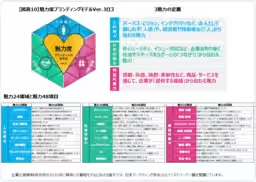
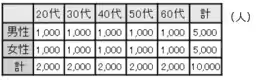
In June to July of this year, the Corporate Communication Strategic Studies Institute conducted the 10th Brand Attractiveness Survey, targeting 10,000 consumers nationwide, aimed to analyze what activities or facts draw consumers to various companies. This survey, which has been conducted annually since 2016, assesses attractiveness based on a developed branding model.
Key Insights
The survey revealed that corporate appeal significantly impacts consumer actions, particularly in purchasing, investing, and employment decisions. Key factors influencing this corporate charm include:
- - Responsiveness to issues
- - Stability and transparency
- - Technological prowess
1. High Human Appeal
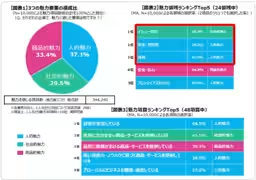
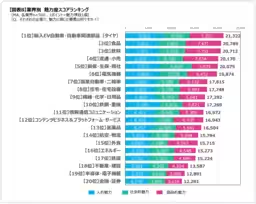
Out of the three main factors assessed, 'human appeal' was rated the highest, with 37.1% of respondents feeling drawn to it. This was followed closely by product appeal at 33.4% and social appeal at 29.5%. Notably, 'human appeal' topped the rankings, suggesting consumers place great value on the people behind a brand.
The survey specifically highlighted that organizations perceived as stable, providing essential goods or services, and producing reliable quality were recognized as most appealing.
2. Consumer Actions Following Appeal
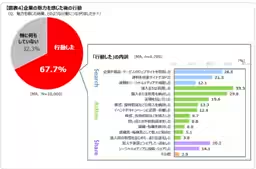
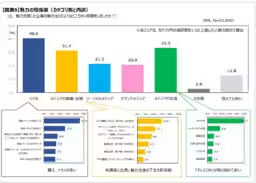
Approximately 67.7% of respondents reported taking some action after feeling a connection to a brand. Among these, about 33.3% mentioned they acted by purchasing or using the product or service. This suggests a significant link between perceived corporate appeal and subsequent consumer behavior.
3. Common Attractive Factors in Decisions
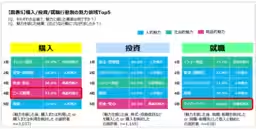
The study revealed that 'responsiveness,' 'stability and transparency,' and 'technology' were crucial across purchasing, investing, and employment behaviors. Additionally, a 'frontier spirit’ was found to be particularly influential in investment and employment decisions.
4. Effective Information Sources
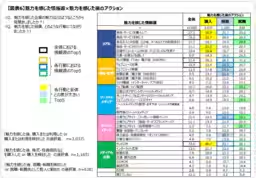
Data pointed out that for purchasing, real-world experiences are vital, while media programs and articles play a significant role in investment decisions. Social media and owned media emerged as crucial in job-seeking scenarios, highlighting the diverse impact of information sources.
5. Industry-Specific Attractions
The results also showed that the attractiveness varies significantly across industries. For example, sectors such as iron and steel rank high on human appeal while food and service industries emphasize product appeal. It indicates that businesses must strategically focus on their unique selling propositions and the characteristics that resonate most with their target consumers.
Study Insights
The study exhibits an increased consumer anxiety owing to various national and global concerns such as economic safety and product shortages. Companies are hence urged to demonstrate a clear pathway towards hope and stability amid these concerns through their communication strategies.
In conclusion, the 10th Brand Attractiveness Survey provides critical insights into what factors drive consumer behavior and underline the necessity for firms to align their practices with stakeholder expectations to enhance corporate attractiveness. By understanding these dynamics, businesses can tailor their branding efforts more effectively, ensuring they meet the evolving desires of the consumers they serve.



Topics Consumer Products & Retail)









【About Using Articles】
You can freely use the title and article content by linking to the page where the article is posted.
※ Images cannot be used.
【About Links】
Links are free to use.