



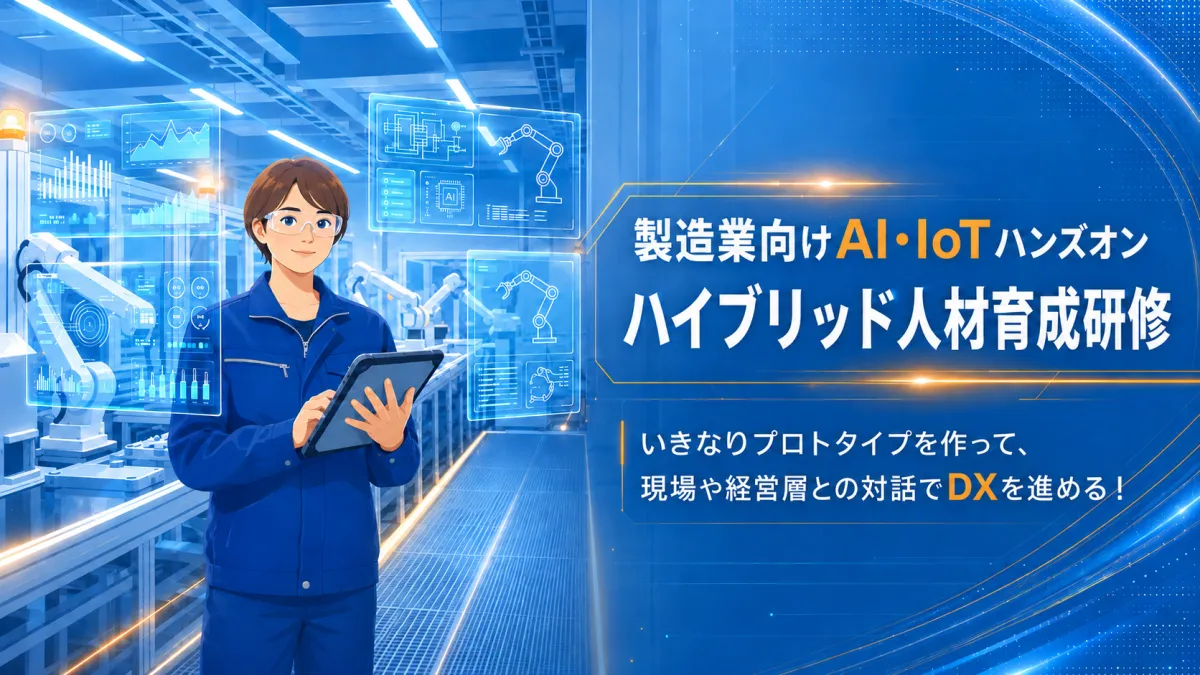
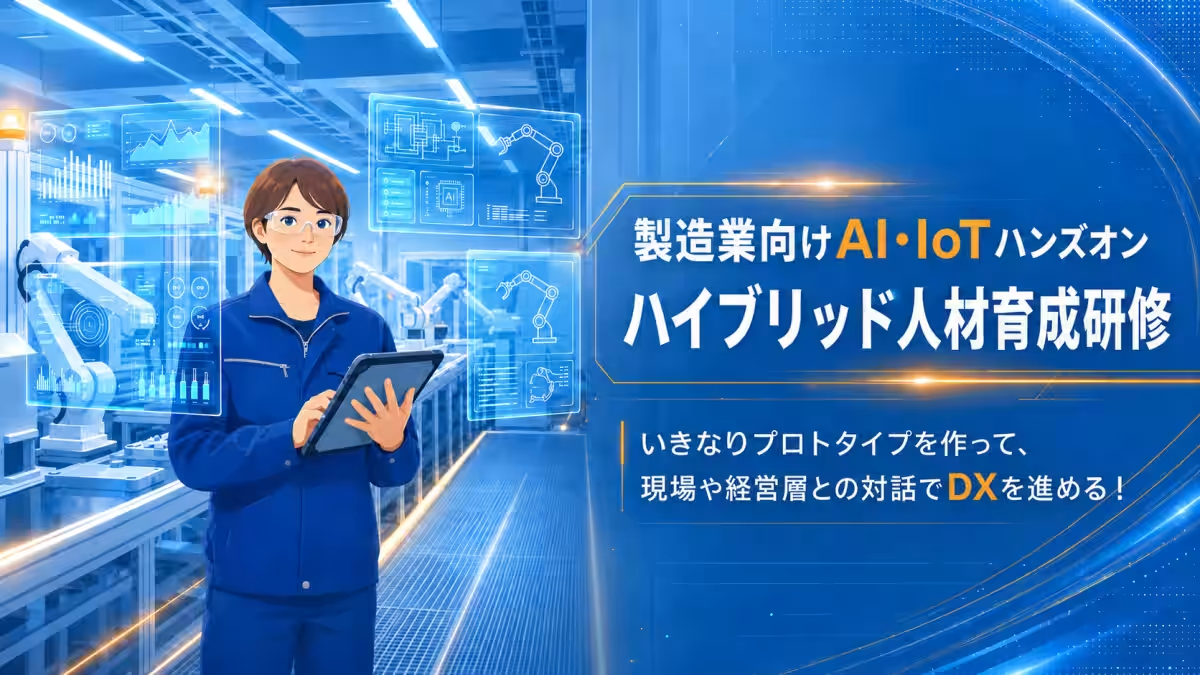
JellyWare Launches Hands-On AI and IoT Training for Manufacturing Workers
JellyWare's Innovative Training for Manufacturing
JellyWare Inc., headquartered in Shinjuku, Tokyo, is set to launch its hands-on training program titled "AI and IoT Hybrid Human Resources Development for the Manufacturing Industry" on May 22, 2026. This initiative targets frontline employees and digital transformation (DX) leaders in the manufacturing sector. The training aims to teach practical AI and IoT implementation skills through a hands-on approach by creating prototypes right from the start.
Addressing Real-World Challenges in Manufacturing
Japanese manufacturing, particularly in the Aichi and Tokai regions, currently faces significant challenges, including severe labor shortages, the aging of skilled workers, and a reliance on a small number of experienced employees. While the need for DX is increasingly critical, the costs involved in hiring external vendors and the disconnection that sometimes exists between systems and on-the-ground realities can hinder effective investment.
Frontline workers have the most insight into the issues they experience, yet merely learning the basics of AI and IoT is not enough to drive genuine improvement. It is essential for these workers to articulate their challenges in technical terms, produce small-scale prototypes, persuade management using these models, and negotiate requirements with external vendors. Only with personnel equipped to manage these tasks can DX initiatives at the ground level truly progress. This program is designed with this philosophy in mind, with the goal of cultivating hybrid talent who can bridge the gap between technological solutions and real-world challenges.
Program Overview: Four Phases
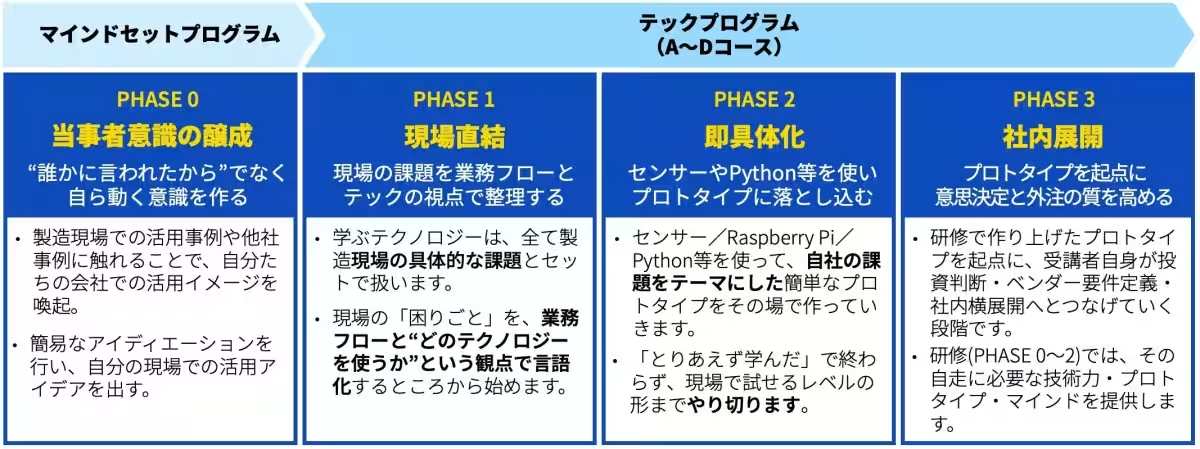
The training program is structured into four phases, beginning with a "Mindset Program" to build a sense of ownership, followed by the main "Tech Program," which involves outlining challenges, constructing prototypes, and implementing them in the company.
Key Features of the Training
1. Hands-On Prototype Creation: Unlike traditional lecture-based learning, participants will create a functioning prototype during the training period. This shift allows discussions around DX to transition from theoretical documents to practical outputs.
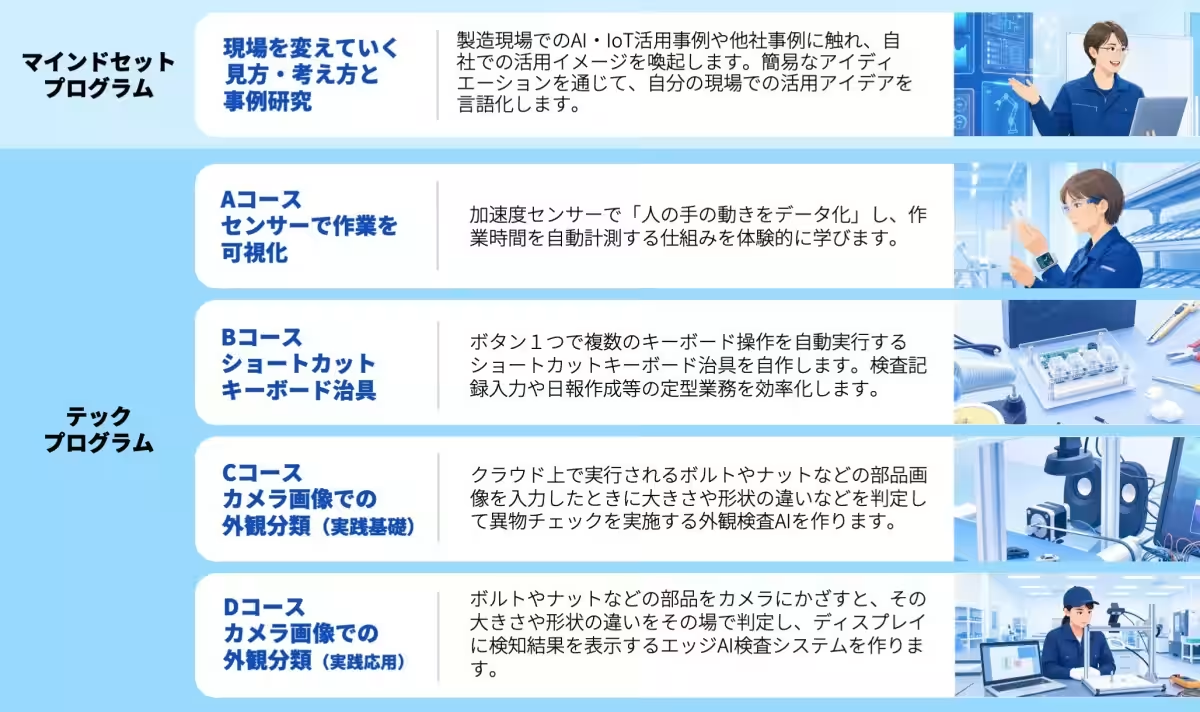
2. Focus on Manufacturing Use Cases: Exercises will be based on real-world manufacturing challenges, like using accelerometers for automated inspection time measurement, automating repetitive PC tasks via shortcut key fixtures, and conducting visual inspections through AI image classification. This practical orientation allows immediate application to participants' own processes after the course.
3. Accessibility for All Skill Levels: The program accommodates participants with no programming experience and offers customization options tailored to specific company needs, based on pre-training consultations.
The Plus-One Effect of Hybrid Talent Development
This training not only focuses on developing hybrid talent but also provides several additional benefits to companies:
- - Relevance-Based Prototypes: Prototypes created during the training become specific proposals that can be discussed within the company, acting as a catalyst for immediate improvements.
- - Enhanced Negotiation Skills: By understanding the nuances of technology through hands-on experience, participants will gain clarity in communication with external vendors, enhancing their ability to lead internal DX initiatives.
- - Sustainable Skill Transfer: Participants will bring back prototypes and teaching materials that facilitate ongoing learning and skill-sharing across the company, fostering a culture of continuous improvement.
Training Costs and Subsidy Options
The training consists of two parts: the "Mindset Program" (2 hours) and the "Tech Program" (15 hours each course).
- - Mindset Program: Costs 100,000 yen per participant (plus tax), with online options available at 80,000 yen.
- - Tech Program: Prices start from 200,000 yen per participant (plus tax) for a single course, with discounts for multiple courses. There are also provisions for government subsidies that may cover up to 75% of the costs for small businesses, potentially allowing participation for as low as 50,000 yen per individual.
Support for Implementation
JellyWare is committed to robustly supporting DX efforts led by workers. For companies that have developed prototypes but struggle with implementation, a five-step support program is available.
1. Define Goals: Articulate the purpose and success criteria clearly.
2. Design Implementation Scenarios: Outline the target areas, scope, duration, and structure.
3. Establish Evaluation Metrics: Agree on quantitative and qualitative evaluation measures.
4. Manage Implementation: Provide support for introducing the prototypes to the field and managing related tasks.
5. Review and Decide: Evaluate results and guide decisions for full-scale implementation or redesign depending on outcomes.
To kickstart this exciting journey, JellyWare is offering free individual consultations for those responsible for DX or training within their organizations. Reach out today!
Additional Information
Launch Date: May 22, 2026
Registration URL: Register Here
For further inquiries, contact:
JellyWare Inc.
Tokyo Office: 2-3-6 Yotsuya, Shinjuku-ku, Tokyo 160-0004
Nagoya Office: 3-6-35 Nishiki, Naka-ku, Nagoya 460-0003
Website: https://jellyware.jp
For media inquiries, please contact:
Nagoya Office, Naoki Inagaki,
Phone: 052-211-8657
Email: [email protected]
We welcome questions and offer demonstrations and related materials to support your understanding of our training program.
Topics Consumer Products & Retail)
【About Using Articles】
You can freely use the title and article content by linking to the page where the article is posted.
※ Images cannot be used.
【About Links】
Links are free to use.