



Tsingke Showcases Innovative AI Solutions for Antibody Development at AIS 2026
AI-Driven Breakthrough for Antibody Discovery
Tsingke, a forefront player in integrated life science research solutions, made waves at the Antibody Industrial Symposium (AIS) 2026, held in Montpellier, France. This esteemed conference, known for its focus on therapeutic antibodies and biotherapeutics, became a platform for Tsingke to showcase its innovative AI-driven strategies in the development of therapeutic antibodies.
Focusing on CLDN18.2 Antibody Development
During the symposium, Tsingke unveiled an exceptional workflow that utilizes artificial intelligence to discover highly selective CLDN18.2 antibodies. Targeting Claudin 18.2 is becoming increasingly relevant in the fight against gastric cancer and other solid tumors. In a scientific presentation, Tsingke illuminated its AI-assisted sequence analysis, aimed at enhancing target specificity while minimizing cross-reactivity issues typically associated with developing antibodies for closely related proteins, such as CLDN18.1. This longstanding concern has been a challenge that researchers have faced.
The antibody candidates derived from Tsingke's innovative approach illustrated strong specificity and favorable characteristics for development—results that leverage the power of AI in conjunction with practical experimental validation. This integration of technology into the therapeutic development pipeline not only signifies a leap in efficiency but also showcases the transformative potential of AI in biotherapeutics.
Comprehensive Antibody Development Platform
Tsingke's presentation was not limited to theoretical advancements; the company also highlighted its robust end-to-end antibody development capabilities. Their comprehensive platform covers the entire spectrum of biologics discovery and development phases, including:
- - Antibody Discovery: Utilizing hybridoma, single B-cell, and phage display technologies to identify antibodies that are both high-affinity and highly specific.
- - Antibody Engineering: Engaging in antibody humanization, affinity maturation, and constructing synthetic antibody libraries to enhance therapeutic antibody optimization.
- - Protein Expression: Supporting a variety of expression systems while facilitating a rapid workflow that transitions from gene to protein, making it applicable to monoclonal antibodies, antibody-drug conjugates (ADCs), antitumor antibodies (AOCs), and in vitro diagnostics (IVD).
Chuanting Tan, a Senior RD Engineer at Tsingke, expressed enthusiasm about AIS 2026, stating that it provided a fantastic opportunity to connect with peers across the antibody community and share vital advancements in AI-enabled antibody discovery. He emphasized the increasing complexity surrounding therapeutic antibody development and noted that integrating computational methods with experimental practices can significantly streamline the identification and optimization of promising therapeutic candidates.
Future Directions and Innovations
As Tsingke aims to further enhance its discovery and development capabilities, the company is committed to expanding its AI-enabled antibody discovery platform and integrated biologics capabilities. This dedication underscores their mission to support researchers effectively at each step from target discovery to the characterization of proteins, thereby aiding in the acceleration of innovative projects in the biopharmaceutical field.
About Tsingke
Established with the vision to revolutionize synthetic biology, Tsingke Biotech represents a significant force in the life sciences landscape. Their ambition is to construct what they refer to as "the world's great gene factory." Merging proprietary reagents, consumables, and synthesis technologies with AI-driven molecular manufacturing capabilities, Tsingke delivers high-quality Tsynth® gene synthesis services across diverse sectors, spanning biopharma, agriculture, food production, and environmental sciences.
For continuous updates and insights, you can follow Tsingke Biotech's journey via LinkedIn.
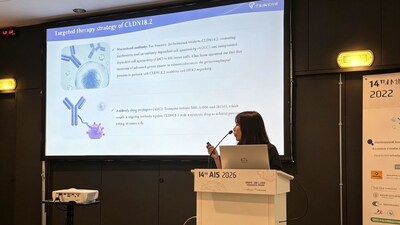
This engagement at AIS 2026 not only cements Tsingke's position as a leader in antibody development but also highlights their commitment to integrating cutting-edge technology within the biopharmaceutical industry. They are setting new benchmarks for innovation, making the future of therapeutic antibodies and biotherapeutics significantly brighter.
Topics Health)
【About Using Articles】
You can freely use the title and article content by linking to the page where the article is posted.
※ Images cannot be used.
【About Links】
Links are free to use.