



Check Point Research's 2026 Q1 Brand Phishing Report Highlights Cyber Threat Trends
Overview of Q1 2026 Brand Phishing
Check Point Software Technologies, recognized as a global leader in cybersecurity solutions, has recently released its latest annual brand phishing report for the first quarter of 2026. The findings of Check Point Research (CPR) reveal significant insights into how cybercriminals are increasingly exploiting widely-used platforms for phishing attacks.
Leading the charts, Microsoft has maintained its stance as the most exploited brand for phishing, accounting for 22% of all recorded attacks in the first quarter. This indicates that cybercriminals are still targeting well-established platforms that are commonly utilized for business and personal purposes, allowing them to illicitly obtain user credentials and gain access to accounts and corporate environments.
In a notable shift, Apple has ascended to second place with 11%, surpassing Google, which now holds third position with 9%. Amazon and LinkedIn follow closely, capturing 7% and 6% respectively. These statistics imply that attackers are increasingly focusing on gaining access to professional accounts and workplace environments, highlighting a worrying trend in targeting platforms integral to business operations.
Key Findings and Insights
The report indicates that the top four brands – Microsoft, Apple, Google, and Amazon – collectively accounted for half of all brand phishing attacks recorded in the first quarter. This concentration on a select few globally trusted platforms underscores the ongoing vulnerabilities present in these significant online services.
Diving deeper into sector-specific trends, the technology industry continues to be a prime target for phishing attempts, followed by social networks and the banking sector. Services that rely heavily on identity verification, including authentication and financial platforms, remain top of mind for cybercriminals.
Omer Dembinsky, data research manager at CPR, remarked, "Phishing attacks are evolving in both scale and sophistication, employing increasingly persuasive impersonations of brands, sophisticated user interfaces, and clever domain manipulation. The consistent rankings of Microsoft, Apple, and Google illustrate how critical identity and cloud access are to attackers. Notably, LinkedIn's rise reflects an amplified interest in targeting business environments. Organizations must adopt a prevention-first approach combining AI-driven threat intelligence and proactive protection across email, web, and collaboration platforms to mitigate these risks effectively."
Top Brands Phished in Q1 2026
Here is a list of brands predominantly targeted in phishing attacks during the first quarter:
- - Microsoft (22%)
- - Apple (11%)
- - Google (9%)
- - Amazon (7%)
- - LinkedIn (6%)
- - Dropbox (2%)
- - Facebook (2%)
- - WhatsApp (1%)
- - Tesla (1%)
- - YouTube (1%)
The persistent prominence of major technology brands in phishing scenarios signifies their essential roles in identity management, productivity tools, and cloud services, making related credentials highly coveted by cybercriminals.
Notable Phishing Cases from Q1 2026
Several high-profile phishing attempts have been documented in the first quarter, including:
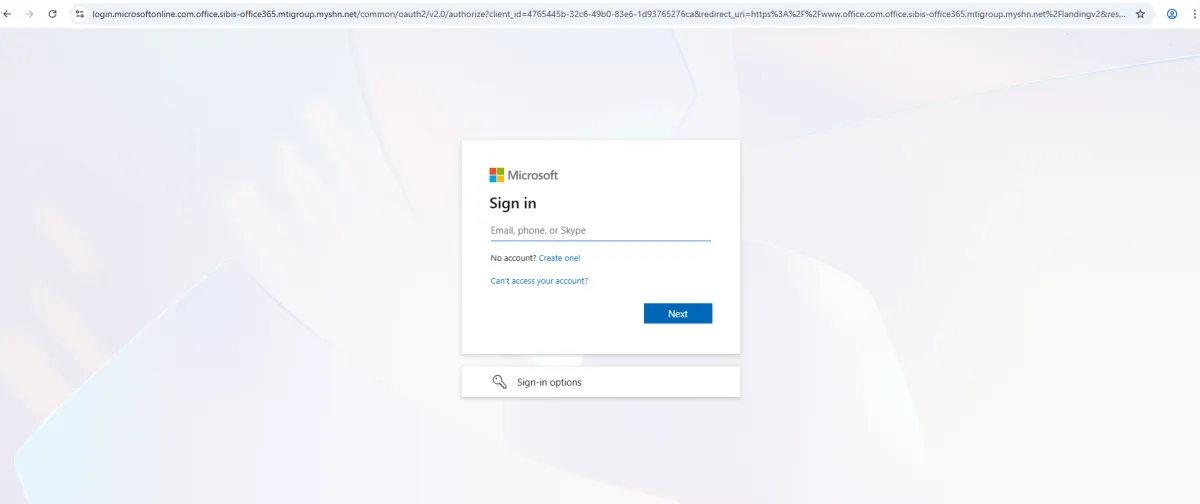
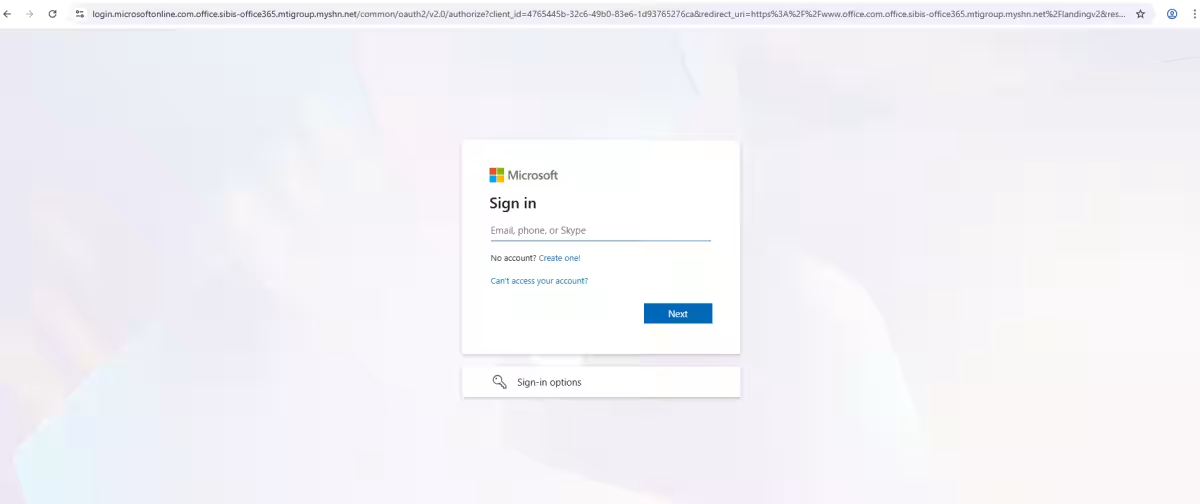
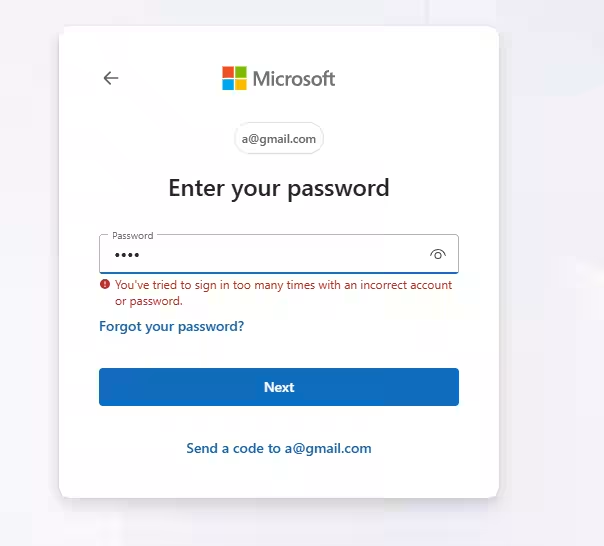
1. Microsoft: A malicious site impersonating Microsoft's authentication services was identified, utilizing a long subdomain to mislead users into entering their credentials, ultimately aiming to steal their sensitive information.
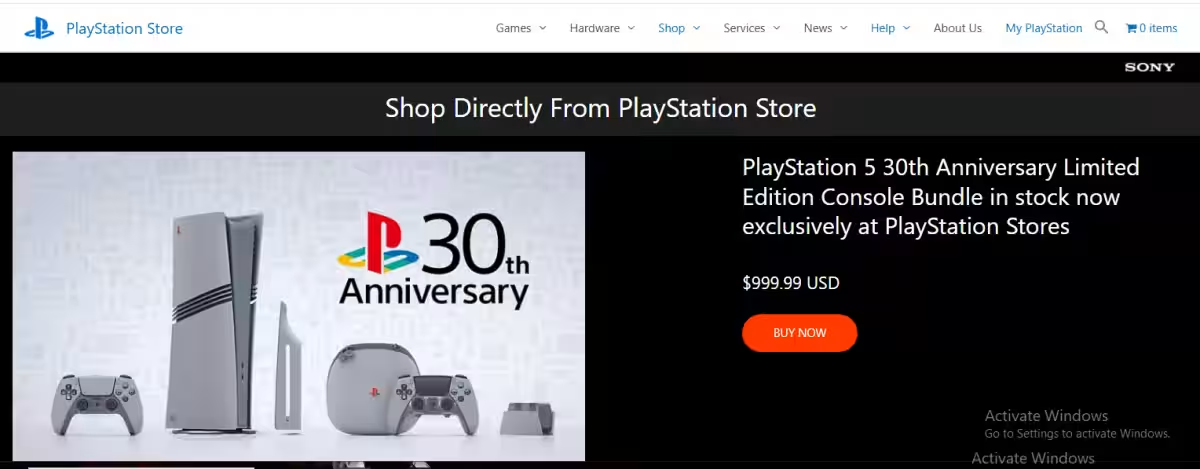
2. PlayStation: A phishing site masquerading as an official PlayStation store prompted users to make payments via bank transfer, integrated with various broken links and redirects to mislead victims.
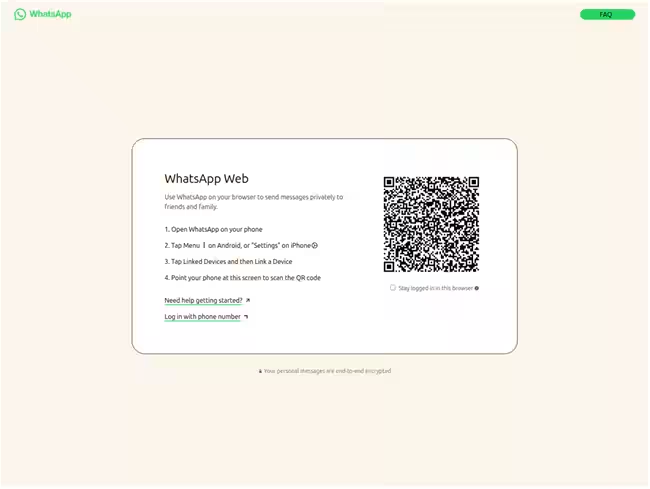
3. WhatsApp: A fake WhatsApp Web page prompted users to scan a QR code, potentially linking their accounts to the attackers' sessions, enabling unauthorized access to private conversations.
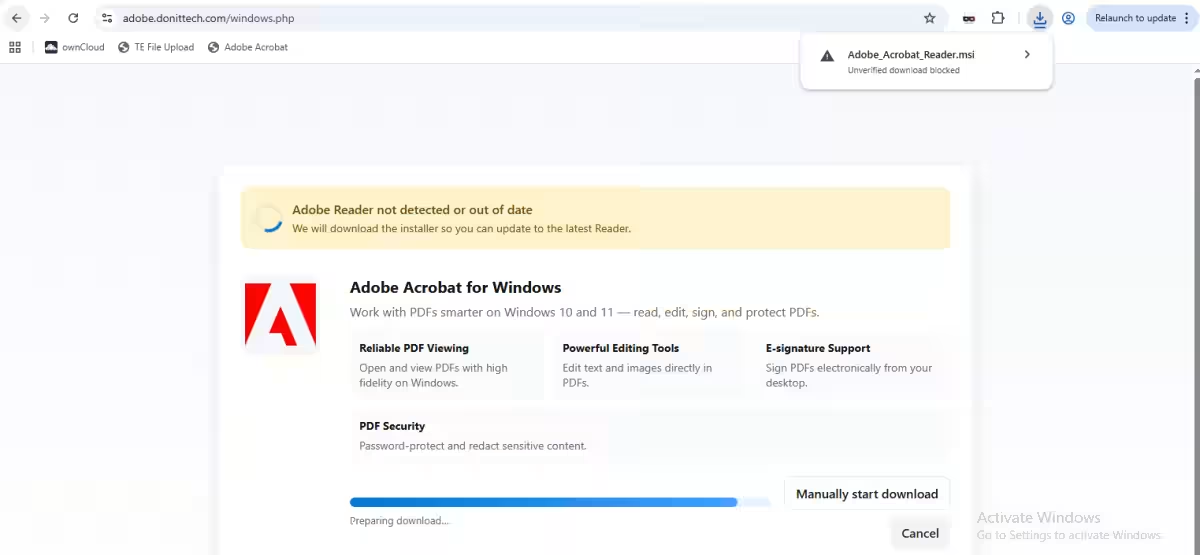
4. Adobe: A phishing website pretending to provide Adobe Acrobat downloads led users to download harmful files, installing malware capable of remote access.
The Surge of Brand Phishing Threats
The ongoing rise in brand phishing can be attributed to an increase in cybercriminals taking advantage of the trust associated with well-known digital services. By employing convincingly similar domains, sophisticated login interfaces, and multi-factor authentication flows, attackers effectively circumvent user skepticism. This results in the large-scale theft of credentials and serves as a launching pad for financial fraud and widespread malware dissemination.
The escalation of these trends is further fueled by the growing reliance on cloud services and digital identity platforms. In environments where a single account compromise can lead to the loss of access to email, collaboration tools, financial data, and corporate networks, brand phishing has become a primary method for initial intrusions in large-scale consumer fraud and security breaches.
For further reference, this article is based on a press release made available on April 16, 2026, US time, through Check Point Research.
About Check Point Research
Check Point Research (CPR) is committed to supplying the latest cybersecurity threat intelligence to its customers and the broader threat intelligence community. By analyzing and collecting data from cyberattacks worldwide through ThreatCloud AI, Check Point's threat intelligence platform, CPR works alongside over 100 analysts and researchers to develop effective cybersecurity solutions in collaboration with security vendors, law enforcement, and various CERT organizations.
For more information, please visit Check Point's official blog and their social media platforms.

Topics Consumer Technology)

【About Using Articles】
You can freely use the title and article content by linking to the page where the article is posted.
※ Images cannot be used.
【About Links】
Links are free to use.