


Revolutionary Semiconductor Film Developed for Next-Gen Light Sensors with Low Power Consumption
Next-Generation Light Sensors: Harnessing Light's Rotation
A research team from Waseda University, the National Institute of Advanced Industrial Science and Technology, and Tokyo University of Science has made a breakthrough in semiconductor technology by developing a film capable of discerning the direction of circularly polarized light while generating electricity. This innovative advance combines multifunctionality and low power consumption, potentially transforming how light sensors are designed.
The Breakthrough in Semiconductor Films
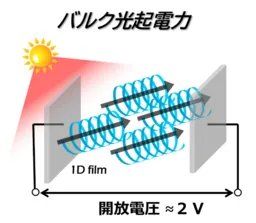
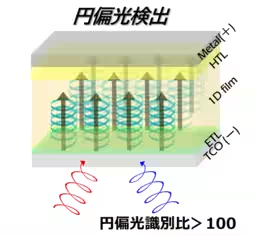
The newly developed semiconductor film excels at distinguishing between right-handed and left-handed circularly polarized light by converting their rotational properties into an electric signal. In addition to this capability, the film can generate a photocurrent without external voltage, thanks to a novel design that facilitates the maintenance of a helical structure within its crystal lattice, thus allowing for controlled crystalline symmetry and arrangement. The film showcases a remarkable capacity to achieve a difference of up to approximately 105 times in photocurrent between the two types of circularly polarized light, along with realizing a light-induced open-circuit voltage of about 2V, without traditional p-n junctions found in conventional solar cells. The implications of this technology are vast, promising a future filled with multifunctional and minimally energy-consuming light sensors.
Technical Advancements and Methodology
Understanding the Fundamental Principles
In various technologies utilizing light, such as communication and sensor systems, it is imperative to effectively read information beyond mere intensity and wavelength, such as the rotation direction of light. Circularly polarized light, where the electric field rotates in a right-handed or left-handed manner, can provide critical data for advanced applications in light communication and high-fidelity imaging. The phenomenon known as the photovoltaic effect, which generates electrical current upon light exposure, has been extensively leveraged in solar cells; traditional designs employ a p-n junction to extract this current. However, the bulk photovoltaic effect (BPVE) offers a different mechanism. It occurs without utilizing junctions, capitalizing instead on intrinsic electronic states and symmetry within the crystal.
The Role of Chiral Structures
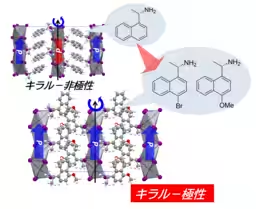
The research team has focused on a unique hybrid material known as one-dimensional helical perovskite, composed of an organic molecular framework intertwined with an inorganic semiconductor backbone. By smartly structuring these molecular components, the team engineered a crystal lattice where chiral molecular arrangements maintain a helical configuration, allowing selective responses to the circularly polarized light. The challenge had always been how to maintain this ordered structure when creating films, which often leads to a loss of structural integrity and functionality.
Achievements in Crystal Control and Film Application
Innovative Molecular Design
By methodically adjusting the organic molecular structures through the incorporation of methoxy groups and bromine atoms, the research group successfully engineered a chiral and polar structure. Notably, this transformation alters the bulk characteristics from non-polar to polar, thereby enhancing the ability of semiconductors to respond to electric fields and light effectively. This incredible achievement heralds a new dimension wherein molecular design can significantly impact semiconductor properties, leading to groundbreaking photovoltaic functionalities.
Film Creation via Solution Processing
Utilizing solution processing techniques, the team crafted thin films that preserve the helicoidal arrangement of molecules. By finely tuning the conditions for forming the film, the semiconductor maintained its desired crystalline attributes while showing symmetric features across the film's surface. Detailed X-ray diffraction measurements confirmed that the significant structural aspects obtained from single crystals were effectively replicated in the functional thin films.
Exceptional Photodetection Capabilities
The resulting thin films were used to fabricate photodetector devices that successfully differentiated between right and left circularly polarized light, yielding distinct photocurrents for each, affirming their potential as high-performance sensors. Under optimum conditions, including applying a small external voltage, a massive circular dichroism ratio of approximately 105 was achieved, illustrating the material's capabilities.
Future Development and Potential Applications
Looking ahead, the multifunctional characteristics of this semiconductor film present ample opportunities for new sensor technologies. The ability to produce photocurrents without the need for external voltage demonstrates significant potential for crafting low-power electronic devices that could operate independently from external power sources; this could lead to advancements in energy-efficient optical sensors that effectively harness light's unique properties.
Addressing Challenges and Next Steps
While significant progress has been made, further research is essential to refine the performance of these sensors and enhance the output levels for practical applications. The ongoing development aims to yield sensors that maintain high performance without external voltages while also increasing photocurrent production. This research could pave the way for new optical devices that operate on principles distinct from traditional designs.
Conclusion
In summary, this research showcases the innovative capacity to control both the crystallographic structure and light functions through molecular design, establishing a versatile framework for future developments in various light-centered technologies. As we delve deeper into understanding the interactions between structural characteristics and photovoltaic functionality, the prospects for advancing not only sensors but also energy conversion technologies remain abundant.
Topics Consumer Technology)

【About Using Articles】
You can freely use the title and article content by linking to the page where the article is posted.
※ Images cannot be used.
【About Links】
Links are free to use.