



Impact of the Principle of Majority Attendance in Upcoming Co-ownership Law Reform
Analysis of the Principle of Majority Attendance in Co-Ownership Law Reform
In anticipation of the implementation of the revised Co-ownership Law, a significant report has been released by Daiwa Life Next Co., Ltd, part of the Daiwa House Group. This report, compiled by the company's comprehensive condominium research institute, the "Mansion Mirai Kachiken Institute," draws from a robust dataset of 3,609 general assembly minutes from 2024, providing invaluable insight into the upcoming law's impact.
Background of the Reform
The revised Co-ownership Law is set to take effect in April 2026 and introduces the "Principle of Majority Attendance," which excludes non-attending members from decision-making processes during general assemblies. This significant adjustment presents new challenges and opportunities for management teams and members alike.
The purpose of the report is twofold: to visualize the attendance patterns seen in the 2024 general assemblies and to analyze how these trends may be affected by the upcoming legal changes. With a clear intention of driving better governance and ensuring management reflects the will of the community, effective participation in general assemblies emerges as an urgent matter.
Key Findings
The report highlights certain key statistics:
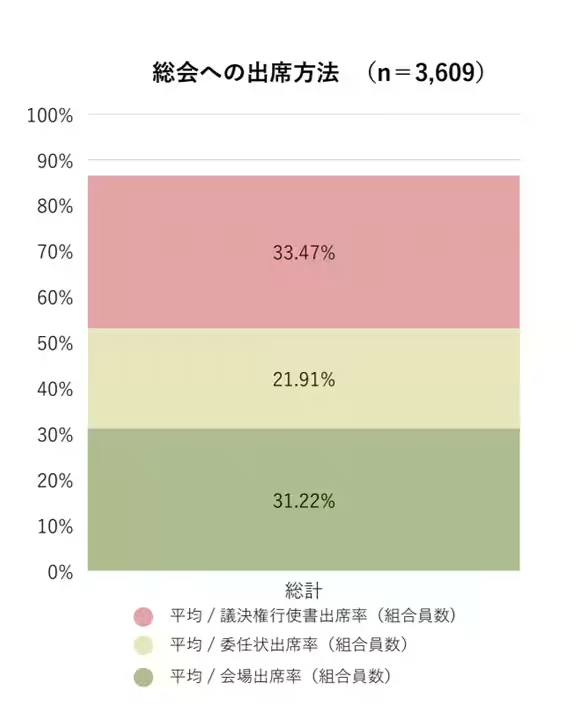
- - Attendance Rate: The overall participation rate for general assemblies in 2024 was 86.70%, a culmination of 31.22% in-person attendance, along with 21.91% of proxies and 33.47% through voting papers. Conversely, this leaves 13.30% of members inactive.
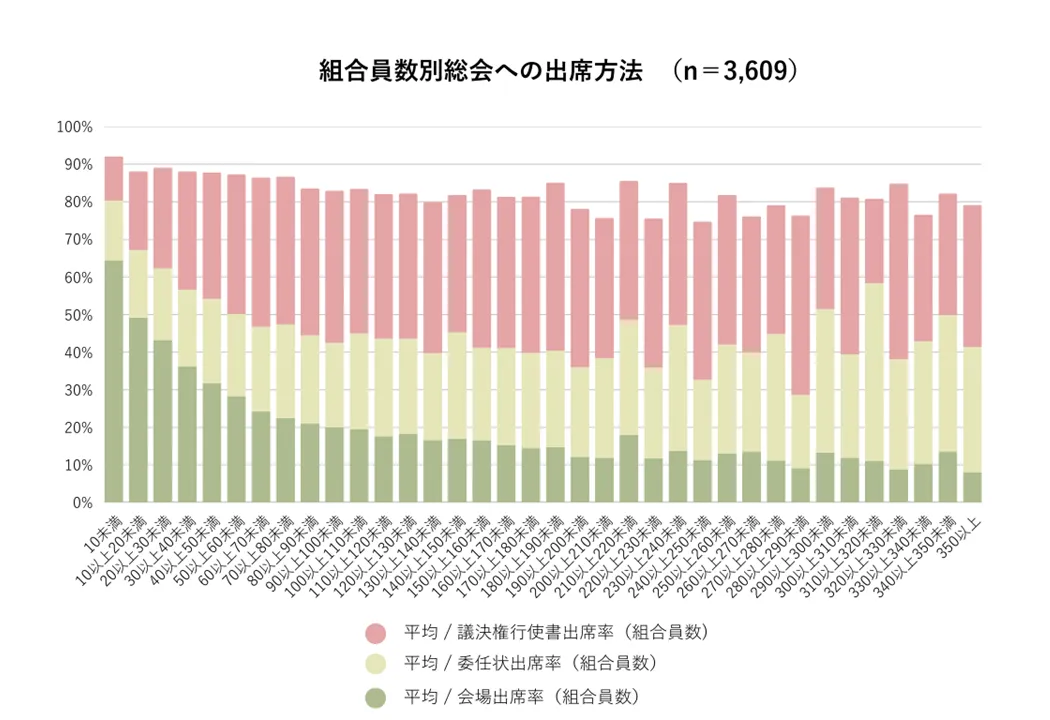
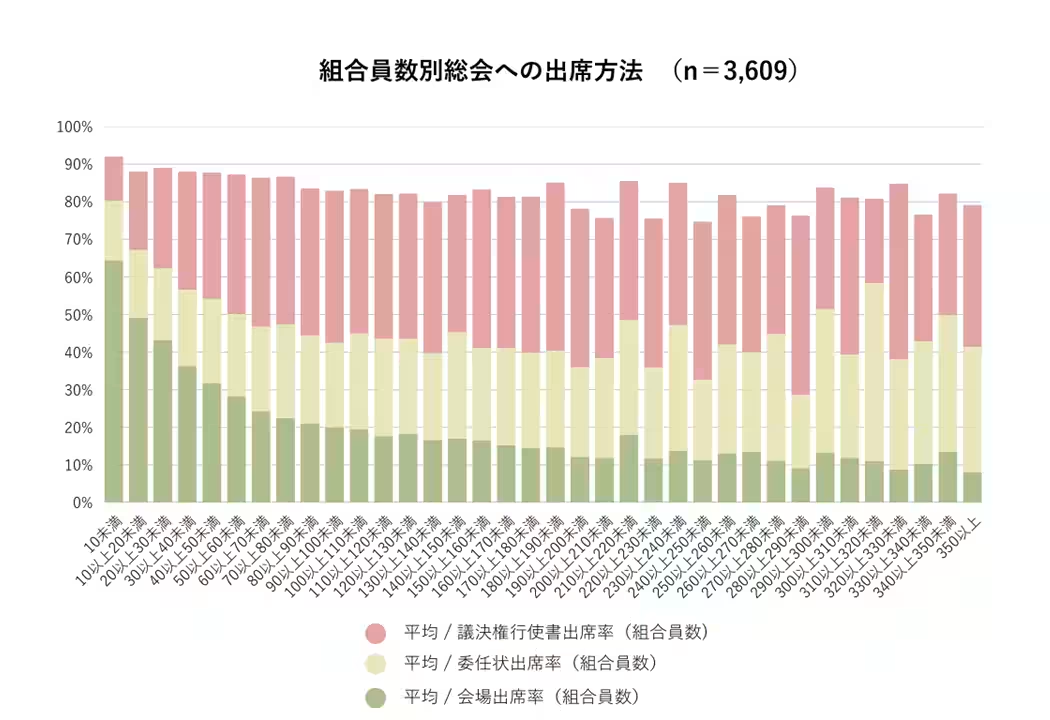
- - Analysis by Member Count: As the number of housing units increases, there is a noticeable decline in participation rates. Many condominiums with over 190 units reported attendance figures falling below the 80% mark.
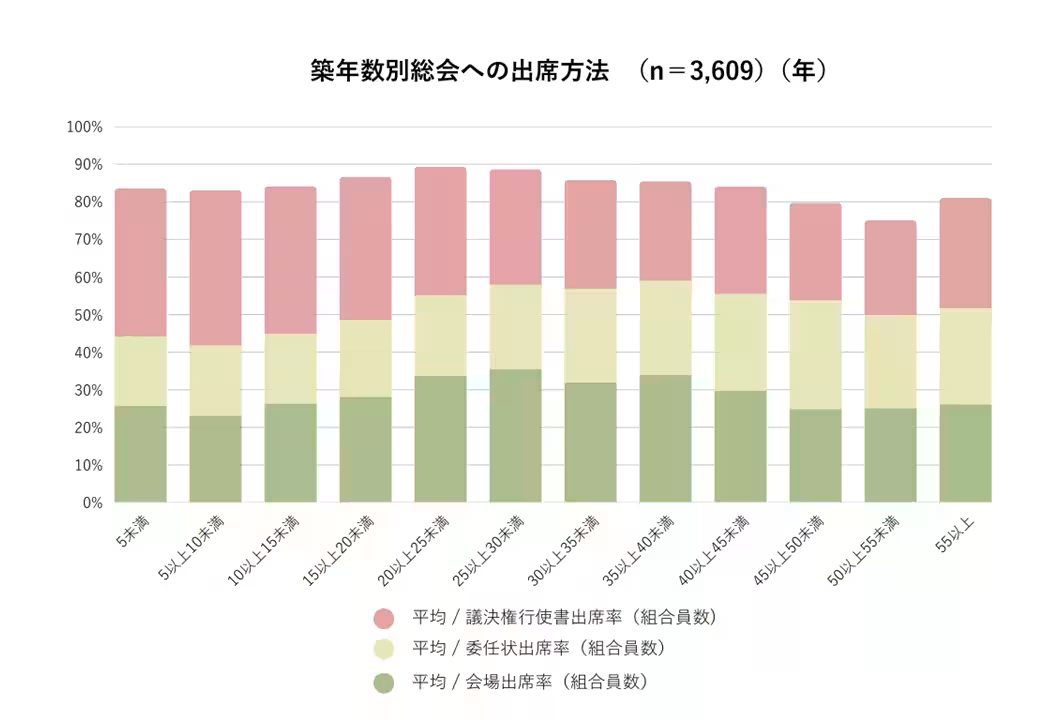
- - Breakdown by Building Age: Not surprisingly, participation peaked in buildings aged between 20 and 25 years before experiencing a decline. However, data suggests that participation rates for buildings over 55 years show a resurgence.
- - Implications of Legislative Changes: The law’s introduction of the majority attendance principle means that those who do not attend will be completely excluded from the decision-making framework. Therefore, encouraging attendance at meetings is paramount to ensure community representation and effective management.
These findings significantly highlight the implications of the revised law and signal a call to action for condominium associations and their members to actively engage in upcoming assemblies.
Research Overview
Survey Period: April to June 2025
Survey Focus: Minutes from 3,609 general assemblies held in 2024
Categories of Analysis: The survey analyzed member counts, attendees, proxies submitted, and voting papers through thorough data extraction.
About Mansion Mirai Kachiken Institute
Established in 2019, the Mansion Mirai Kachiken Institute serves as Japan's first comprehensive research organization for condominium management companies. It aims to address pressing issues facing condominiums, such as the aging population leading to shortages of officer candidates, rising renovation costs due to aging properties, and increased labor expenses, all contributing to insufficient reserve funds essential for building maintenance. Through their findings, the institute seeks to contribute to the innovation and value creation of condominiums in Japan.
For more information about the Mansion Mirai Kachiken Institute, visit their website here.
Company Overview
Daiwa Life Next Co., Ltd
CEO: Eiji Saito
Capital: ¥1,301,000,000
Established: March 8, 1983
Location: 5-1-33 Akasaka, Minato-ku, Tokyo
Business Focus: Management services for condominiums, rental apartments, commercial buildings, and hotels, as well as corporate services like subleasing and office relocation support.
Corporate Website: Daiwa Life Next

Topics Consumer Products & Retail)
【About Using Articles】
You can freely use the title and article content by linking to the page where the article is posted.
※ Images cannot be used.
【About Links】
Links are free to use.