



Results of 2025 SMEs Management Survey: A Gap Between Wage Hikes and Business Realities
Analyzing the Gap in Wage Hikes Among SMEs in Japan
In the light of Prime Minister Takaichi's wage hike policy, a recent survey by Forval GDX Research Institute has highlighted a significant disparity between the government's push for wage increases and the on-ground reality faced by small and medium-sized enterprises (SMEs) in Japan. While there has been considerable talk and policy advancements aimed at promoting wage hikes, the effectiveness and outcomes of these initiatives are being questioned by those directly impacted.
Background of the Survey
The survey, titled the "2025 Second Management Survey on SMEs", was conducted from September 16 to October 17, 2025. It aimed to delve deep into the productivity improvements and compensation adjustments in SMEs. With 1,464 responses collected from SME owners across the nation, the data serves as a crucial indicator of the current wage dynamics within these businesses.
Key Findings
1. Wage Hikes Not Implemented by 30% of SMEs
Despite heightened scrutiny regarding minimum wage raises and government support, the willingness and ability to implement wage hikes have seen minimal positive change. Approximately 30% of the surveyed SMEs admitted to not being able to issue wage increases.
2. Main Reason for Not Raising Wages
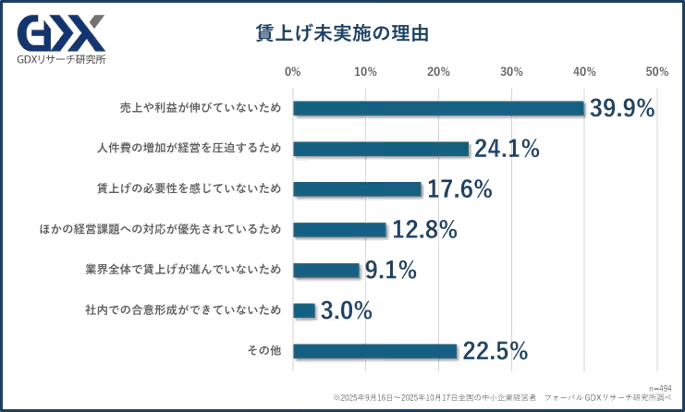
Among those who haven’t raised wages, 39.9% indicated that their sales and profits have not sufficiently grown to allow for wage increases, pointing towards a lack of economic growth in their businesses. This emphasizes the ongoing struggle SMEs face within the competitive marketplace.
3. Perception of Wage Hikes’ Effectiveness
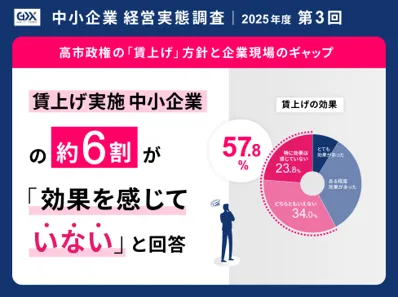
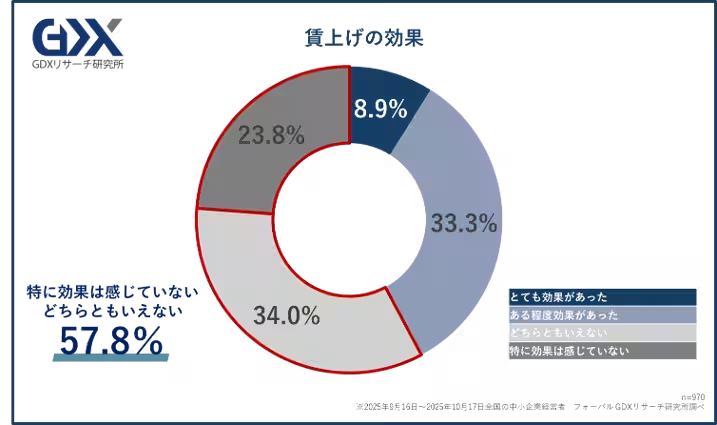
Strikingly, nearly 60% of companies that did implement wage hikes reported feeling no tangible benefits from these increases. This aspect raises concerns that the purpose of wage hikes may not be effectively communicated to employees.
Survey Insights
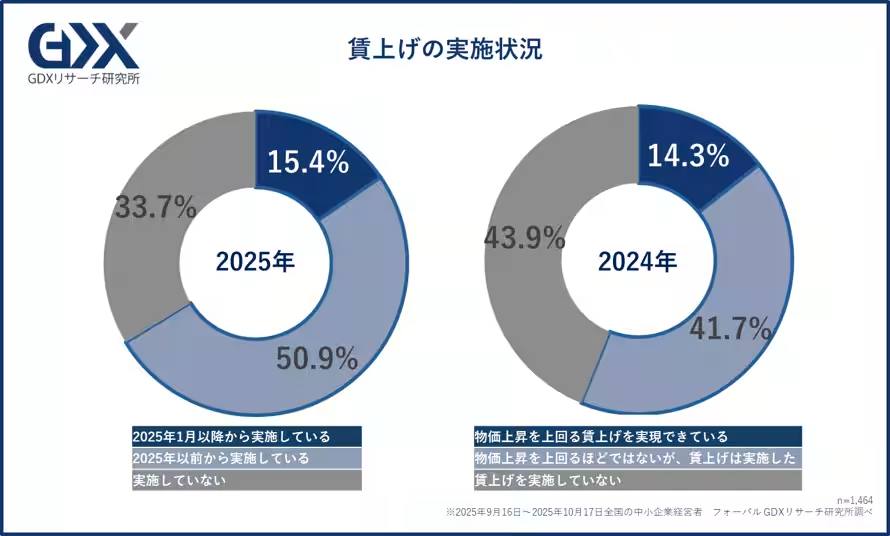
The survey posed the question: “Is your company implementing wage hikes?” Of the 1,464 SME executives, 15.4% confirmed they had initiated increases after January 2025, while 50.9% had done so prior. However, a significant 33.7% remained unable to implement wage hikes at all. Compared to last year, where 56% of companies claimed they had made wage increases, this year’s data indicates that while progress is being made, the numbers still highlight a considerable gap between intention and occurrence.
With rising global prices, particularly in energy and food, the hesitance or inability among SMEs to raise wages points toward economic anxieties. Though discussions around minimum wage hikes have intensified, actual implementation remains sluggish.
Additional Insights
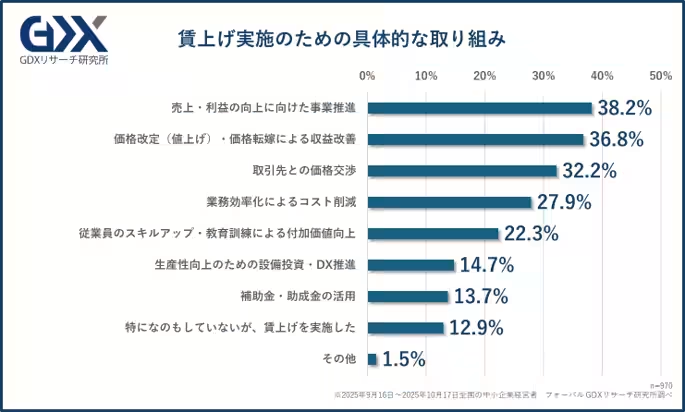
When examining the businesses that did increase wages, several contributing factors came to light. Many attributed their wage policies to enhanced revenue or profit improvement strategies, with 38.2% indicating that increasing business activities led to successful wage adjustments. Another 36.8% stated that price revisions were vital in counterbalancing increased operational costs.
On the flip side, businesses that did not implement wage increases primarily cited their inability to expand revenues and profits as the leading cause. Notably, 24.1% of these respondents mentioned that rising labor costs pressured their operations. This reveals a complex interplay between rising costs and the revenues needed to support wage increases.
Moving Forward
Given the ongoing inflationary trend, it is crucial for companies to remain alert to growth opportunities while ensuring a sustainable operational environment. The primary takeaway from the survey emphasizes the need for SMEs to gauge their wage policies against their overall economic health. Companies that implement effective communication strategies about wage increase goals and performance can cultivate a more motivated workforce.
As Prime Minister Takaichi underscores the importance of sustainable wage growth as part of the broader economic strategy, the onus now falls on SMEs to bridge the evident gap between policy intentions and business realities.
Conclusion
Forval GDX Research Institute, led by Manabu Taira, points out that while there is an appreciable increase in the number of SMEs considering wage hikes, a considerable obstacle remains. The effective communication of wage hike intentions to employees and maintaining a steady growth trajectory to support those raises are vital for the continued success and stability of Japan's SMEs.
More insights can be found by visiting Forval GDX Research Institute’s website.






Topics Business Technology)
【About Using Articles】
You can freely use the title and article content by linking to the page where the article is posted.
※ Images cannot be used.
【About Links】
Links are free to use.