



Education Cannot Wait Launches $3.5 Million Emergency Grant in Bangladesh for Rohingya Children
Education Cannot Wait's Emergency Grant in Bangladesh
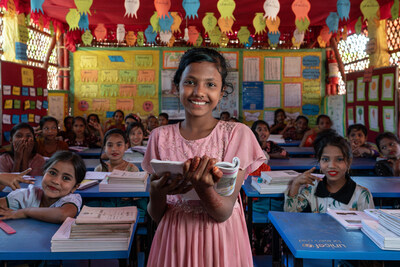
On November 10, 2025, Education Cannot Wait (ECW) unveiled a significant emergency response grant of $3.5 million aimed at addressing the ongoing Rohingya refugee crisis in Bangladesh. This effort is particularly crucial as it targets the restoration of educational opportunities for around 180,000 children residing in Cox's Bazar, which is home to the world’s largest refugee camp.
The funding builds upon ECW’s previous commitment of $50.7 million in investments specifically focused on Bangladesh, an initiative that has already successfully reached over 386,000 children, approximately 96% of whom are Rohingya refugees. With these funds, ECW has constructed or renovated about 2,300 classrooms and provided financial assistance to 2,700 educators. In addition, it has equipped teachers and administrative staff with essential training on various critical subjects, including disaster-risk reduction, gender awareness, and mental health support.
This latest grant is delivered in collaboration with UNICEF and a robust network of local partners, including the Community Development Centre (CODEC), Jagorani Chakra Foundation (JCF), BRAC, Mukti Cox's Bazar, Friendship, and the COAST Foundation. Together, these organizations aim to enhance access to inclusive and safe learning environments for children affected by the crisis.
Rana Flowers, the UNICEF Representative to Bangladesh, emphasized the critical importance of education during crises. She stated, "Every child deserves the chance to learn, no matter the crisis. This support from Education Cannot Wait is a lifeline. It is more than books and lessons – it is a child's bridge to dignity, stability, and the future they deserve."
Support from ECW is more than just an educational opportunity; it also provides Rohingya children with vital skills, confidence, and hope to help rebuild their communities when conditions permit their safe return home. This investment is seen as essential for securing the future of the Rohingya people, preserving their culture, identity, and their voices.
However, the situation remains precarious, as declining humanitarian assistance has jeopardized previous educational advancements. As of June 2025, over 3,600 learning facilities catering to children from early childhood through Grade 4 are still non-operational. A recent analysis indicated that only half of the financing required for the Joint Response Plan has been raised so far.
About Education Cannot Wait
Education Cannot Wait (ECW) is recognized globally as the leading fund dedicated to addressing educational needs during emergencies and protracted crises within the United Nations framework. It works to achieve quality educational outcomes for children who have been displaced by conflict or affected by crises, ensuring that no child is left behind.
By engaging with a range of stakeholders, including governments, private and public donors, UN agencies, and civil society organizations, ECW aims to enhance emergency responses to crises while connecting immediate relief with sustainable, long-term educational solutions. ECW is thus calling on both public and private sector donors to expand support to reach even more vulnerable children.
For timely updates, follow ECW on social media platforms, including X/Twitter:
- - @EduCannotWait
- - @YasmineSherif1
- - @KentPage
For more information, you can visit Education Cannot Wait's official website.
Topics Other)
【About Using Articles】
You can freely use the title and article content by linking to the page where the article is posted.
※ Images cannot be used.
【About Links】
Links are free to use.