



MOL Conducts Emergency Response Training for Maritime Accidents
Emergency Response Training Organized by MOL
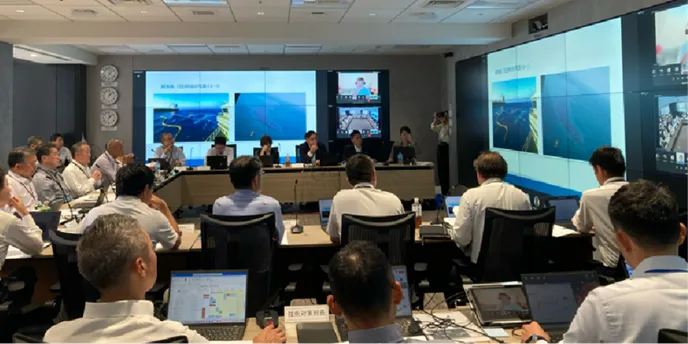
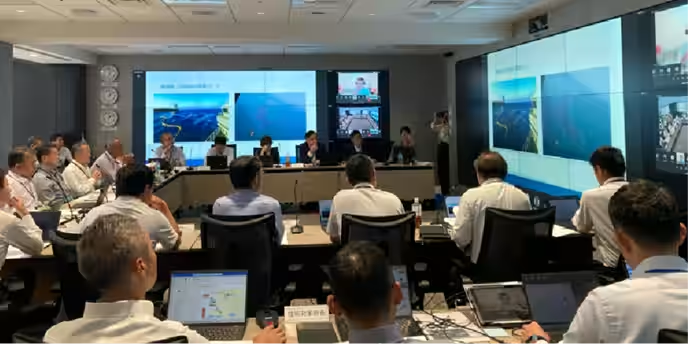
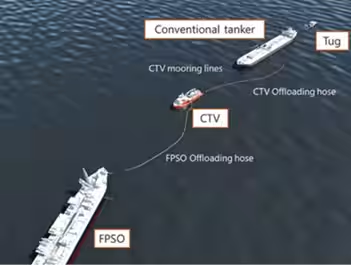
On October 6th, Mitsui O.S.K. Lines (MOL), led by President Tsuyoshi Hashimoto, conducted an emergency response training exercise simulating a maritime accident involving one of its group companies, SeaLoading Holding AS (CEO: Yoshirou Kubo). The training took place on a Cargo Transfer Vessel (CTV), which is crucial in ensuring safe oil transfers between Floating Production Storage and Offloading (FPSO) units and tankers.
Training Details
During the exercise, participants focused on reinforcing emergency procedures and coordination between MOL and its group companies. The training included role-playing various scenarios reflective of potential accidents at sea. Key personnel, including Kubo and other MOL executives, actively engaged in discussions to enhance their understanding of emergency response strategies. External stakeholders, particularly from the Maritime Disaster Prevention Centre, were invited to offer valuable insights and feedback on the drills, ensuring a holistic approach to maritime safety.
Simulated Incident Overview
The training scenario presumed a critical situation where the CTV was engaged in the transfer of crude oil from an FPSO located approximately 100 nautical miles south of Rio de Janeiro, Brazil. Due to severe weather conditions, loading operations were halted, leading to an emergency evacuation from the FPSO. Simultaneously, a failure occurred with the transfer hose connecting the CTV and the tanker, resulting in an oil spill of an estimated 80 cubic meters into the ocean.
Objectives and Future Directions
This training exercise was designed not only to test the immediate response capabilities but also to accumulate and enhance the knowledge necessary for future emergencies. The overarching goal of MOL is to elevate the safety awareness across the entire group, striving for the highest standards of safe operational practices in maritime transport.
Importance of CTV Technology
The CTV technology plays a pivotal role in efficient oil logistics, particularly in challenging marine environments. Currently, there are only two CTVs in the world, both owned by SeaLoading, which holds the patents for this groundbreaking technology. The CTV significantly increases the efficiency of crude oil transfer between FPSOs and tankers, minimizing risks associated with environmental contamination during adverse weather.
Concluding Remarks
MOL's commitment to maritime safety is paramount. This training exercise exemplifies the company's proactive approach towards crisis management and commitment to global maritime safety. Through continuous improvement and collaboration, MOL aims to uphold its reputation for excellence in the shipping industry, ensuring the safety of its operations while mitigating the impact of potential maritime incidents. By investing in training and adopting advanced technology, MOL demonstrates its dedication towards achieving world-class safety standards.
Topics Consumer Products & Retail)
【About Using Articles】
You can freely use the title and article content by linking to the page where the article is posted.
※ Images cannot be used.
【About Links】
Links are free to use.