



Understanding Organizational Behavior: Five Types of Employees for Growth Strategies
Unlocking the Potential of Workforce Dynamics
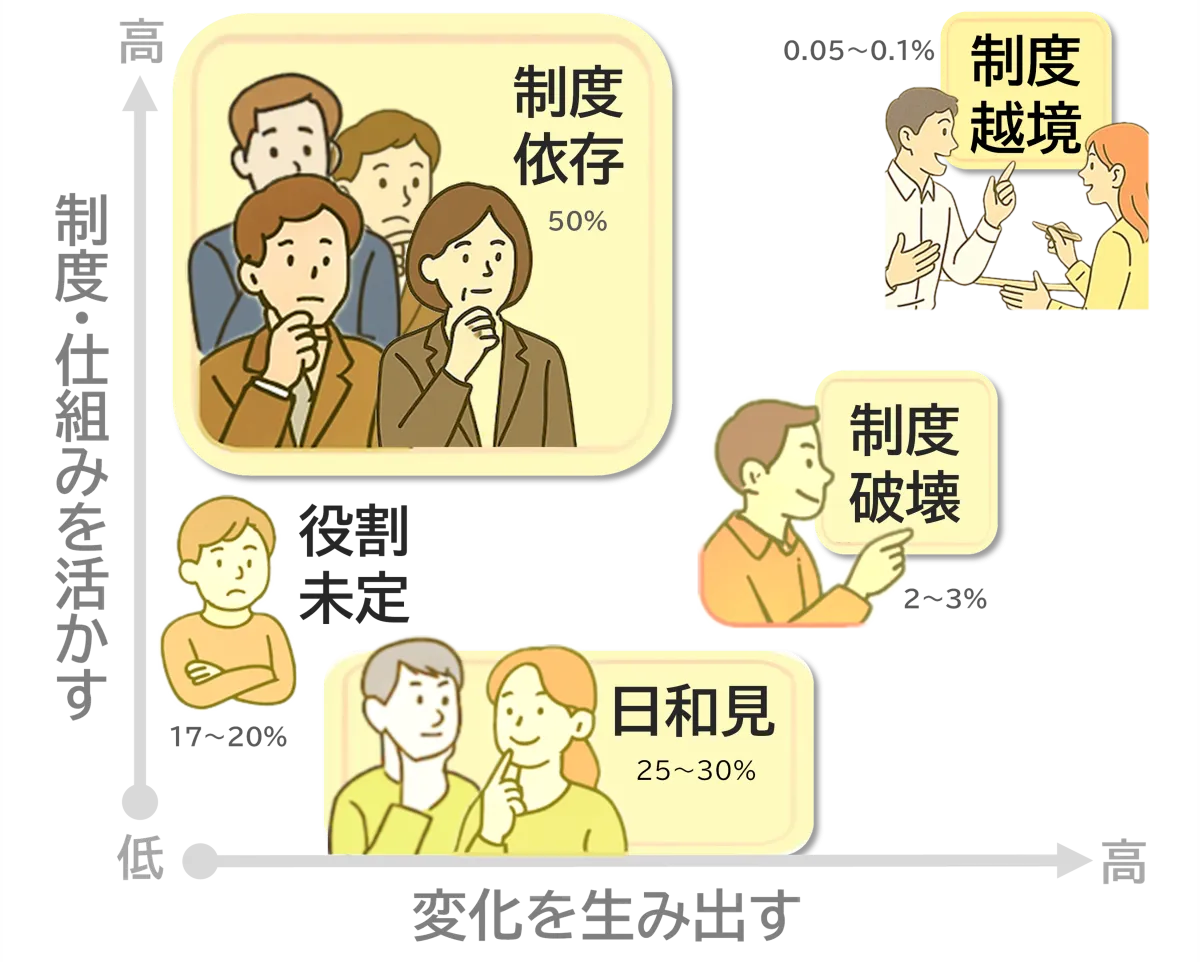
In a landmark report released by Request Inc., based in Shinjuku, Tokyo, over 338,000 individuals across 980 companies have been analyzed to classify employees into five distinct types: the Institutional Border-Crosser, Institutional Disruptor, Institutional Dependent, Opportunistic, and Undefined Role types. This classification provides organizations with insights into employee behaviors and growth trajectories, as well as how these types fit into competitive positions like Leader, Challenger, Follower, and Nicher.
Background
Organizations often set ambitious strategic goals; however, the effectiveness of these strategies heavily relies on the composition of their workforce. For instance, if an organization prioritizes transformative change but has a majority of Institutional Dependent and Opportunistic employees—over 70-80%—it may find itself struggling to adapt to new environments or innovate effectively. Conversely, having too many Disruptors or Border-Crossers can hinder stability when operational consistency is necessary.
This study outlines the correlation between organizational culture and workforce composition, thereby visualizing the 'fit' between strategy and human resources.
Research Overview
The report analyzes employees based on three axes:
- - Understanding of Institutional Frameworks
- - Autonomy
- - Adaptability to Changes
Data Sources
Data was collected from various sources, including:
- - Practical data from Organizational Behavior Science developed through studies involving 338,000 individuals from 980 companies (up to 2025)
- - Role classification data from major domestic manufacturers, financial institutions, and IT companies (2015–2024)
- - Gallup’s 'State of the Global Workplace' (2024)
- - Insights from McKinsey’s report, 'The Inconvenient Truth about Change Management'
- - Rogers' work on the diffusion of innovations
- - Japan's Ministry of Health, Labour and Welfare 'Basic Survey on Competence Development'
Key Findings
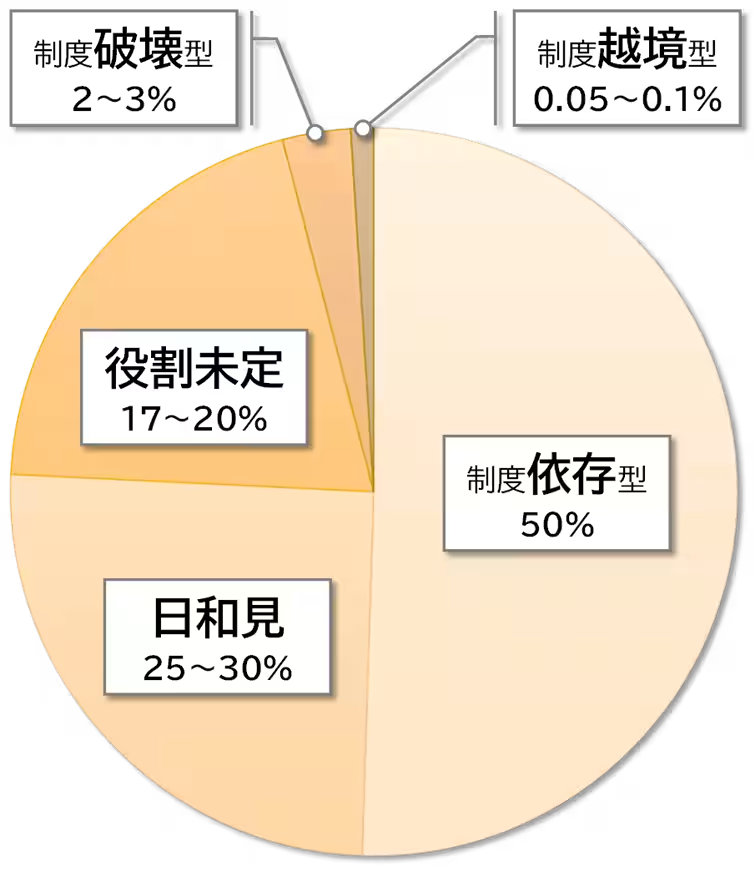
The report estimates the characteristics and proportions of each employee type:
- - Institutional Border-Crosser (0.05-0.1%): These rare change agents deeply understand institutional frameworks and create value beyond constraints. They typically number only about 5 to 10 individuals in a large organization of 10,000.
- - Institutional Disruptor (2-3%): Bold reformers who push against existing systems to create new structures.
- - Institutional Dependent (50%): Focused on achieving results within existing frameworks, they are stable but slow to adapt to external changes.
- - Opportunistic (25-30%): Capable of adapting to environments but reliant on others for direction, they can mobilize quickly when given clear guidelines.
- - Undefined Role (17-20%): As their roles are not well-defined, they are in an exploratory phase but can significantly expand potential depending on the provided guidance.
Strategic Fit Analysis
For organizations positioned as market leaders, it is essential to have at least 7% of employees as Border-Crossers or Disruptors to drive transformation. However, average large companies show only about 3% in these categories, leaving a substantial gap in their strategic execution capabilities. In the case of a market challenger, the absence of stable operational roles can obstruct the solidification of results.
Practical Implications
By comparing their current position with the desired workforce composition, organizations can clarify their training and development strategies necessary for effective execution of strategies. Furthermore, understanding the growth stages and supporting strategies pertinent to each employee type will facilitate intentional shifts and growth among staff.
Institutions can also prevent the isolation of rare Border-Crossers and create frameworks for sharing insights across the organization.
For detailed insights, download the report here: Request Inc Report
About Request Inc.
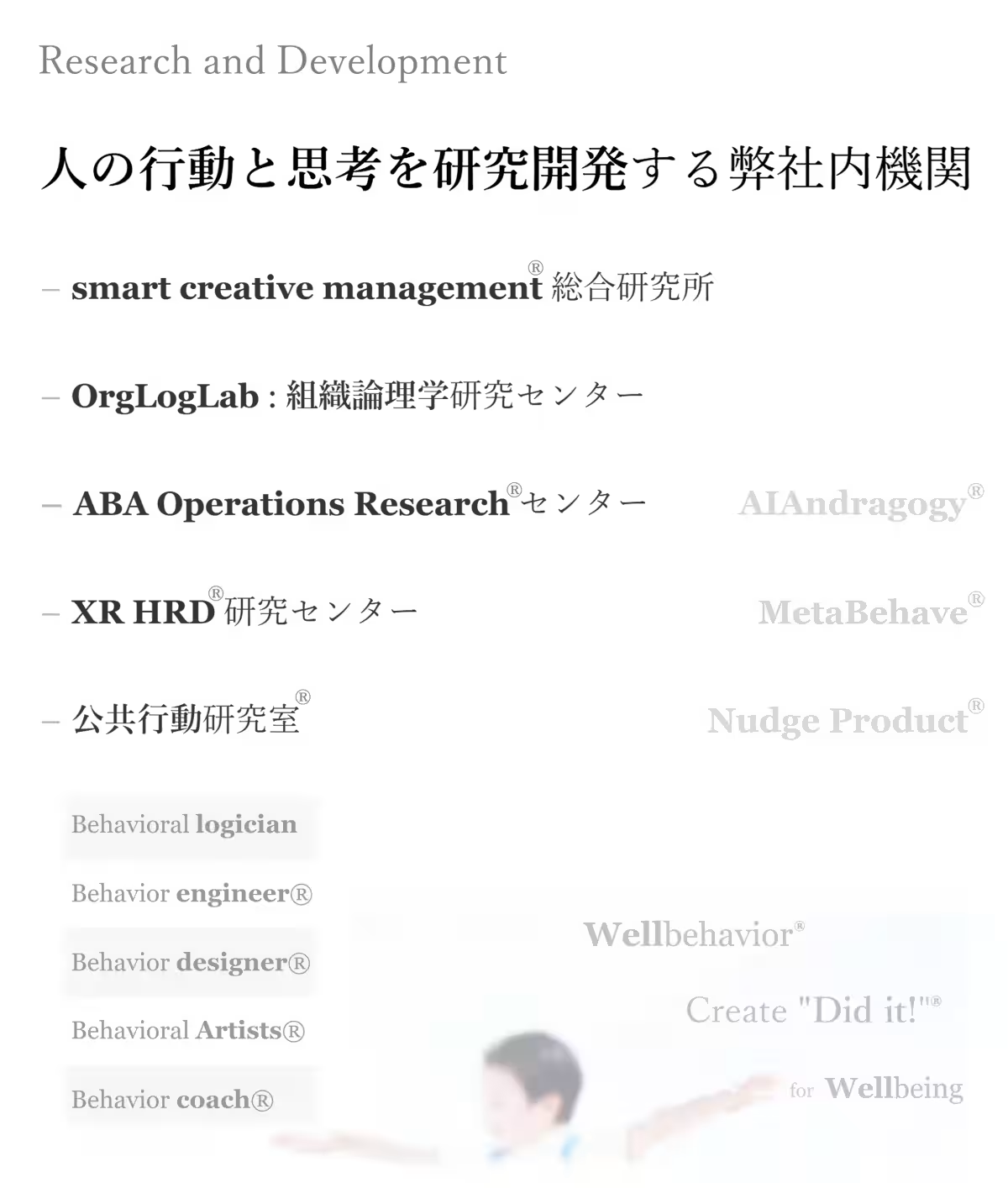
Request Inc. actively pursues the research and development of human behavior and thought processes as part of its core brand, 'Behavior: Aiming for the Better,' collaborating with five institutions that focus on organizational behavior science. The company has facilitated human capital development for over 980 organizations, rendering vital insights into workforce dynamics.
Find more info on our corporate site: Request Inc
Company Details:
- - Name: Request Inc.
- - Location: 3-4-8 Shinjuku, Shinjuku-ku, Tokyo, 160-0022, Japan
- - CEO: Tomoyasu Kohat
- - Business Area: Human Capital Development, AI Utilization Support
Contact Information
For inquiries, please reach out to our Human Capital Development XR HRD® Team at E-mail.
Topics Business Technology)

【About Using Articles】
You can freely use the title and article content by linking to the page where the article is posted.
※ Images cannot be used.
【About Links】
Links are free to use.