



Survey Reveals Key Factors in Selecting Virtualization Foundation Transitioning Choices
New Insights from Cybertrust's Study on Virtualization Infrastructure Selection
A recent survey conducted by Cybertrust Inc., headquartered in Minato, Tokyo, has unveiled crucial insights into the factors influencing businesses when selecting their virtualization infrastructure. The study focused on IT managers and decision-makers involved with server virtualization technologies over the past two years. This report, which stems from a detailed assessment involving 109 responders, reveals pressing challenges and the realities shaping the current virtualization landscape.
Findings on Cost Increases
An overwhelming 93.6% of respondents have acknowledged increases in financial burdens related to changes in VMware’s license model. Notably, a significant portion of respondents, about 75.5%, attributed these rising costs primarily to substantial hikes in licensing fees. The study clearly shows the immediate impact these changes have had on company operations and planning.
Transitioning Towards Change
The survey also revealed that 77.0% of participants have initiated specific actions to transition to alternative server virtualization platforms. Interestingly, nearly half of the subjects are still in the comparison stage for their new systems, while 28.4% are already progressing with their migration plans. This reflects a dynamic shift as companies navigate through their virtualization options.
Selection Criteria: Cost Predictability Takes the Lead
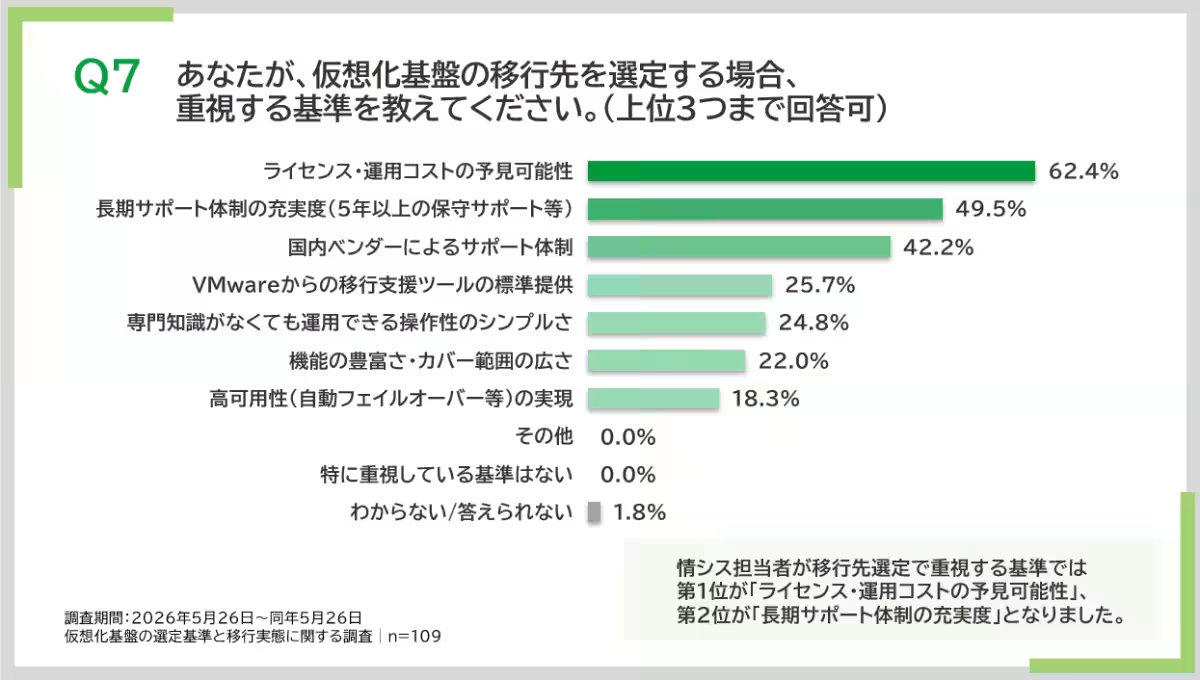
When evaluating criteria for selecting new platforms, a striking 62.4% of respondents highlighted the importance of cost predictability, followed by long-term support capabilities at 49.5%. The need for clear cost structures and dependable support systems has never been more pressing, indicating a shift in priority from merely features and functionalities to stability and reliability in operating costs.
The Importance of Transparency
The survey findings indicate that cost transparency is favored overwhelmingly over functionality. While only 22.0% of respondents favored a broad feature set, the preference for predictable licensing and operational costs was about three times higher at 62.4%. This suggests businesses are leaning towards solutions that minimize unexpected costs, rather than those with extensive functionalities.
Support Expectations from Vendors
As concerns over rising costs dominate, expectations regarding vendor support illustrate local requirements. The survey showed that 48.6% of managers find quick responsiveness from local branches crucial, while 42.2% emphasize the need for inquiries handled in Japanese. About 39.4% of respondents also seek a commitment to over eight years of long-term maintenance from suppliers, indicating a demand for stability and reliability from domestic vendors.
Conclusion of the Study
In conclusion, the study conducted by Cybertrust shed light on how practically all participants (93.6%) perceive the increased cost burden due to VMware’s licensing changes. Emphasis on cost predictability (62.4%) as the top selection criterion underlines the prevalent anxiety surrounding cost management and future budgeting in virtualization.
Moreover, direct challenges such as high operational costs (67.0%) and resource allocation required to adapt to vendor policy changes (65.0%) are prominent concerns. As 77.0% of organizations are taking definitive steps toward evaluating their infrastructural future, the apparent risk of system downtime during transitions (62.4%) remains a critical barrier.
The study underscores the necessity for vendors to offer prompt local support and ensure assured long-term maintenance contracts as foundational elements for successful virtualization transitions. Given the essential roles these infrastructures play in company operations, it's evident that practice, transparency, and dependable support systems will define the future for virtualization transitions.
Overview of the Survey
- - Survey Name: Study on Selection Criteria and Transition Realities of Virtualization Infrastructure
- - Methodology: Conducted via IDEATECH's
Topics Business Technology)

【About Using Articles】
You can freely use the title and article content by linking to the page where the article is posted.
※ Images cannot be used.
【About Links】
Links are free to use.