




J.D. Power 2025 Japan Initial Quality Study: Insights on Automotive Quality Improvements
Overview of the 2025 J.D. Power Japan Initial Quality Study
J.D. Power Japan, a globally recognized consulting firm specializing in customer satisfaction surveys, has released its findings for the 2025 Japan Initial Quality Study (IQS). Conducted annually, this study targets new car buyers and sheds light on the automotive industry's performance regarding initial quality.
For the 15th consecutive year, J.D. Power surveyed consumers regarding their experiences with vehicle defects after purchasing new cars within a 2 to 13-month window. The latest data reveals a significant turn in the trend of defect reports, which declined for the first time in four years.
Key Findings: A Decrease in Overall Defect Reports
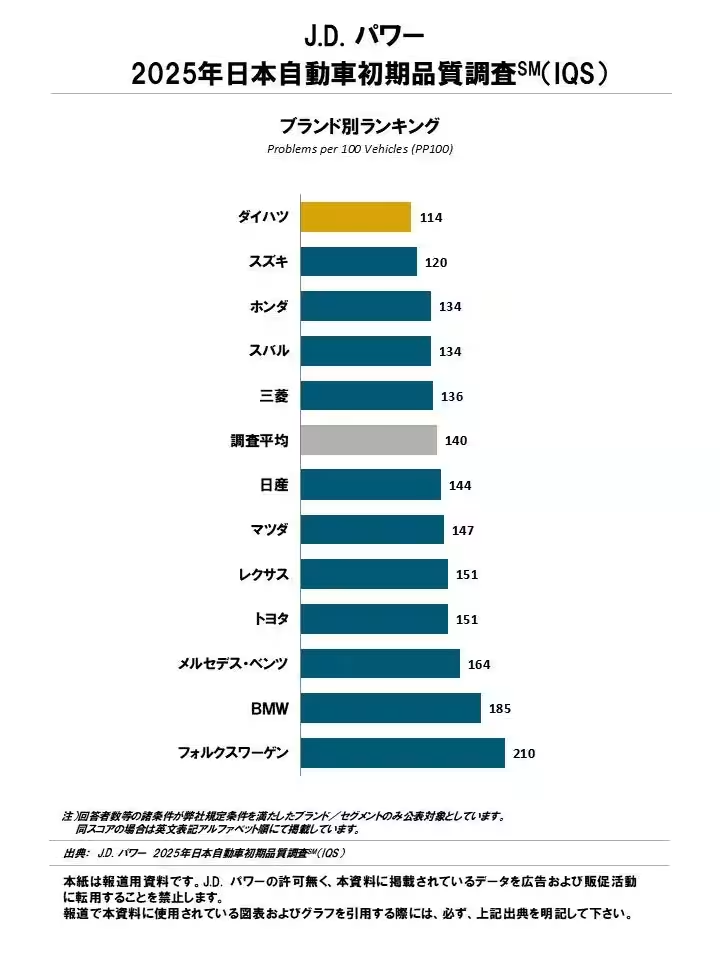
The average number of overall defect reports in this year’s study has reached 140 Problems Per 100 vehicles (PP100), marking a notable decrease of 12 points from last year's figure of 152 PP100. This reduction signals a step in the right direction, particularly after years of increasing defect reports since 2021.
Though this overall decrease is encouraging, the breakdown of defect reports highlights critical usability concerns. Issues related to vehicle design, predominantly classified as “difficult to understand/use”, comprised the largest segment of complaints, representing 108.5 PP100. Although this reflects an improvement of 9.3 points compared to the previous year, these usability concerns persist as a significant challenge for manufacturers, underlining the need for continued focus on user-centric design.
In contrast, reports pertaining to manufacturing quality defects such as “not working/broken” stood at 29.0 PP100, which is a slight 2.8 points reduction from the prior year.
Persistent Challenges in Infotainment Systems
Among the nine categories analyzed, infotainment systems continued to record the highest number of defect reports, with 28.7 PP100, despite a reduction of 2.5 points compared to the previous year. The plight of infotainment-related issues remains a key obstacle in the journey toward enhanced initial quality. The disparity between brands persists, with the lowest reporting at 18.6 PP100 and the highest at a staggering 65.2 PP100. Nonetheless, the gap has narrowed from a previous 80.0-point spread to 46.6 points, indicating some progress in addressing these disparities.
User Feedback on Common Features
The study also revealed user feedback concerning everyday equipment in vehicles. Over the past few years, concerns regarding lane departure warnings and assist systems have been prevalent, but reports have improved slightly this year, showing a decrease of 0.8 points to 3.6 PP100.
However, the most prevalent complaint this year pinpointed the cup holder, with numerous users reporting issues such as “difficult to use, poor holding capacity, or inconvenient location,” accounting for 4.1 PP100. Other notable areas of concern included complaints about seat materials being prone to wear and tear, and various controls such as the bonnet latch and ignition switch being touted as difficult to manage or poorly placed. This highlights a trend where, despite advancements in technology and support systems, minor yet frequently used features often draw the most criticism from users.
J.D. Power Awards for 2025
In conjunction with the IQS findings, J.D. Power has announced its Brand and Segment Award winners.
- - Brand Award (Overall): Daihatsu
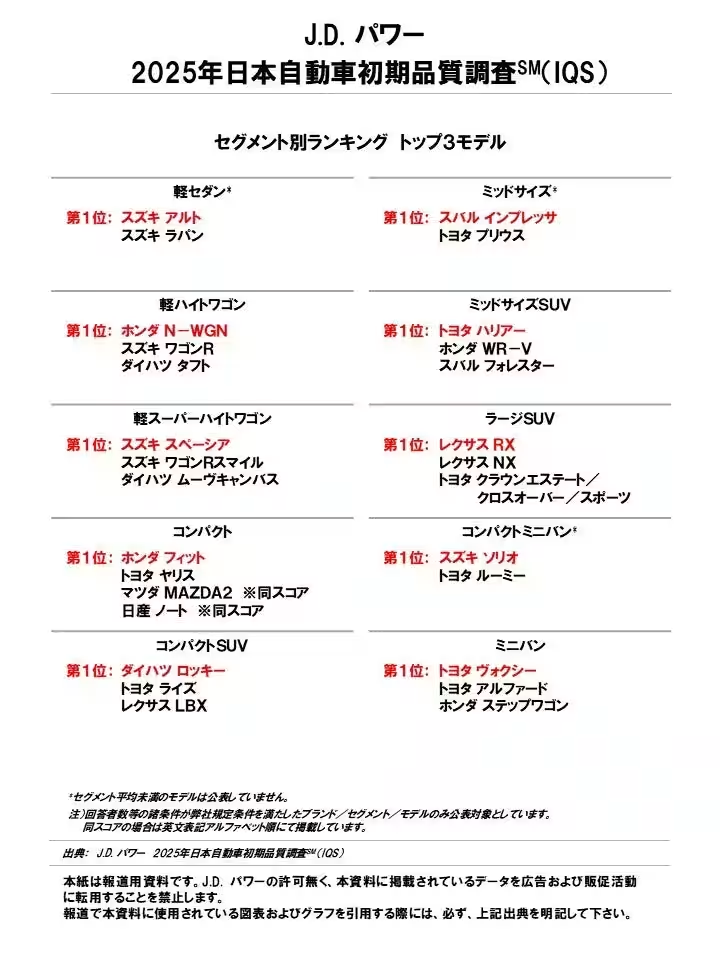
- - Segment Awards include:
- Light Height Wagon: Honda N-WGN
- Light Super Height Wagon: Suzuki Spacia
- Compact Car: Honda Fit
- Compact SUV: Daihatsu Rocky
- Mid-Size: Subaru Impreza
- Mid-Size SUV: Toyota Harrier
- Large SUV: Lexus RX
- Compact Minivan: Suzuki Solio
- Minivan: Toyota Voxy
This year, no awards were given in the luxury segment as it did not meet the company’s criteria.
Conclusion and Future Directions
The 2025 Japan Initial Quality Study sheds light on both improvements and persistent challenges within the automotive industry. Manufacturers are encouraged to address the usability issues that customers face daily, such as the design and functionality of commonplace features.
As J.D. Power continues its IQS annually, the insights gained will play a crucial role in steering manufacturers toward better products, enhancing overall customer satisfaction in the ever-evolving automotive market. The full study methodology and results can be accessed on the J.D. Power Japan website, reflecting the company's commitment to data-driven analysis and improvement in the automotive sector.




Topics Consumer Products & Retail)

【About Using Articles】
You can freely use the title and article content by linking to the page where the article is posted.
※ Images cannot be used.
【About Links】
Links are free to use.