



The Rise of Hezi Rash: A New Era of Ideological Cyber Attacks
The Rise of Hezi Rash: A New Era of Ideological Cyber Attacks
In a recent report from Check Point Software Technologies, a global leader in cybersecurity solutions, a concerning trend has been identified: the Kurdish hacktivist group known as Hezi Rash has significantly escalated its cyber offensive activities, conducting approximately 350 DDoS (Distributed Denial of Service) attacks between late August and early October 2025. This figure stands out markedly when compared to similar groups, which typically conduct between 50 and 100 attacks within such a timeframe, highlighting the group’s growing capability and ambition.
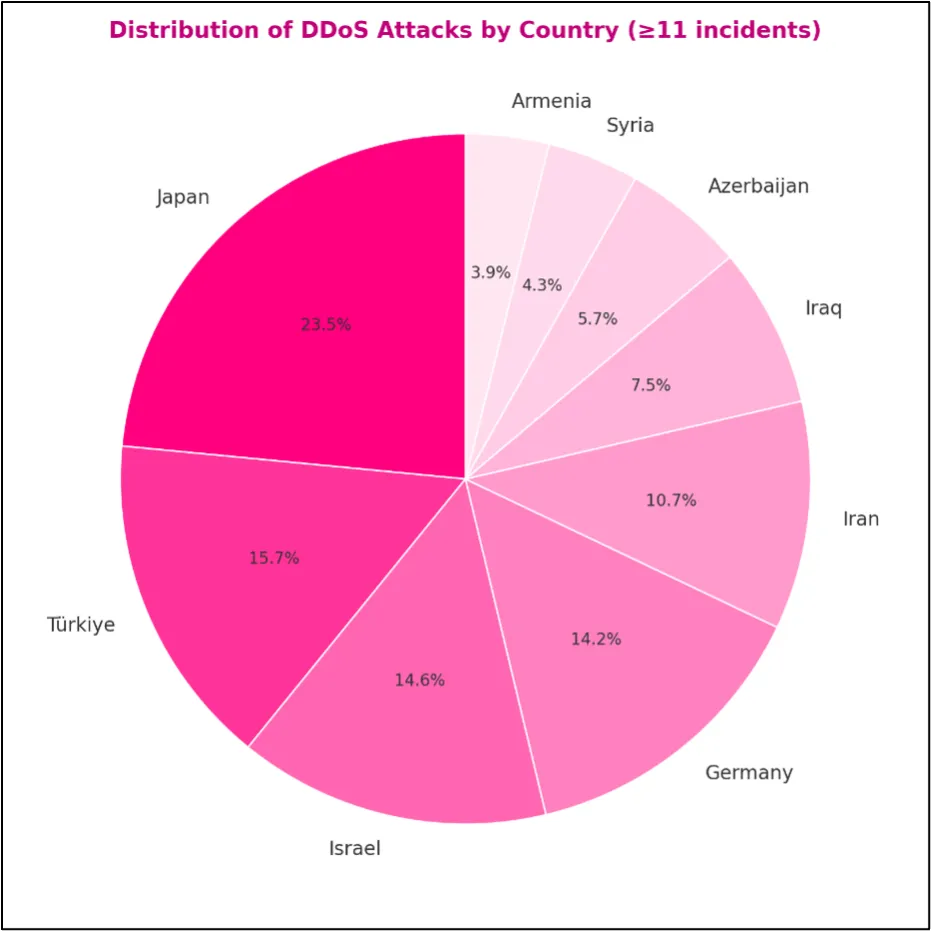
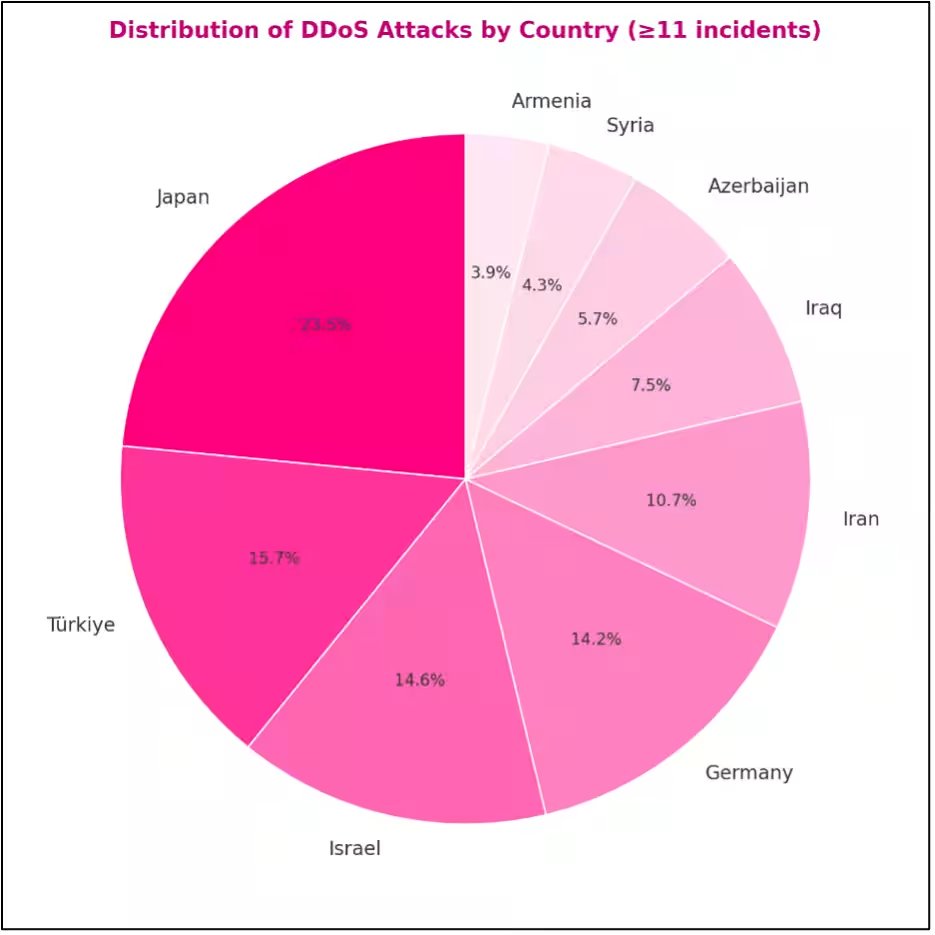
Hezi Rash, which identifies itself as part of a networked hacktivist ecosystem, has targeted nations such as Japan, Turkey, Israel, Iran, Iraq, and Germany in its operations. Notably, Japan has been subjected to 66 documented attacks; intriguingly, these assaults stem not from economic or political motivations but rather from symbolic and cultural provocations. The group's attacks serve as stark reminders of the potent intertwining of ideology and technology in contemporary cyber warfare.
Ideological DDoS Attacks on the Rise
The emergence of Hezi Rash encapsulates a pivotal transformation in hacktivism, characterized by the shift from symbolic protests to organized large-scale cyber assaults aimed at disrupting vital services and influencing public opinion. This group, now one of the most active players in the field, has weaponized DDoS tactics to disseminate nationalist and religious agendas.
For instance, in August 2025, the group executed multiple cyberattacks targeting anime studios and related platforms as retribution against a portrayal in a Japanese anime that purportedly depicted scenes of a Kurdish flag being burned. This example underscores the peculiar position of Japan as a primary target, despite the absence of extensive geopolitical conflicts with the Kurdish community. The actions of Hezi Rash signify a deliberate emphasis on the symbolic nature of their attacks, where the intent is to provoke a cultural response rather than outright political confrontation.
A Shift in Cyber Threat Landscape
According to Check Point's external risk management research team, Hezi Rash has rapidly raised its profile in the global cyber threat landscape, as evidenced by the reported 350 attacks within just a few months. Their approach signifies a strategic endeavor to gain international recognition, employing sophisticated tools and alliances to amplify their impact. While most attacks primarily cause temporary disruptions, the trend indicates an alarming shift whereby industry-grade sabotage tools, once reserved for state-sponsored actors, are now in the hands of smaller, ideologically-driven groups.
Hezi Rash is reported to leverage sophisticated platforms like DaaS (DDoS as a Service), collaborating with other hacker collectives such as New Russian and Islamic hacktivist groups. This collaboration facilitates access to tools like DDoSia and Abyssal DDoS v3, thereby exponentially increasing the scale and effectiveness of their cyber operations.
Global Implications
The phenomenon of Hezi Rash reflects a significant evolution in hacktivism amid the broader landscape of global cyber threats. Hacktivist groups today are able to autonomously escalate attacks, rapidly mobilizing participants across encrypted social channels like Telegram and X. They have updated their strategies to target national symbols and narratives, transforming online outrage into large-scale digital disruptions.
For governments and critical infrastructure entities, this evolution of hacktivism signifies a departure from traditional motivations that were largely driven by money or territorial disputes, moving into a realm where ideology and technological capability coalesce into new forms of conflict. Hezi Rash's alliances stretch across Europe, the Middle East, and Asia, with the APAC region—including Australia—facing similar risks from ideologically motivated threat actors utilizing open-source DDoS ecosystems.
Daniel Saday, a cybersecurity threat intelligence specialist at Check Point’s external risk management division, notes: "Hezi Rash embodies the next evolution of hacktivism—rapid, ideologically driven, and amplified by automation. What we are witnessing is the weaponization of attention, where symbolic events can instantaneously convert into organized global cyber attacks. To ensure safety, organizations must adopt prevention-first strategies leveraging real-time threat intelligence and AI-driven automation. The future of cybersecurity will belong to those who can detect, decide, and defend at machine speed before chaos becomes the norm."
In conclusion, the surge of attacks by groups like Hezi Rash illustrates a complex interplay of ideology, technology, and cyber warfare. As hacktivism continues to evolve, it is vital for organizations worldwide to remain vigilant and adaptive in their cybersecurity practices, ensuring that they are prepared to counter these modern threats effectively.
Topics Other)
【About Using Articles】
You can freely use the title and article content by linking to the page where the article is posted.
※ Images cannot be used.
【About Links】
Links are free to use.