



Exploring Future Energy Policies Under the 2026 New Administration: Trends and Implications
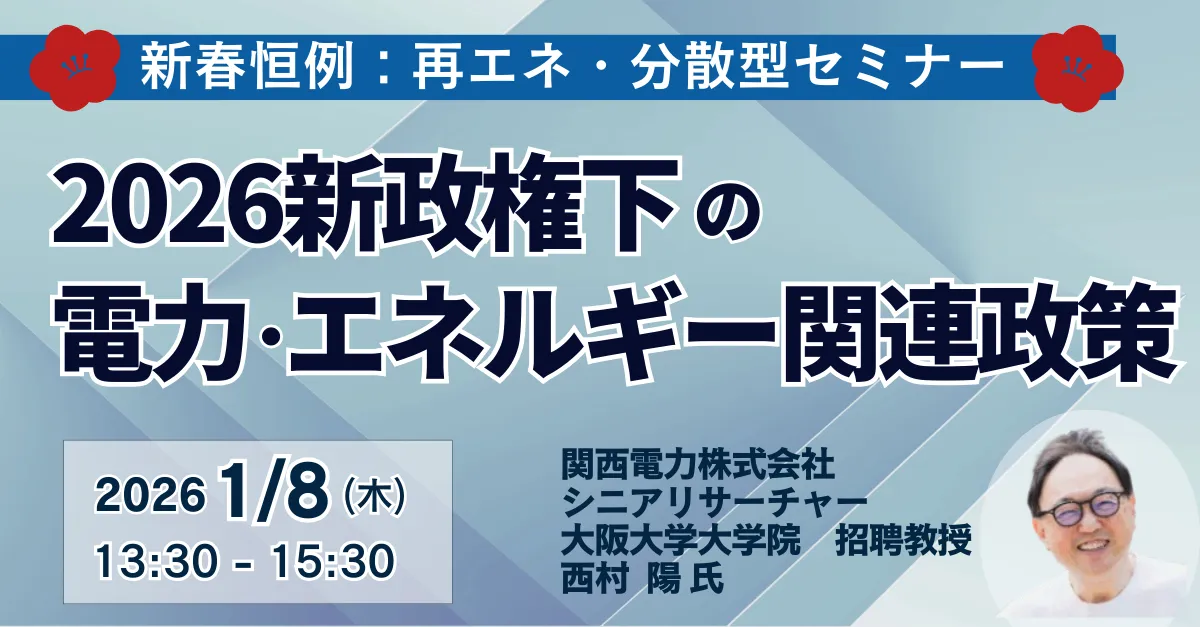
Seminar on Future Energy Policies under the 2026 Administration
JPI (Japan Planning Institute) will host a seminar on January 8, featuring prominent guest speaker Yoshinori Nishimura, a senior researcher at Kansai Electric Power Co. and a professor at Osaka University Graduate School. This event will focus on a detailed examination of the energy-related policies expected to emerge under the new administration starting in 2026.
Seminar Overview
The 2026 new administration is expected to inherit the framework established by the Seventh Basic Energy Plan and the GX Action Plan. However, significant shifts are anticipated, including a reevaluation of the incentives provided to renewable energy sources established since 2012, a review of relevant subsidies, enhanced cybersecurity measures for Chinese-made energy equipment, and initiatives to revitalize the domestic manufacturing sector in the energy industry. The seminar aims to provide insights into developments in electricity business regulations concerning power generation capacity, nuclear energy promotion, and balancing decarbonization with energy security.
Key Topics Covered
1. 2026 Energy Policy and Electricity Business Law Revisions
- What does 2026 electricity policy entail?
- Financing in the electricity sector, measures to strengthen absorption of renewable energy, and increasing retail regulations.
- The expected structure of the electricity business between 2026 and 2030.
2. Strengthening Energy and Economic Security
- How to confront China, a powerhouse in energy resources.
- Current trends in cybersecurity issues and the JC-STAR initiatives.
- The changing policies concerning Chinese-made storage batteries and Distributed Energy Resources (DER).
3. Guidelines for Stationary Storage Batteries
- How to purchase and utilize batteries in a safe and rational manner.
- Criteria for selecting and using foreign-made products.
- Strengthening industrial competitiveness through decentralized systems.
4. Perspectives on EV Business
- Advances in the examination of EV/grid collaborations (Smart Resilience Networks).
- Which businesses should prepare for the evolving landscape?
- Expanding business opportunities toward the 2030s.
5. Q&A Session
- Engage directly with the speaker and address any specific questions regarding the topics discussed.
6. Networking Event
- An opportunity for attendees to exchange business cards and establish connections with both the speaker and fellow participants, which can be beneficial for business expansion.
Participation Options
Participants can choose to attend the seminar in person, join via live broadcast, or access recorded sessions (available for two weeks, allowing multiple views at their convenience).
Seminar Fee
- - Individual: ¥37,830 (tax included)
- - From two participants onward: ¥32,830 (when applied by related companies simultaneously).
- - For those affiliated with local government entities, a special rate of ¥11,000 is available for two participants (conditions apply).
For more details and registration, please visit the seminar's official page.
Post-Seminar Support
After the seminar, participants will have the opportunity to submit questions to the speaker. Building a network between the speaker and participants is highly encouraged, serving as a valuable basis for new business ventures.
Contact Information
JPI (Japan Planning Institute)
Address: 5-2-32 Minamiazabu, Minato-ku, Tokyo 106-0047
Phone: 03-5793-9761
Fax: 03-5793-9767
Website: www.jpi.co.jp
About JPI
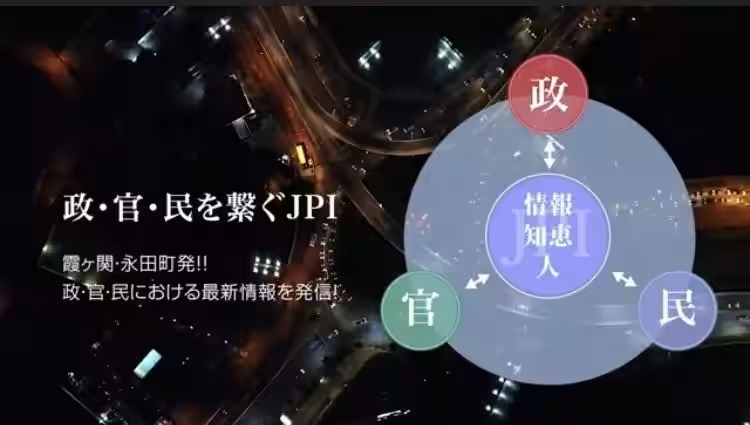
For over fifty years, JPI has been serving as a vital bridge of knowledge among government, officials, and the private sector, providing useful information through exclusive real-world seminars aimed at upper management and executives, supporting national policies, and advancing national projects.

Topics Policy & Public Interest)
【About Using Articles】
You can freely use the title and article content by linking to the page where the article is posted.
※ Images cannot be used.
【About Links】
Links are free to use.