



Do Mixed Crystals Truly Exhibit Uniformity? Exploring Composition Bias During Crystal Growth
The Quest for Uniformity in Mixed Crystals
Recent studies indicate that mixed crystals may not be as uniform as previously assumed. Traditionally, it was believed that the arrangement of elements within multi-component crystals—such as alloys or semiconductors—was random and homogeneous. However, a team of researchers from Tokyo Metropolitan University and Tottori University have conducted molecular dynamics simulations on the ion crystal AgPbBiTe3, uncovering the intricacies of its growth dynamics and the resulting compositional disparities.
Key Findings
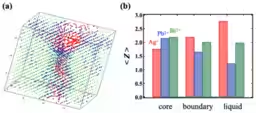
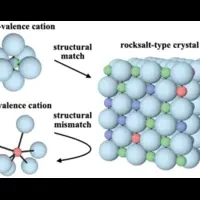
This research revealed that silver ions (Ag) are less likely to be integrated into the crystal structure compared to lead (Pb) and bismuth (Bi). Instead, Ag ions preferentially accumulate near growth interfaces and grain boundaries. Surprisingly, this phenomenon is attributed not to differences in diffusion rates but rather to the varying affinities between local liquid structures and crystal formations.
During the crystallization process, the distribution of ions becomes decidedly non-uniform. Specifically, Ag ions tend to remain in the liquid phase or at the interface rather than being incorporated into the internal crystal structure. This is crucial, as it suggests that the growth process itself plays a vital role in how element distribution is ultimately determined.
Experimental Confirmation
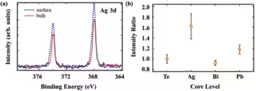
To validate the simulation results, the team analyzed samples of AgPbBiTe3 using X-ray photoelectron spectroscopy. To compare, they examined the composition of the surface versus the internal regions of the crystals. The findings supported their predictions—higher concentrations of Ag were detected near grain boundaries, mirroring the behavior observed in simulations.
Understanding Multi-component Crystals
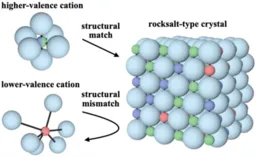
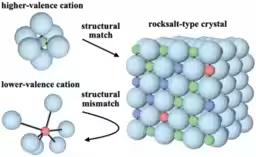
Multi-component crystals consist of multiple elements sharing the same crystal lattice. While prior studies assumed that the elements entered the crystal lattice randomly, the crystallization process introduced a selection mechanism that favors certain ions based on their local structural compatibility with the crystal. This discovery challenges the conventional understanding of crystal growth by highlighting the selective incorporation of ions during the crystallization process.
Implications for Material Design
The critical takeaway from this research is that the compositional heterogeneity of multi-component crystals arises not post-crystallization, but during the growth phase. This offers new insights into designing materials with desired properties. By manipulating crystal growth conditions, researchers can potentially create materials with uniform element distributions or intentionally introduce specific elemental biases.
Furthermore, this understanding extends beyond AgPbBiTe3, laying the groundwork for future studies across various multi-component crystalline materials. The implications for technology and materials science could be significant, especially in fields focused on high-performance and functional materials.
Conclusion
In summary, the detailed investigation into the dynamics of crystal growth reveals compelling evidence that uniformity in mixed crystals may be a misperception. As research continues to unfold, the knowledge gained from the studies conducted by Ishikawa and colleagues can potentially revolutionize how multi-component crystals are approached in both academic and industrial applications. This work emphasizes the importance of not only the elemental combinations in these materials but also the processes that lead to their formation.
Topics Consumer Products & Retail)





【About Using Articles】
You can freely use the title and article content by linking to the page where the article is posted.
※ Images cannot be used.
【About Links】
Links are free to use.