



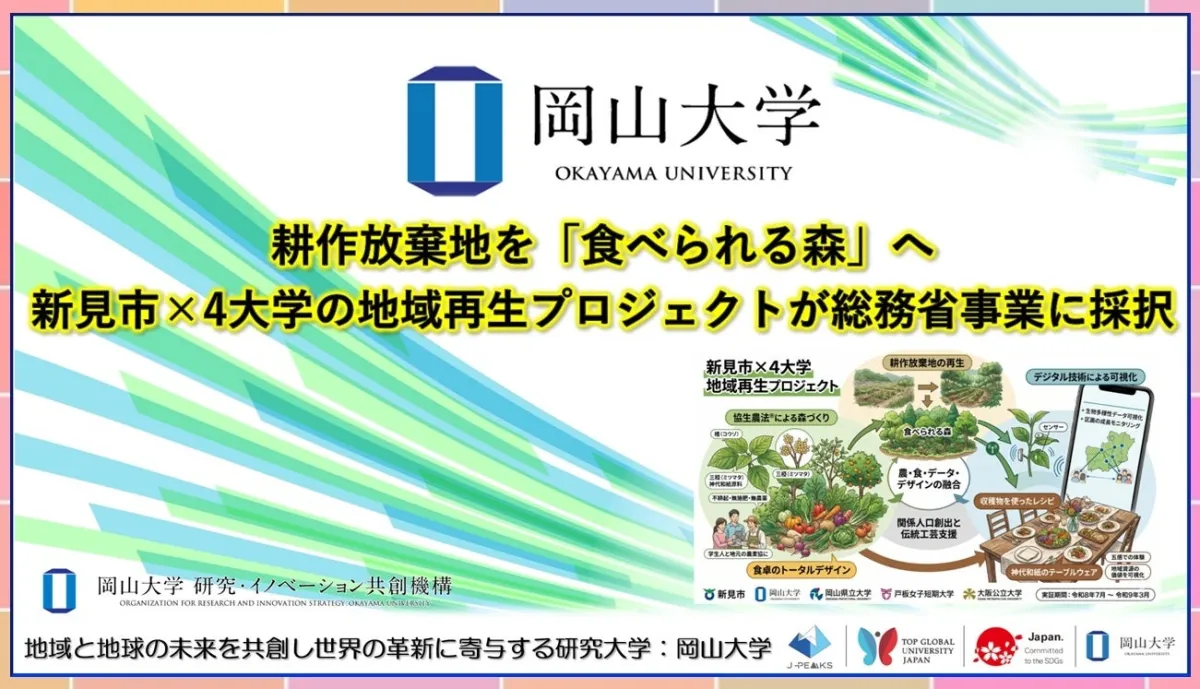
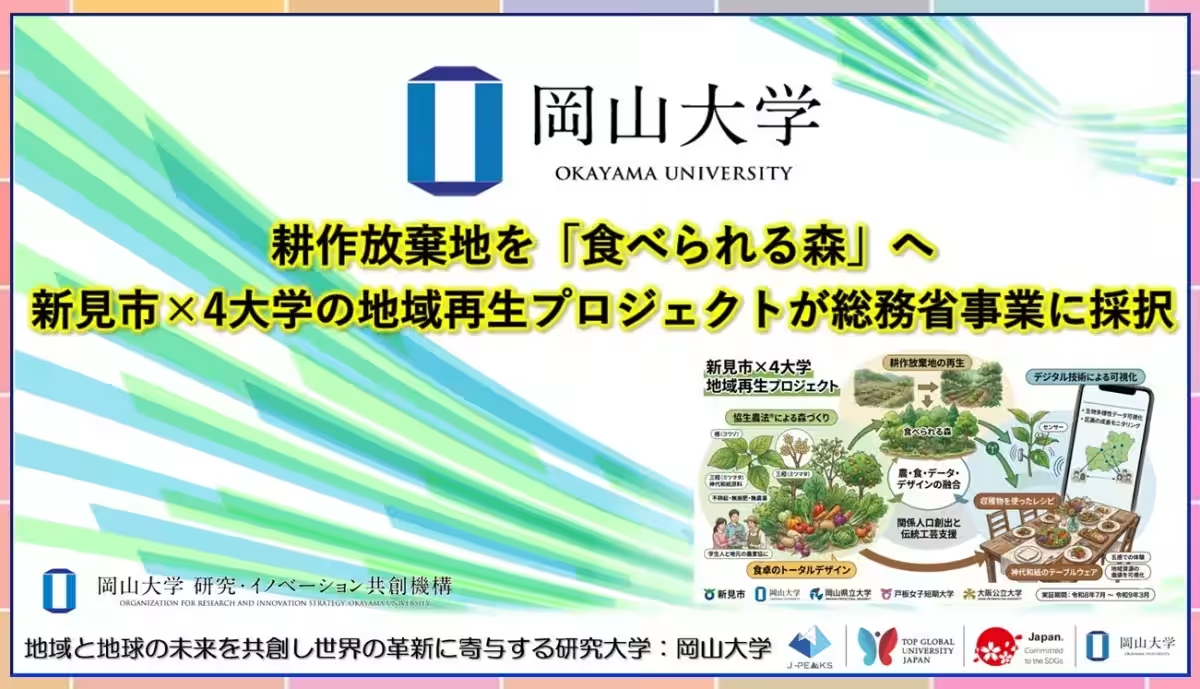
Okayama University Launches Innovative Local Ecosystem Project in Niimi City
Transforming Abandoned Land into an Edible Forest: A Collaborative Project in Niimi City
Okayama University is excited to announce its recent acceptance into a groundbreaking initiative aimed at revitalizing abandoned farmland in Niimi City. Partnering with Okayama Prefectural University, Toita Women’s Junior College, and Osaka Metropolitan University, this project titled "Transforming Abandoned Land into a Valuable Ecosystem: A Niimi City Model through Data, Design, and Coexistence Farming" was recognized under the Ministry of Internal Affairs and Communications' fiscal 2023 model project for hometown revitalization.
The initiative aims not only to reclaim neglected agricultural areas but also to foster a diverse and sustainable ecosystem that resonates with the community. As part of a broader effort to combat demographic decline and an aging population, this project aligns with the values of preserving traditional crafts like Kōjiro Washi paper. By securing raw materials for this ancient craft and encouraging ongoing engagement between urban students and local residents, the program aspires to create a sustainable model showcasing the importance of community and nature.
Project Components
The project will consist of three main activities:
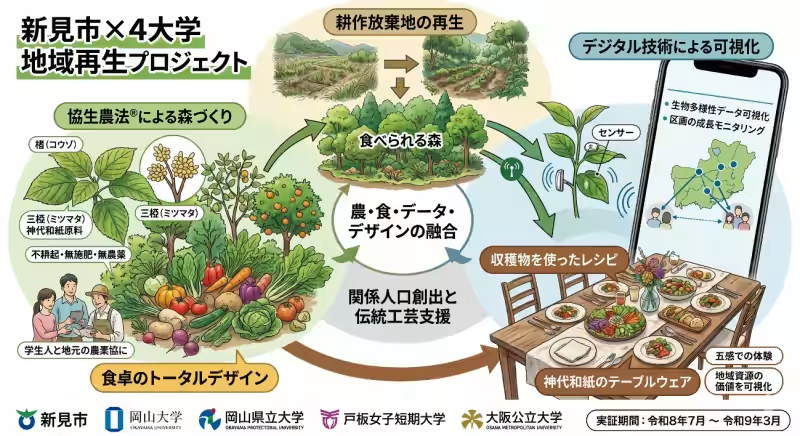
1. Cultivation of an Edible Forest: This innovative approach will incorporate the principles of coexistence farming, a registered trademark of Sakurashinzie, focusing on growing a diverse range of plants without tillage, fertilizers, or pesticides. By planting vegetables, fruits, and the essential Kōzo and Mitsumata plants used for Kōjiro Washi, the areas will be transformed into engaging spaces that celebrate biodiversity and create enjoyable interactions among people and nature.
2. Utilization of Digital Technology: To enhance connectivity and participation from a distance, the data science department at Okayama University will develop a remote farmland monitoring application. This tool will visualize biodiversity data and farmland status, allowing users in urban environments to appreciate the changes and growth in the plots they engage with, thus closing the psychological distance between them and the project.
3. Total Table Design through Regional Resource Enhancement: By harnessing the harvested products for recipe development and utilizing Kōjiro Washi for tableware design, the initiative will present regional assets as sensory experiences. This aspect aims to create a new communication model that bridges the urban and rural divide.
Collaborative Network
The project will be supervised by Niimi City, which will also present local challenges for resolution. Central coordination will be provided by Okayama University, focusing on data science and inter-university cooperation. Each partnering institution will contribute their expertise: Okayama Prefectural University will handle product design and public outreach regarding washi, Toita Women’s Junior College will focus on total table design and recipe development, while Osaka Metropolitan University will lend its agricultural insights and help assess business models.
The practical implementation of this project is scheduled from July 2026 until March 2027, primarily in the Kamigō Area of Niimi City. Activities will integrate fieldwork during summer and spring while promoting ongoing engagement and collaboration within the community to address regional challenges and construct a sustainable social implementation model.
As an institution committed to practical learning through inter-university collaboration like the Coexistence Alliance, Okayama University looks forward to continuing its mission of promoting symbiotic living environments and regional revitalization. We encourage everyone to keep an eye on our exciting developments as a core research university dedicated to open engagement with the community.
For more details, you can visit the official pages of Okayama University and the referenced institutions for updates on this thriving initiative.
Topics Other)
【About Using Articles】
You can freely use the title and article content by linking to the page where the article is posted.
※ Images cannot be used.
【About Links】
Links are free to use.