




Strengthening Human Resource Development for Sustainable Growth in the Gaming Industry
Strengthening Human Resource Development for Gaming
The Computer Entertainment Suppliers Association (CESA), based in Shinjuku, Tokyo, has initiated the "Game Creator Skills Verification Project" as part of a broader program aimed at enhancing the cultural and artistic foundation for creators. This initiative, set to commence in 2025, is crucial in addressing the ongoing transformation of the Japanese content industry toward international expansion and innovation.
In July 2026, the Japanese government officially recognized content development as one of the 17 strategic sectors under the "Japan Growth Strategy". Importantly, it aims to achieve overseas sales of ¥20 trillion (approximately $188 billion) by 2033, positioning this industry as a cornerstone of Japan's economic future. Notably, the gaming industry accounts for about 60% of these overseas sales, with revenues reaching ¥3.4 trillion. This statistic highlights the critical need for robust talent acquisition and development strategies.
Project Goals and Collaboration
To ensure the gaming industry continues to thrive, it is essential to cultivate a workforce capable of competing on a global scale. The Game Creator Skills Verification Project will facilitate collaboration between the gaming industry and educational institutions to identify and categorize the skills required for game development. This collaborative effort will result in the creation of a comprehensive "skill map".
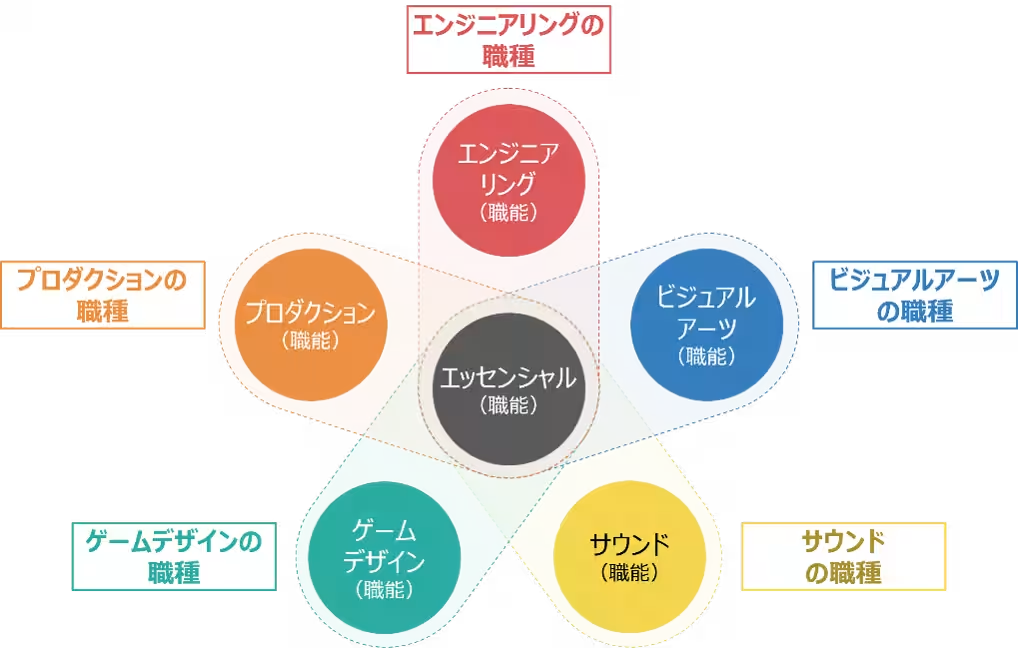
This skill map will not only support educational curriculum design but will also help students and professionals shape their learning and career paths. It will serve as a resource for companies as they develop their talent training programs. To oversee this endeavor, a Steering Committee, comprising experts from both the gaming industry and academia, will be established. This committee will categorize game development roles into six key domains: Engineering, Production, Visual Arts, Game Design, Sound, and Essential Skills, with working groups formed from seasoned developers in each specialization.
Utilizing the Skill Map
The project's ultimate aim is to establish a universally applicable human resource development framework that both educational institutions and individuals in the gaming sector can leverage. Here are some of the anticipated benefits of the skill map:
- - For Educational Institutions:
- Enhanced curriculum structure
- Optimal educational guidance based on student skill assessments
- Programs designed for reskilling
- - For Students and Professionals:
- Alignment of skills with suitable job roles
- Effective skill promotion to potential employers
- Self-assessment opportunities through skill validation examinations
- - For Companies:
- Designing training and development programs
- Providing guidance for performance reviews and promotions
By engaging with various stakeholders, the project aims to continuously evolve the skill map to reflect industry feedback and technological advancements in game development. Long-term goals include potential certifications and extensive training programs, solidifying support for the industry's talent cultivation initiatives.
Timeline and Future Directions
The initiative outlines a detailed timeline with specific milestones:
- - 2026:
- Preparation for validation of utilization within educational institutions.
- - 2027:
- Collaborative validation of the skill map in partnership with educational institutions, followed by enhancements based on the findings.
- - Mid to Long Term:
- Ongoing updates to the skill map to reflect feedback and changes in technology and development environments.
- Potential rollouts of certification programs and training initiatives.
For further details on the task force structure and the Cultural and Artistic Foundation Enhancement Fund"s initiatives, please visit the official website.
Contact Information
For inquiries about this initiative, please reach out to:
Computer Entertainment Suppliers Association (CESA) Secretariat
[email protected]

Topics Other)







【About Using Articles】
You can freely use the title and article content by linking to the page where the article is posted.
※ Images cannot be used.
【About Links】
Links are free to use.