



Advanced Robotic Arm Capable of Grasping Transparent and Shiny Objects Efficiently
Revolutionary Grasping Technology
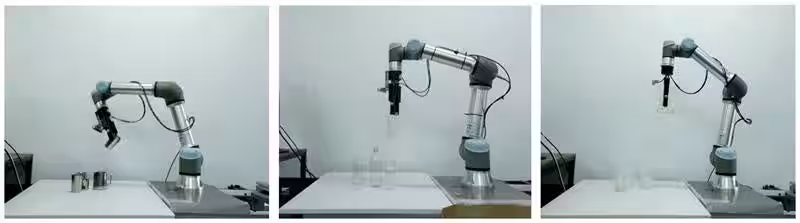
In a remarkable innovation, researchers at the Tokyo University of Science have developed a technology allowing robotic arms to grasp transparent and shiny objects with unprecedented accuracy and speed. This advancement is crucial for automating production processes, leading to reduced task completion times and improved productivity in various industries.
Research Overview
The study, led by Associate Professor Shogo Arai and graduate student Ginga Kennis from the Department of Mechanical and Aerospace Engineering, tackled the challenge that traditional 3D measurement methods face with transparent and glossy materials. The team created a solution that utilizes a single camera image to estimate the shape of such objects, overcoming prior limitations that hindered automated grasping.
Methodology and Innovation
The conventional techniques struggled with the optical properties of materials, where light reflection and transmission caused instability in depth measurement. To address this, the researchers combined semantic segmentation of RGB images that are less influenced by optical properties with a method called Shape from Silhouette, which reconstructs shapes from multiple view contours.
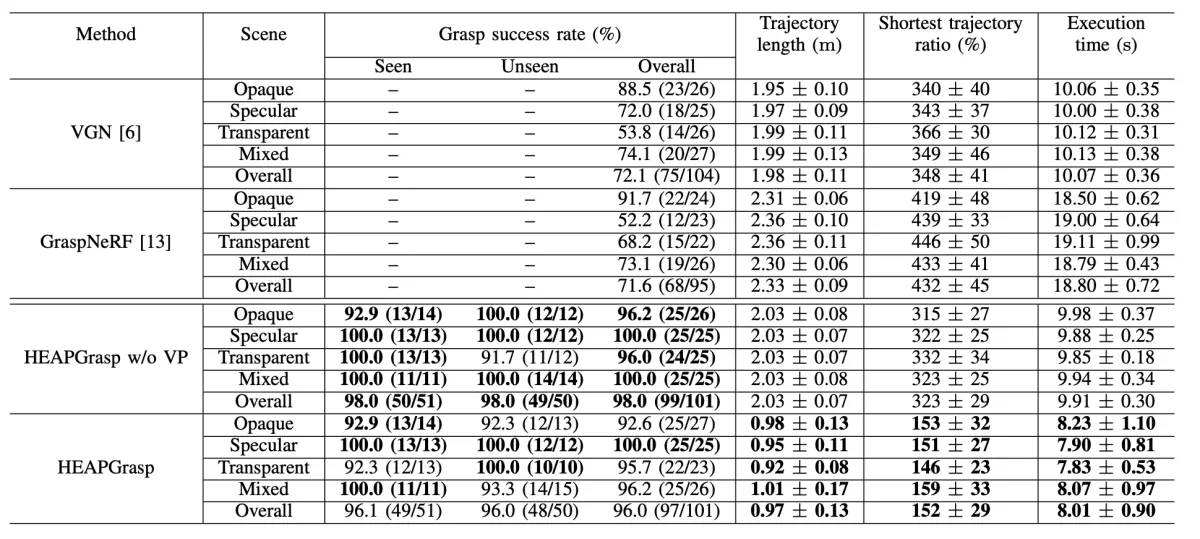
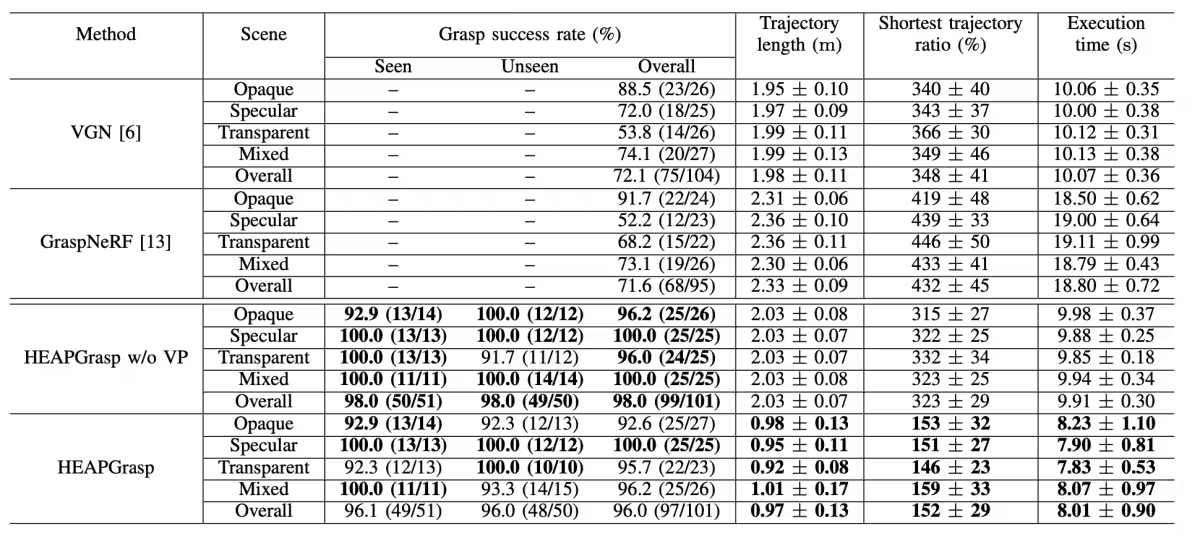
To optimize the balance between measurement accuracy and camera movement distance, the team introduced a cost function that helps automate the decision-making process of shooting positions and movement paths. This innovative approach led to a striking success rate of 96% for grasping various objects during real-world tests, which was a significant improvement over previous methods.
Performance Metrics
Comparative testing revealed substantial advancements: the newly developed system reduced camera movement distance by 52% and overall handling time by 19% compared to existing baseline methods that struggled with similar challenges. This achievement reflects not only technological advancement but also the potential for operational excellence in manufacturing and logistics.
Implications for Automation
This research paves the way for the automation of processes that previously relied heavily on human intervention, particularly in handling difficult-to-manage materials like transparent trays and glossy bags. As production settings aim to reduce reliance on manual labor and enhance efficiency, the developed system represents a significant breakthrough.
Future Prospects
Associate Professor Arai expressed aspirations for future applications. He emphasized the importance of creating systems that can adapt to various conditions and demands in manufacturing environments, further streamlining operations and boosting productivity. The vision includes systems that can easily integrate into existing setups while accommodating a wide variety of tasks.
Acknowledgments and Future Studies
The findings of this research are set to be published in the upcoming January issue of the prestigious journal "IEEE ROBOTICS AND AUTOMATION LETTERS" and will be presented at the 2026 IEEE International Conference on Robotics & Automation (ICRA 2026), marking its global significance.
In conclusion, this work not only enhances the robustness of robotic grasping technologies but also promises a transformative impact on manufacturing and logistics through improved automation capabilities, positioning the scientific community for further advancements in robotics and artificial intelligence.
Related Terms
- - 3D Measurement: A methodology to ascertain the position and shape of objects in three-dimensional space using cameras and sensors.
- - Grasp Planning: The process that determines how robots can stably grasp and handle various objects based on shape and positioning data.
- - Hand-Eye Configuration: A system where cameras mounted on robotic arms allow the arm’s actions to be guided by visual feedback.
Reference
This study highlights the evolving landscape of robotics, demonstrating that even materials once considered challenging for automation can now be managed effectively, thanks to interdisciplinary research and technological innovation.
Topics Consumer Technology)
【About Using Articles】
You can freely use the title and article content by linking to the page where the article is posted.
※ Images cannot be used.
【About Links】
Links are free to use.