



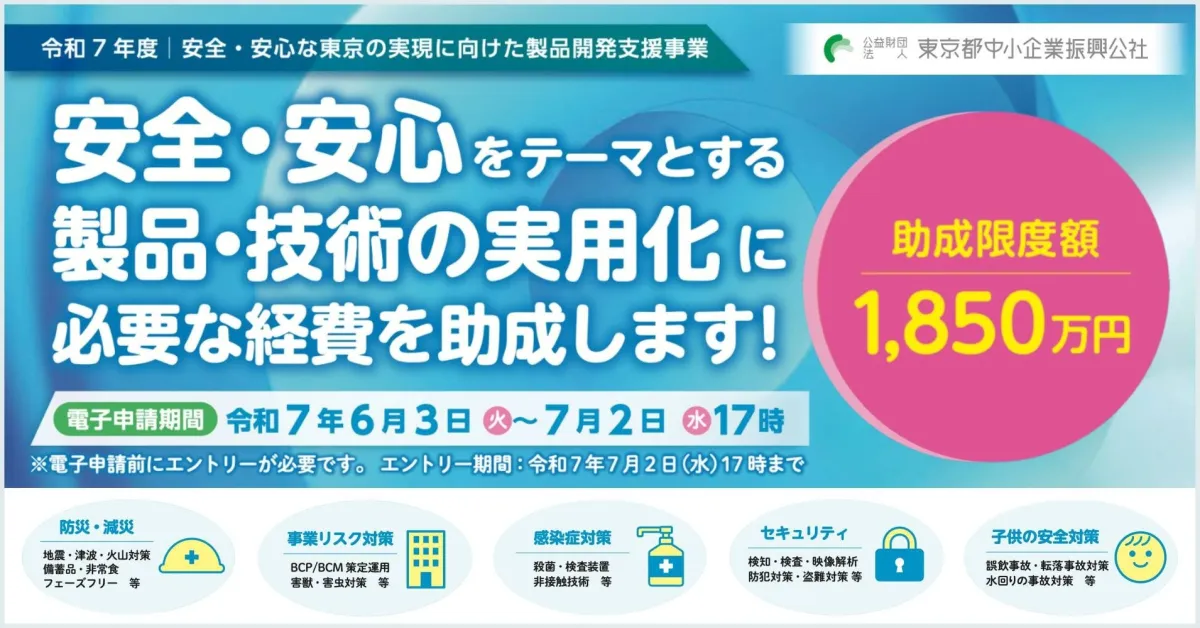
Tokyo's New Initiative Supports Safe Product Development with Up to ¥18.5 Million in Subsidies
Supporting Safe Product Development in Tokyo
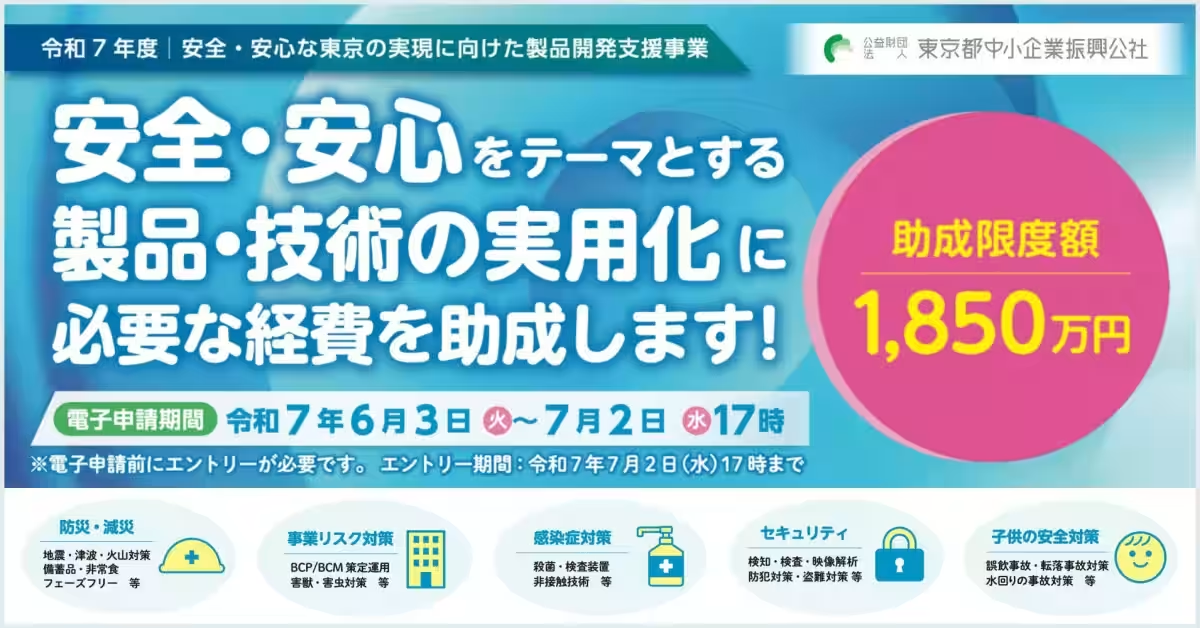
Tokyo's Small Business Promotion Corporation (Tokyo Shoko Kaikan) is taking significant steps to enhance safety and security within its industries. They have launched a new product development support project dubbed "2025 Tokyo Safety and Security Product Development Support Project," aimed at backing small and medium-sized enterprises (SMEs) based in Tokyo. As part of this initiative, which runs until July 2, 2025, up to ¥18.5 million can be available to applicants.
Addressing Emerging Threats
In recent years, people have become increasingly aware of the rising rate of natural disasters, sophisticated cyberattacks, and random crimes and accidents. As these threats multiply, they create an urgent need for effective crisis management solutions. This new funding program is specifically designed to encourage the development and improvement of superior crisis management products by local SMEs, ultimately achieving a safer Tokyo.
Key Features of the Funding Program
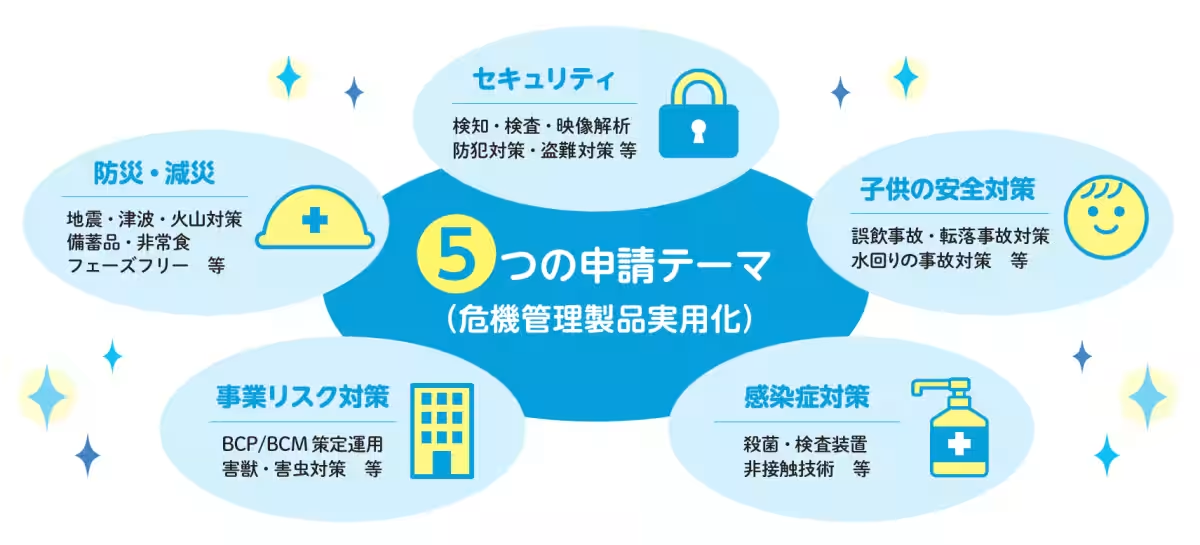
1. Diverse Business Areas Supported: The program accepts submissions across various sectors, including disaster preparedness and mitigation, child safety measures, business risk management, and security.
2. Financial Assistance of Up to ¥18.5 Million: Eligible businesses can receive funding for numerous expenses involved in product development, which may include direct labor costs up to ¥10 million. This support spans the entire process, from product development and improvement to public promotion.
3. Post-Project Support: After projects conclude, selected companies will have opportunities to showcase their crisis management products at major exhibitions, such as the Tokyo Big Sight's Crisis Management Industry Exhibition. Additionally, there will be a catalog published documenting real-world examples of successful crisis management products.
Eligibility Criteria for Applicants
To qualify for this program, companies must meet the following conditions:
- - Be officially registered as SMEs in Tokyo with a physical office or branch as of July 1, 2025, and have been operational for over a year.
- - Plan to continue their business in Tokyo while utilizing the outcomes of the funded project.
Applicable Fields for Subsidy Applications
Companies can submit applications across various themes, including but not limited to:
- - Disaster Prevention and Mitigation: Earthquake, tsunami, fire disaster management.
- - Health Risk Management: Infection prevention and detection technology, non-contact technology.
- - Security: Surveillance systems, detection and analysis technology.
- - Child Safety Measures: Ensuring the safety of children in various environments.
The program greatly emphasizes integrating phase-free solutions—products and services that serve users well in both daily life and emergencies.
Proposed Submission Phases
The funding initiative is divided into two phases:
1. Development and Improvement Phase (Mandatory): Lasting from November 1, 2025, to July 31, 2026. Companies can apply for grants up to ¥15 million (covering two-thirds of costs) for materials, tools, and direct labor expenses involved in creating and enhancing their products.
2. Promotion Phase (Optional): This phase begins immediately after the completion inspection of the development. Additional funding of up to ¥3.5 million can be provided for exhibition participation and promotional activities.
Support in Preparation for Application
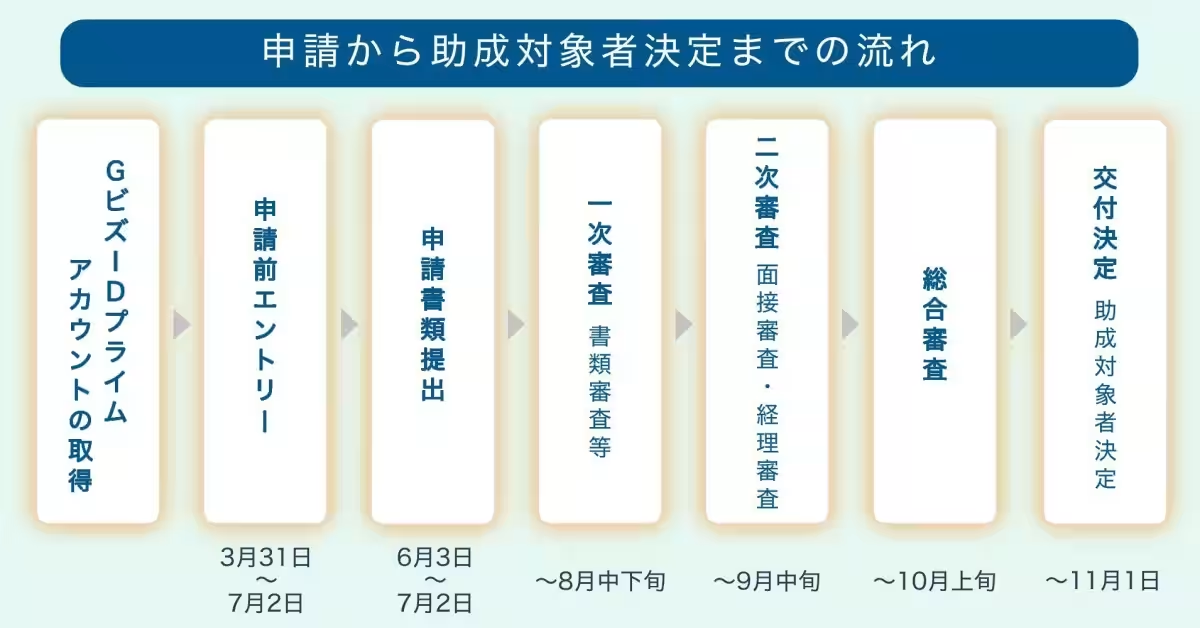
The program also emphasizes the importance of support leading up to applications. Companies can participate in pre-application seminar sessions, and the assistance includes expert consultations, available for up to eight times per company, free of charge. Early entries are available on the official Tokyo Shoko Kaikan website.
Conclusion
This initiative embodies Tokyo's commitment to building a resilient urban environment that protects its residents. It encourages local SMEs to take part in boosting public safety and aims for a safer city overall. For further details, applicants are encouraged to visit the website or contact the relevant departments via phone or email.
Topics Business Technology)
【About Using Articles】
You can freely use the title and article content by linking to the page where the article is posted.
※ Images cannot be used.
【About Links】
Links are free to use.