



Regional Variations in Pest Damage Risks: Insights from the Nationwide Survey on Wildlife Encounters
Understanding Pest Damage Across Different Regions in Japan
In an extensive survey conducted by Kujyo Zaurus, a pest control company, findings revealed significant differences in wildlife pest encounters based on regional factors in Japan. The research focused on individuals aged 20 to 70 who experienced pest-related problems at home within the last three years. The aim was to assess the types of pests encountered and the seasonal variations in these issues.
Introduction to Pest Concerns
Many homeowners may recall unsettling occurrences like odd noises from the attic or mysterious foul odors in their living spaces, which could indicate the unwelcome presence of wildlife pests. However, the nature of these pest issues varies widely based on geographic regions and environmental conditions.
The survey was conducted from February 26 to 27, 2026, utilizing internet-based methodologies with a sample size of 1005 respondents. Key findings show that more than 80% of participants have endured recurring pest issues, underlining the necessity for long-term preventive strategies against wildlife infiltration.
Regional Challenges Revealed
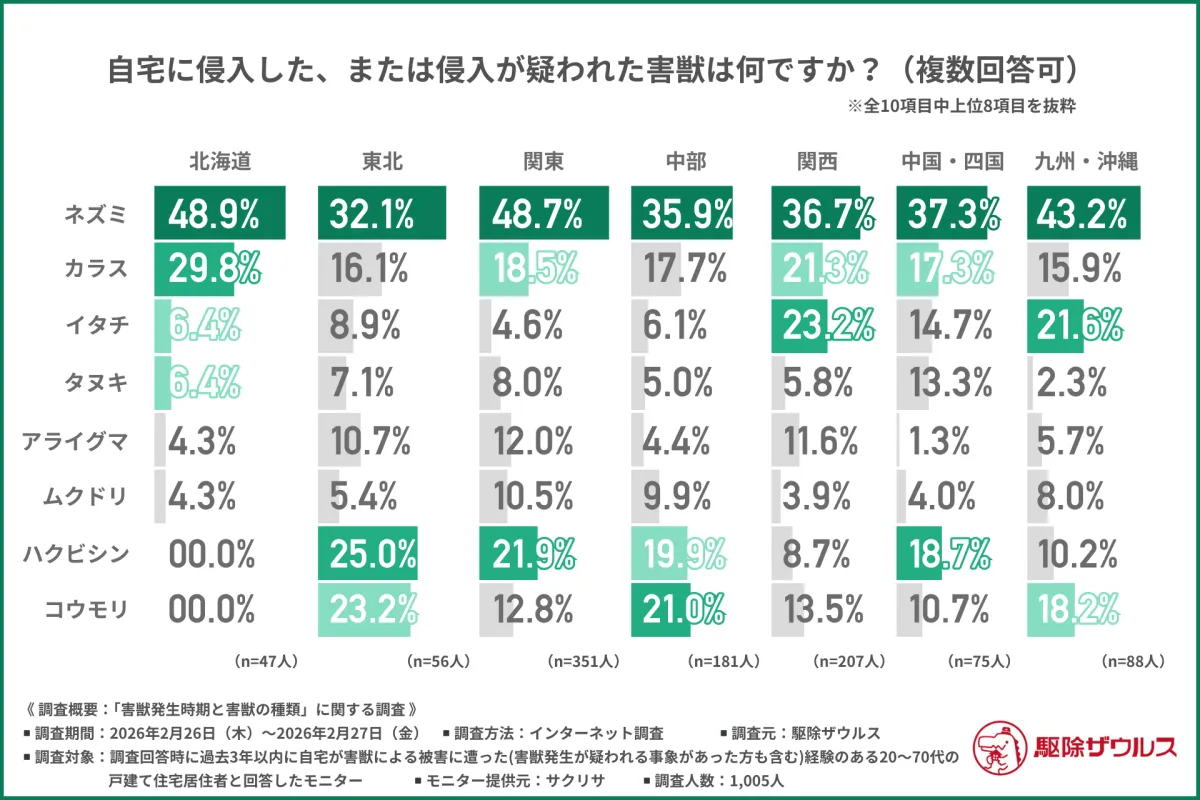
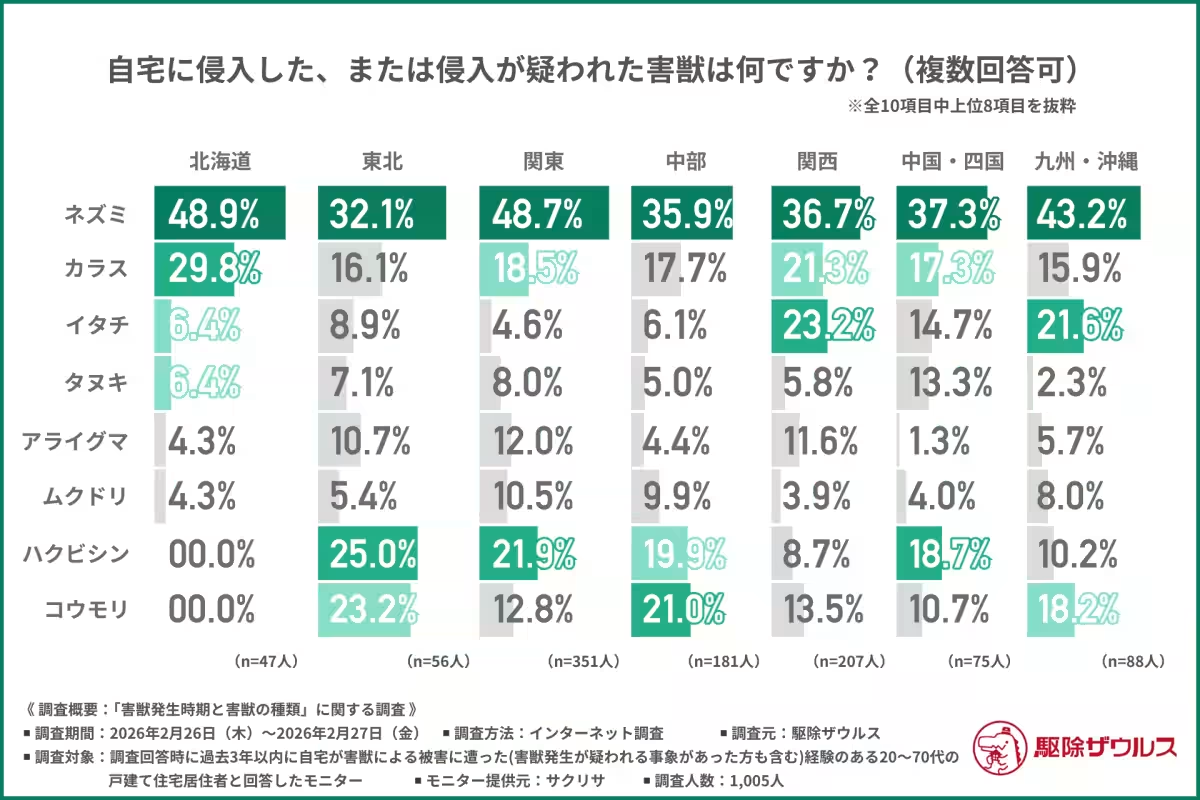
Respondents identified mice as the most prevalent pest across every region, with the following findings:
- - Hokkaido: Mice (48.9%), Crows (29.8%), Weasels (6.4%)
- - Tohoku: Mice (32.1%), Civets (25%), Bats (23.2%)
- - Kanto: Mice (48.7%), Civets (21.9%), Crows (18.5%)
- - Chubu: Mice (35.9%), Bats (21%), Civets (19.9%)
- - Kansai: Mice (36.7%), Weasels (23.2%), Crows (21.3%)
- - Chugoku & Shikoku: Mice (37.3%), Civets (18.7%), Crows (17.3%)
- - Kyushu & Okinawa: Mice (43.2%), Weasels (21.6%), Bats (18.2%)
From the data, it's evident that mice pose the most considerable threat nationwide. However, distinct patterns emerge between regions, such as the prominence of weasels in Western Japan and civets in Eastern Japan.
Seasonal Awareness of Pest Activities
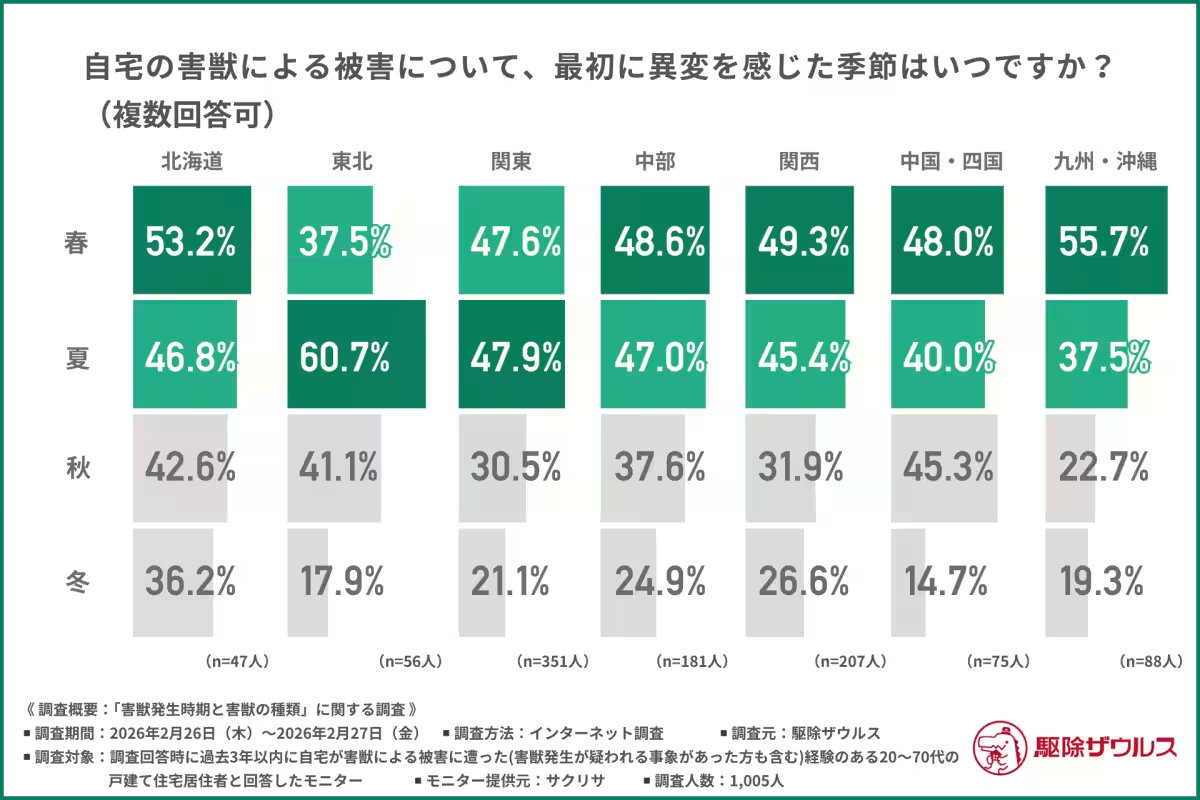
In terms of the timing of pest encounters, the survey indicated:
- - Spring: 48.6%
- - Summer: 46.4%
- - Fall: 33.6%
- - Winter: 22.8%
Regionally, the data showcases that spring and summer are critical times for pest emergence, which correspond with the natural breeding cycles of many wildlife species. Notably, the survey highlighted spring as a key season when pests like weasels enter homes looking for suitable nesting environments.
Common Entry Points and Signs of Invasion
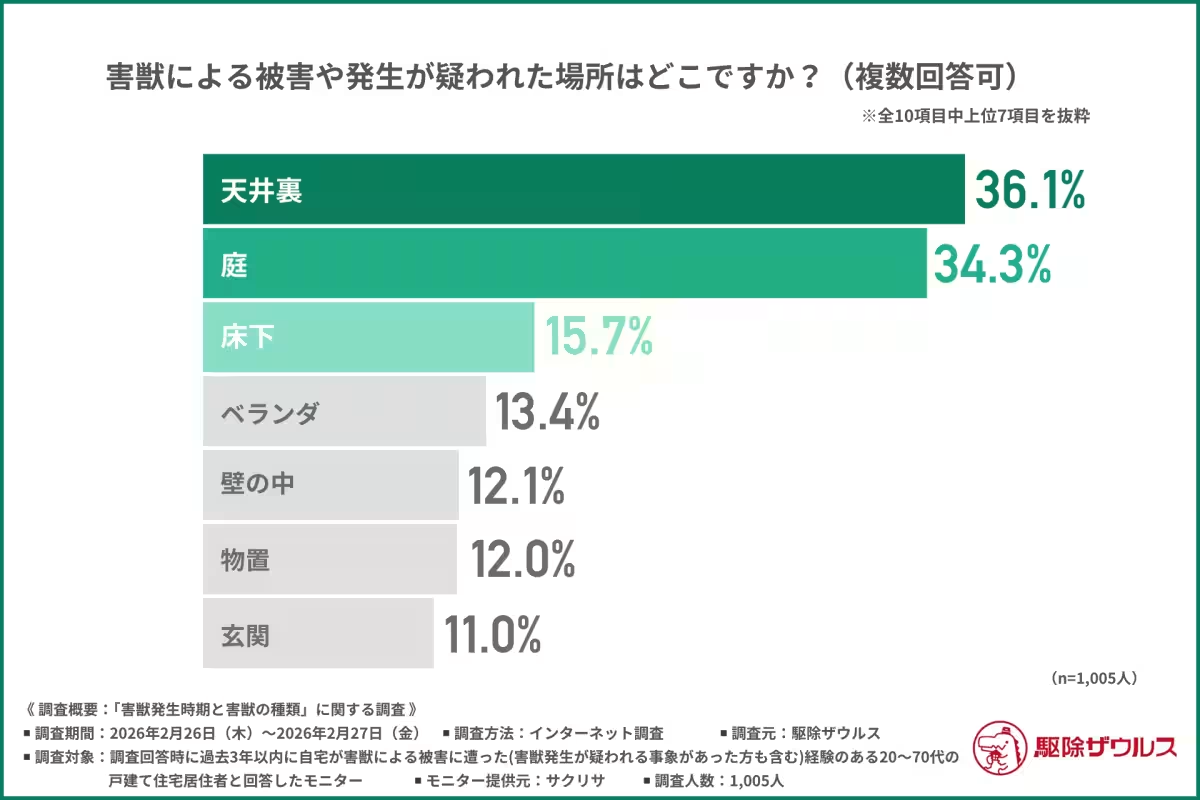
Respondents frequently reported that infestations primarily occurred in:
1. Attics (36.1%)
2. Gardens (34.3%)
3. Crawl spaces (15.7%)
The prominence of attic and crawl space invasions illustrates that pests prefer concealed, secure environments. Additionally, the survey identified common signs indicating a pest issue, including:
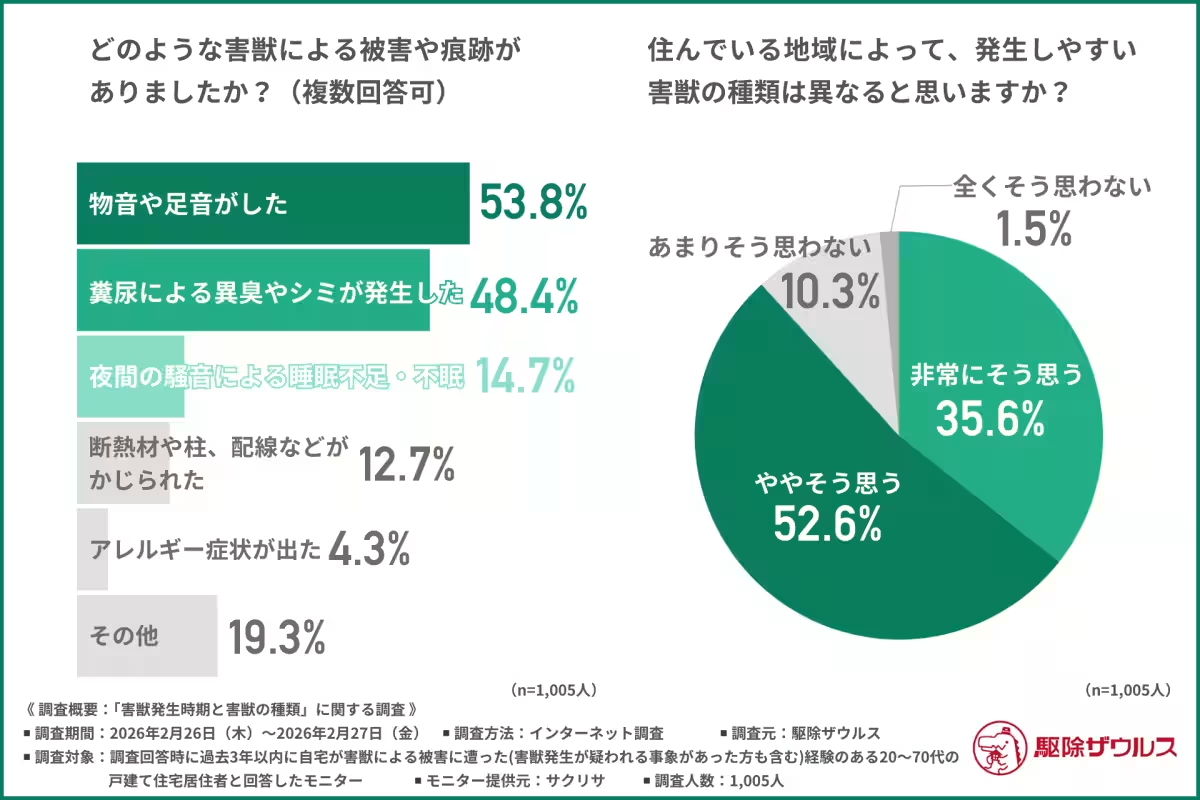
- - Notable noises or footfalls (53.8%)
- - Odors or stains from urine and feces (48.4%)
- - Sleep disturbances due to nocturnal activity (14.7%)
This highlights the pests' impact not only on hygiene and environmental quality but also on human health and wellbeing, with a significant number of respondents experiencing sleep disruption as a result of pest activity.
Awareness of Regional Differences in Pest Types
An overwhelming 90% of participants indicated awareness that varying regions harbor distinct pest populations that can cause damage. This understanding emphasizes the critical need for localized strategies in pest management tailored to the specific challenges posed by the unique wildlife of each area.
Recurring Infestations as a Persistent Problem
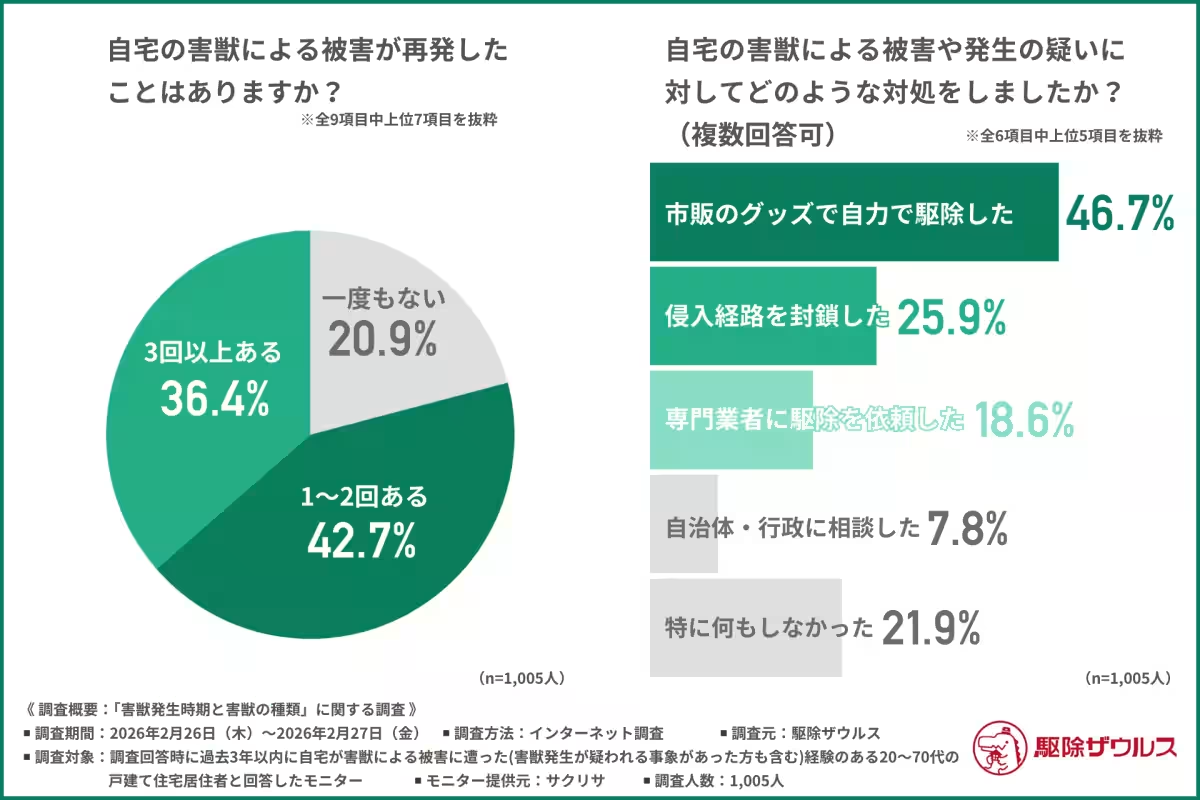
The survey found that nearly 80% of participants had faced recurring pest issues, with 42.7% admitting to experiencing it 1-2 times and 36.4% acknowledging three or more incidents. This alarming statistic indicates that once pests invade a home, complete eradication proves challenging without ongoing preventative measures.
Approaches to Pest Control
When asked about their methods for dealing with pest invasions, respondents commonly employed the following tactics:
1. DIY pest control using commercial products (46.7%)
2. Sealing entry points (25.9%)
3. Hiring professional exterminators (18.6%)
While many have attempted self-remedies, the high rate of recurrence calls into question the effectiveness of these measures and indicates a reliance on professional guidance may yield more consistent results.
The Importance of Professional Help
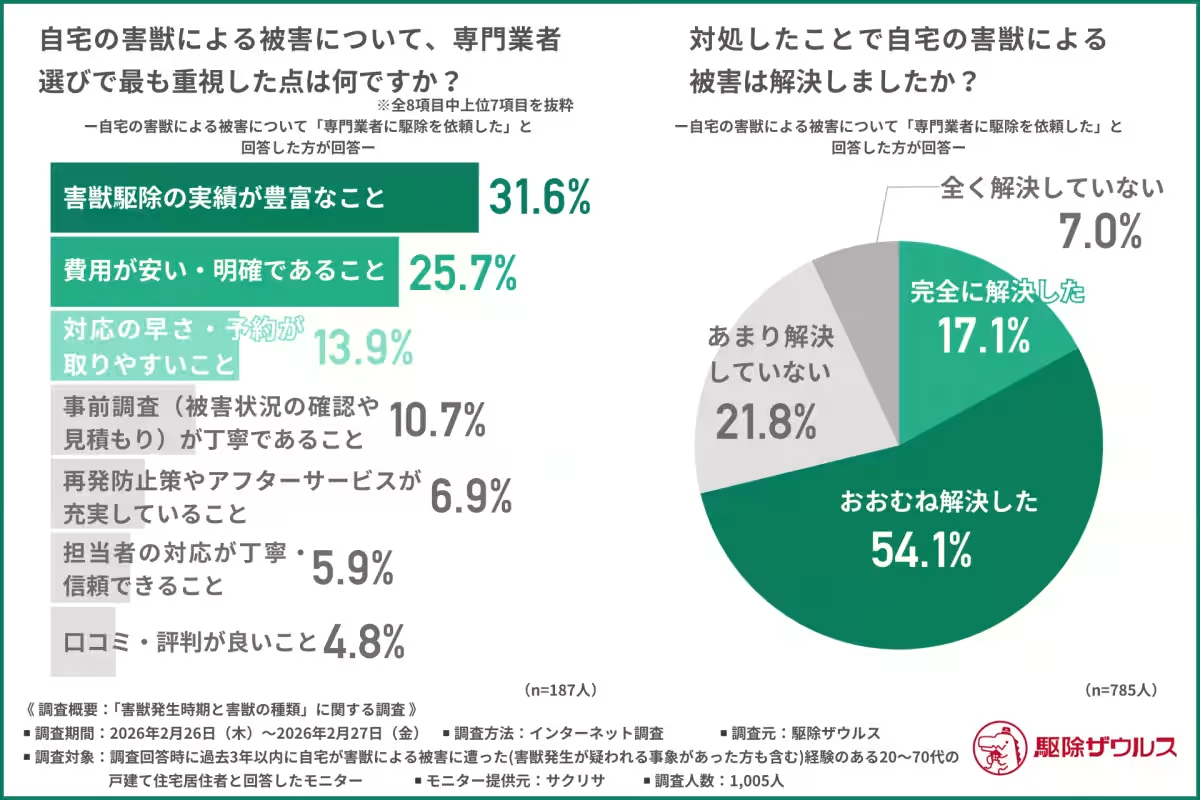
Individuals who chose professional extermination services highlighted the following concerns in selecting a provider:
- - Proven success in pest control (31.6%)
- - Clarity and affordability of costs (25.7%)
- - Responsiveness and ease of booking (13.9%)
- - Thorough initial assessments (10.7%)
This feedback underscores the inclination of homeowners to seek trustworthy services that ensure results while providing transparency in pricing.
Conclusion: Addressing Pest Threats for Long-term Solutions
Through analyzing the survey results, it is clear that wildlife pest encounters vary significantly throughout Japan based on regional differences and seasonal predilection. While the classic threats are mice, the rising populations of species like civets and weasels vary geographically.
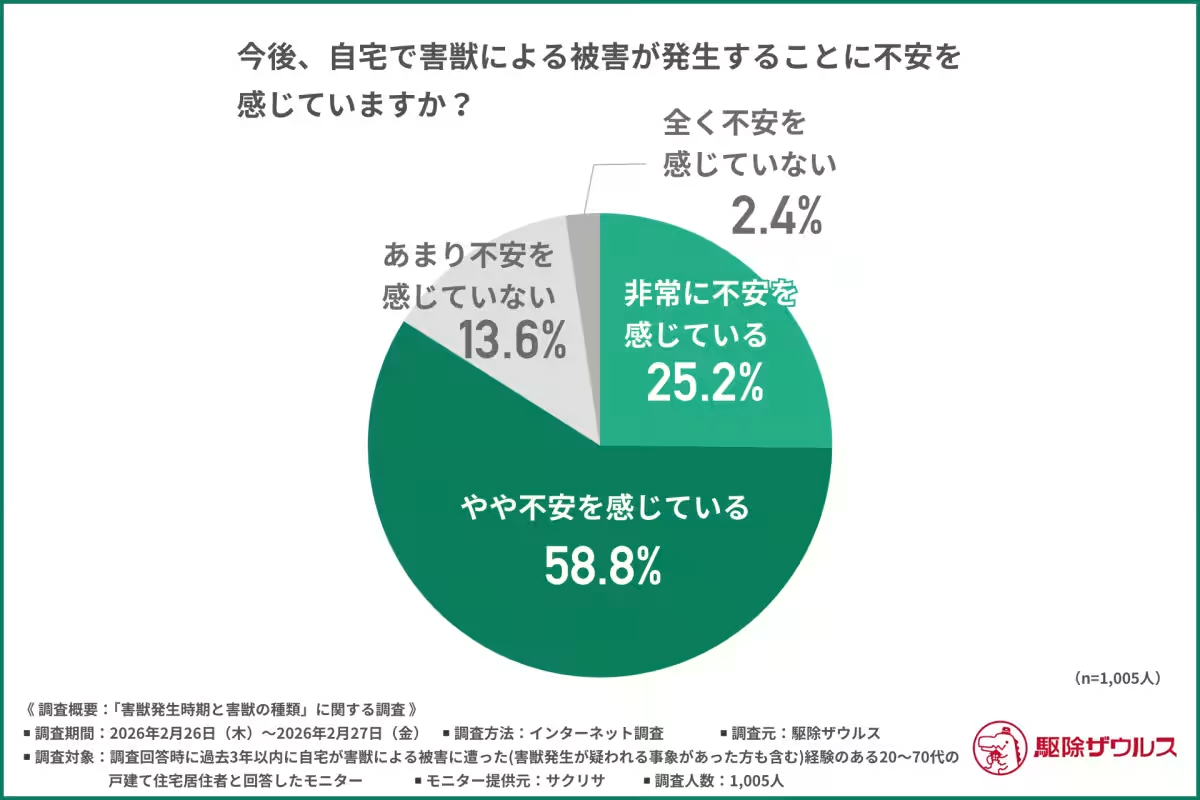
The findings point towards the necessity for continuous vigilance, particularly as we approach spring - a peak invasion period for various pests. Homeowners are urged to implement comprehensive and informed pest control strategies that encompass both immediate solutions and long-term preventive measures, ensuring peace of mind regarding household safety from wildlife incursions.
For reliable pest control services, look no further than Kujyo Zaurus, with over 20 years of experience and a track record of effective interventions. Schedule a consultation to protect your home today!

Topics Other)
【About Using Articles】
You can freely use the title and article content by linking to the page where the article is posted.
※ Images cannot be used.
【About Links】
Links are free to use.