



Understanding Foreign Workers' Impact on Social Security and Preferences for High-Income Immigrants
Understanding Foreign Workers' Impact on Social Security and Preferences for High-Income Immigrants
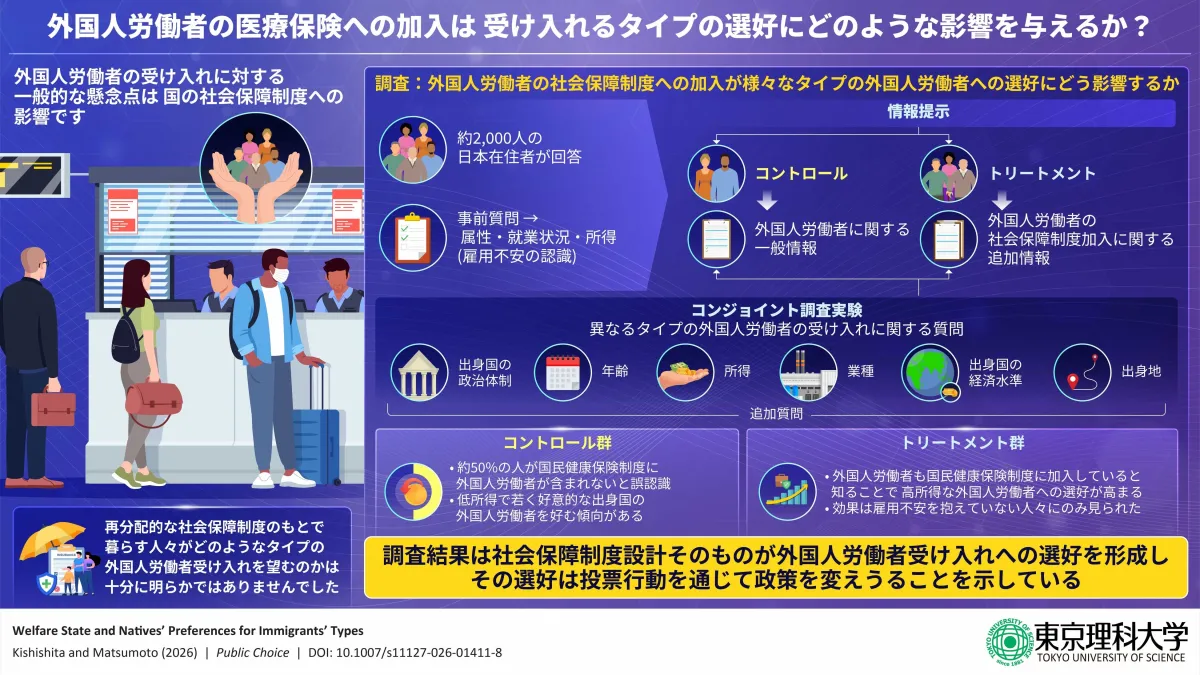
In recent years, Japan has faced significant labor shortages due to its aging population and declining birth rates. A recent study conducted by a research group from Tokyo University of Science and Hitotsubashi University has delved into how people's understanding of the social security system, particularly regarding foreign workers’ participation in medical insurance, shapes their preferences when it comes to accepting foreign labor.
Research Overview
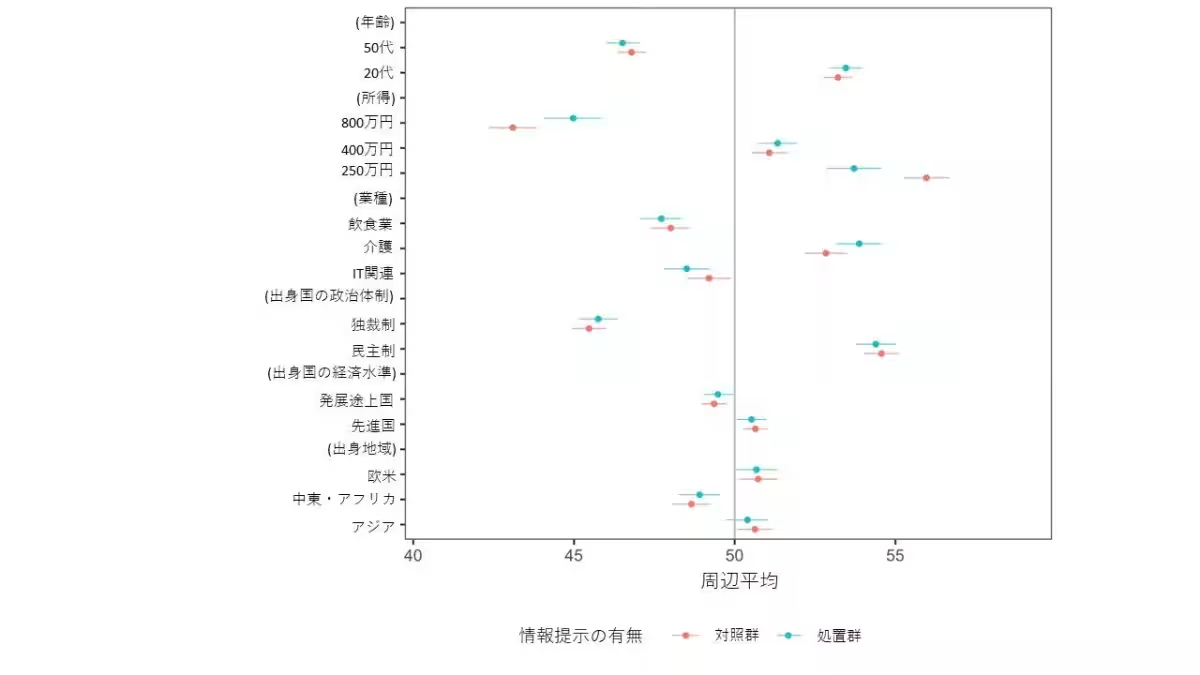
The online survey experiment involving approximately 2,000 participants revealed an intriguing connection between awareness of the Japanese healthcare system and the type of foreign workers Japanese citizens prefer to accept. When respondents learned that foreign workers are included in the nation’s medical insurance scheme, there was a marked increase in preference for accepting high-income foreign workers, while interest in low-income workers declined. This shift in preference underscores the notion that foreign workers are not just filling labor gaps but also contributing to the social security system.
A critical finding of this study was that the positive perception of high-income foreign workers was primarily observed among individuals who do not perceive a threat to their own employment from the increase in foreign labor. This observation indicates that understanding of social security systems and feelings of job security significantly influence public attitudes towards immigration policies.
The Importance of Context
Japan's labor market is increasingly reliant on foreign workers, especially in sectors such as healthcare, construction, agriculture, and service industries, grappling with labor shortages. However, discussions surrounding foreign labor often focus on potential impacts on employment for local workers and affect the support for immigration policies. Previous studies had largely drawn attention to the fears regarding low-income immigrants potentially burdening social security systems, neglecting the positive contributions of high-income immigrants.
In this research, both social security insights and employment concerns were examined to understand how they shape public opinion regarding foreign workers. The implications of this research are significant, suggesting that policy discussions about accepting foreign labor must encompass both the sustainability of social security and the anxieties of local workers regarding job displacement.
Detailed Findings
Participants in this study were divided into two groups for the online survey: Group A and Group B. Group A was only told about Japan's aging population and the role of foreign workers in alleviating labor shortages, while Group B received the additional information that these foreign workers are included in Japan's medical insurance system and that higher earners contribute more significantly to this insurance through their premiums.
The results revealed that 50.7% of Group A understood the connection between foreign workers and the healthcare system, whereas this understanding rose to 80.9% for Group B following the informative intervention. This demonstrates that education about the healthcare system can significantly enhance perceptions regarding foreign workers.
When analyzing preferences for different types of foreign workers, Group A showed a tendency to favor low-income workers, likely due to their perceived necessity to fill immediate labor shortages. Conversely, Group B exhibited a preference for high-income foreign workers, suggesting a shift in viewpoint when recognizing the role of these workers in supporting social insurance.
However, the change in preference based on perceived contributions to social security was not universal. Among respondents who feared that the increase of foreign labor could jeopardize their or their families’ job security, the information about healthcare benefits did not lead to a significant shift in favor of high-income foreign workers. This highlights the complexity of attitudes toward foreign labor, affected by both economic conditions and social security perceptions.
Conclusion
As Japan continues to confront labor shortages in various sectors, the findings from this study provide critical insights into public attitudes towards foreign workers and the underlying factors influencing these perspectives. It emphasizes the need for a comprehensive approach in policy-making that considers both labor demands and the integration of foreign workers into the social security system. Future discussions on immigration policy must integrate these concerns to foster mutual understanding and address the intricacies of social acceptance of foreign labor.
By furthering the debate around foreign worker integration, especially within the context of a changing demographic landscape, this study lays essential groundwork for future immigration policy reform. As noted by Associate Professor Tomoko Matsumoto, who led the research, the increase in foreign workers, while still comparatively low compared to Western countries, reflects rising public interest; thus, understanding the relationship between redistributive policies and social acceptance of foreign labor remains vital for Japan's social fabric and economic stability.
Topics Policy & Public Interest)
【About Using Articles】
You can freely use the title and article content by linking to the page where the article is posted.
※ Images cannot be used.
【About Links】
Links are free to use.