




The Surging Cost of Ad Fraud: Insights from Spider Labs 2026 Report
Rising Concerns Over Advertising Fraud in Japan
In a recent report released by Spider Labs, a Tokyo-based company specializing in marketing security, alarming figures regarding ad fraud in Japan have been revealed. The report, titled "Ad Fraud Investigation Report (Annual Edition 2026)", estimates that the losses due to ad fraud in Japan for the year 2025 will reach about ¥159.2 billion (approximately $1.47 billion). This figure not only highlights the growing concern over the integrity of online advertising but also signifies a staggering increase of approximately ¥8.2 billion compared to the previous year.
Understanding Ad Fraud
Ad fraud involves various malicious practices that result in wasteful spending on worthless impressions, clicks, and conversions generated by fraudulent programs and users. This malicious activity not only extracts revenue from advertisers but also dilutes the effectiveness expected from their ad campaigns by creating invalid interactions that don't resonate with targeted audiences.
Key Findings from the Report
A Shockingly High Cost of Ad Fraud
The report details a year-on-year increase in estimated ad fraud losses, which, although the average occurrence rate has slightly decreased, maintains an upward trend in total damages due to the expanding ad market.
In light of the rapid increase in the advertising market, the report emphasizes the necessity for advertisers to adapt to this evolving landscape. The ongoing trend towards "AI-first" marketing strategies has resulted in a 192% growth in AI optimization menus, implying that advertisers lean more toward machine learning tools to enhance campaign efficiency.
The Dark Side of AI Optimization
While the incorporation of AI in advertising management opens avenues for more effective resource allocation, it also presents a perilous downside. The report indicates that the fraud rate in AI-optimized campaigns reaches up to 5.2%, significantly higher than the overall average of 2.2% to 2.5%. This alarming trend underscores potential vulnerabilities arising from automation, where fraudsters exploit these technologies to enhance their deceptive tactics.
The Proliferation of MFA Sites
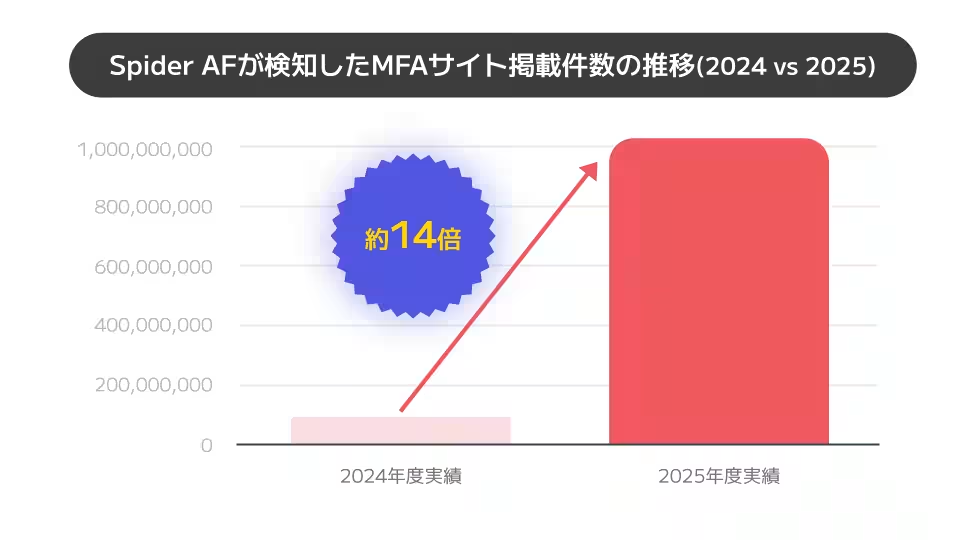
The report also draws attention to the alarming rise of Made For Ad (MFA) sites, which are primarily designed to generate ad revenue. Spider AF tracked a staggering 1,409% increase in the number of occurrences related to MFA sites over the past year alone, with the associated losses surging by 533%. The proliferation of generative AI, enabling rapid content creation, has largely contributed to this dramatic escalation, making MFA sites increasingly harder to identify and control in terms of their ad placements.
As AI optimization campaigns become commonplace, the potential for advertisers to misidentify MFA sites as high-efficiency placements poses a severe risk for increased losses.
Additional Insights from Spider Labs Report
Alongside the primary findings, the report delves deeper into:
- - Trends in ad fraud loss over time and the breakdown of different types of fraud
- - Industry-specific risks associated with ad fraud
- - The rising threat of fraud within AI-optimized advertising
- - Emerging fraudulent methods including MFA sites
- - A comparative analysis of click quality and its impact on advertising results
- - The critical importance of data quality for achieving favorable ad performance
The comprehensive documentation underscored the depth of this issue and provided actionable recommendations for advertisers to safeguard their investments in the ever-evolving digital advertising landscape.
For a detailed look at the findings, the full report is available for free download here.
About Spider Labs
Founded in April 2011, Spider Labs is located in the Minato area of Tokyo and specializes in creating and maintaining the marketing security tool "Spider AF", a solution designed to detect and block ad fraud effectively. By offering a free diagnostic service for assessing ad fraud losses, Spider AF empowers advertisers to take proactive measures against fraudulent activities without intricate technical knowledge.
To learn more about Spider Labs and their innovative solutions, visit their website at Spider Labs.


Topics Consumer Technology)
【About Using Articles】
You can freely use the title and article content by linking to the page where the article is posted.
※ Images cannot be used.
【About Links】
Links are free to use.