




Sony's APAS Platform Launches for Enhanced Traffic Safety Analysis and Education
Introduction to the APAS Platform
In a significant step toward boosting traffic safety, Sony Network Communications has unveiled the APAS Platform. This innovative geospatial analysis platform is specifically designed to visualize and analyze behavioral data from vulnerable road users, including pedestrians and cyclists, aiming to mitigate traffic accident risks. Collaborating with various stakeholders from industry, government, and academia, Sony aims to create a safer environment for everyone, especially children during their commute to and from school.
Overview of APAS Platform
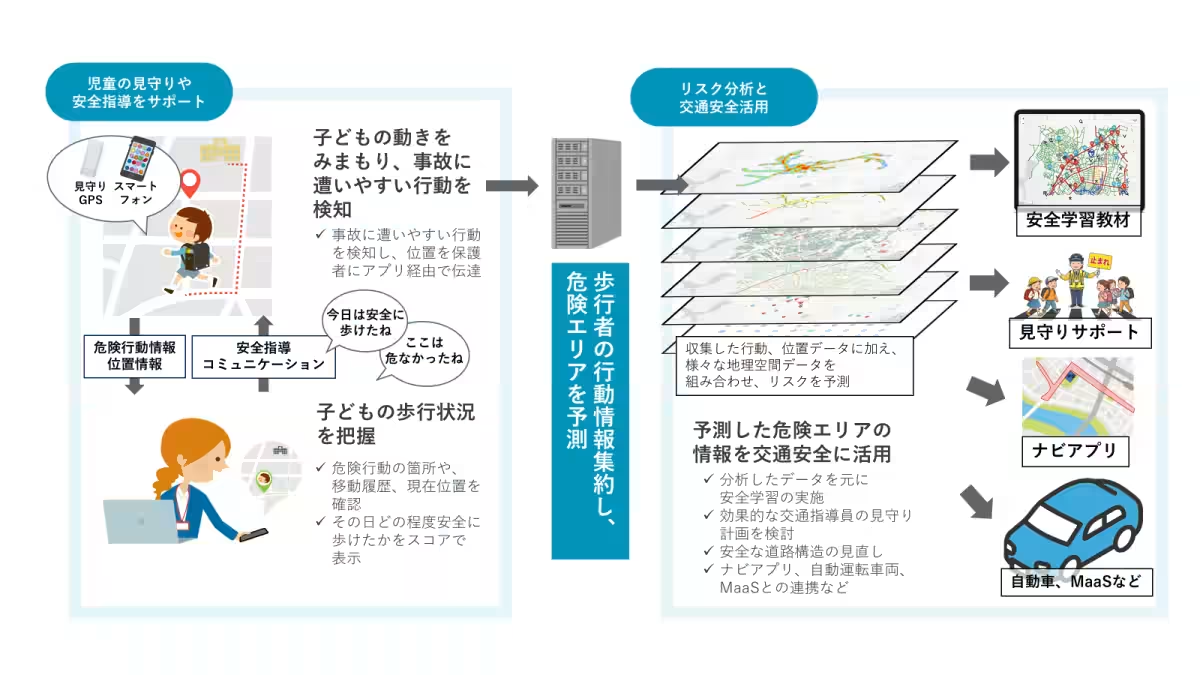
The APAS Platform combines dynamic human flow data collected from monitoring GPS devices and smartphone applications with static geospatial data, such as accident records, traffic volume, topography, buildings, and population statistics. The platform employs advanced AI analytics to assess potential accident risks, moving beyond traditional methods that often rely on automotive traffic data and sparse accident locations. Unlike conventional approaches, the APAS Platform allows for risk detection from both automotive and pedestrian perspectives, facilitating a more comprehensive understanding of road safety.
Key Features of the APAS Platform
1. Collection of Behavioral Data and Risk Visualization
By utilizing monitoring GPS devices and smartphone sensors commonly carried by children, the APAS Platform detects dangerous behaviors such as sudden road crossings or unsteadiness. This data is then recorded, transformed, and analyzed to uncover potential risks that might be invisible to vehicles.
2. Data Integration and Analysis
Through topological clustering, the platform can statistically infer traffic volume on roads where there are no sensors, such as school routes. Moreover, it estimates pedestrian flow on paths not indicated on maps, effectively enhancing the accuracy of safety analyses.
3. Information Dissemination and Automated Educational Resource Generation
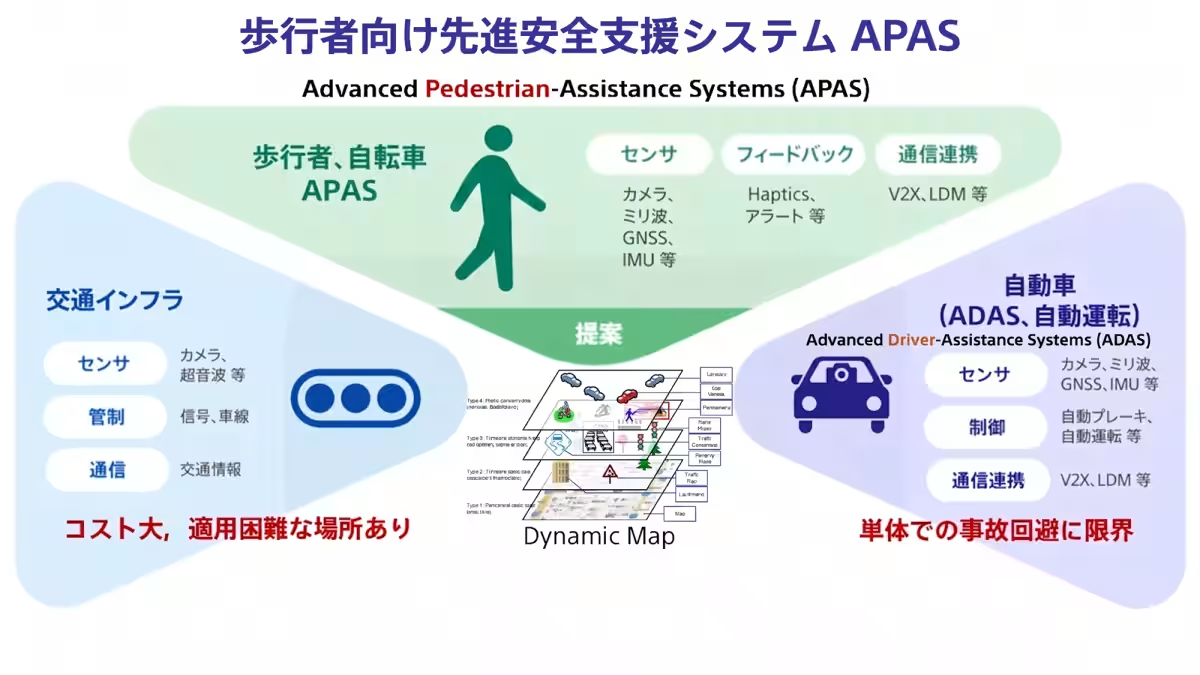
The results of the analyses can be shared with automotive systems, such as Advanced Driver-Assistance Systems (ADAS) and navigation tools. Furthermore, it can be utilized to generate educational materials and safety maps tailored to specific communities and schools.
Contribution to Child Safety Education
Sony is also committed to utilizing the APAS Platform’s data and tools to promote traffic safety education among children.
1. Smart Safety Map
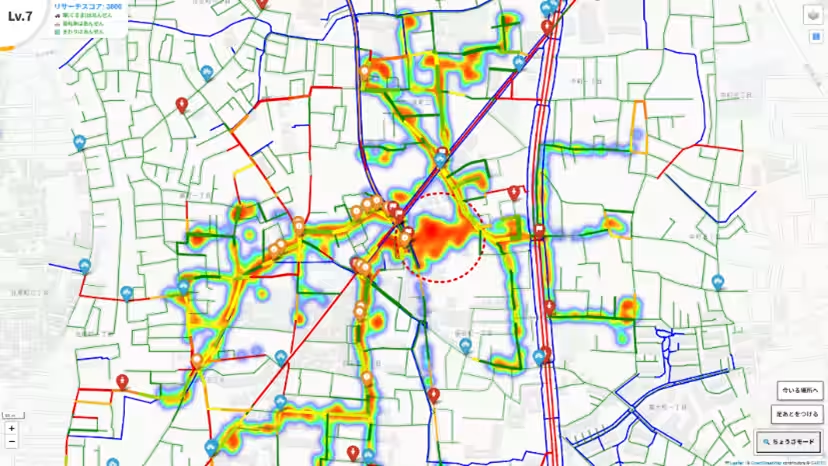
The Smart Safety Map application for schools is designed to reduce accidents by providing an interactive mapping resource. Students can explore various safety-related data in their neighborhoods and register dangerous spots they identify, facilitating safety education and community exploration activities. The app is compatible with smartphones, tablets, and school-issued GIGA devices, allowing use even offline for field learning activities.
2. Our Local Safety Research Class
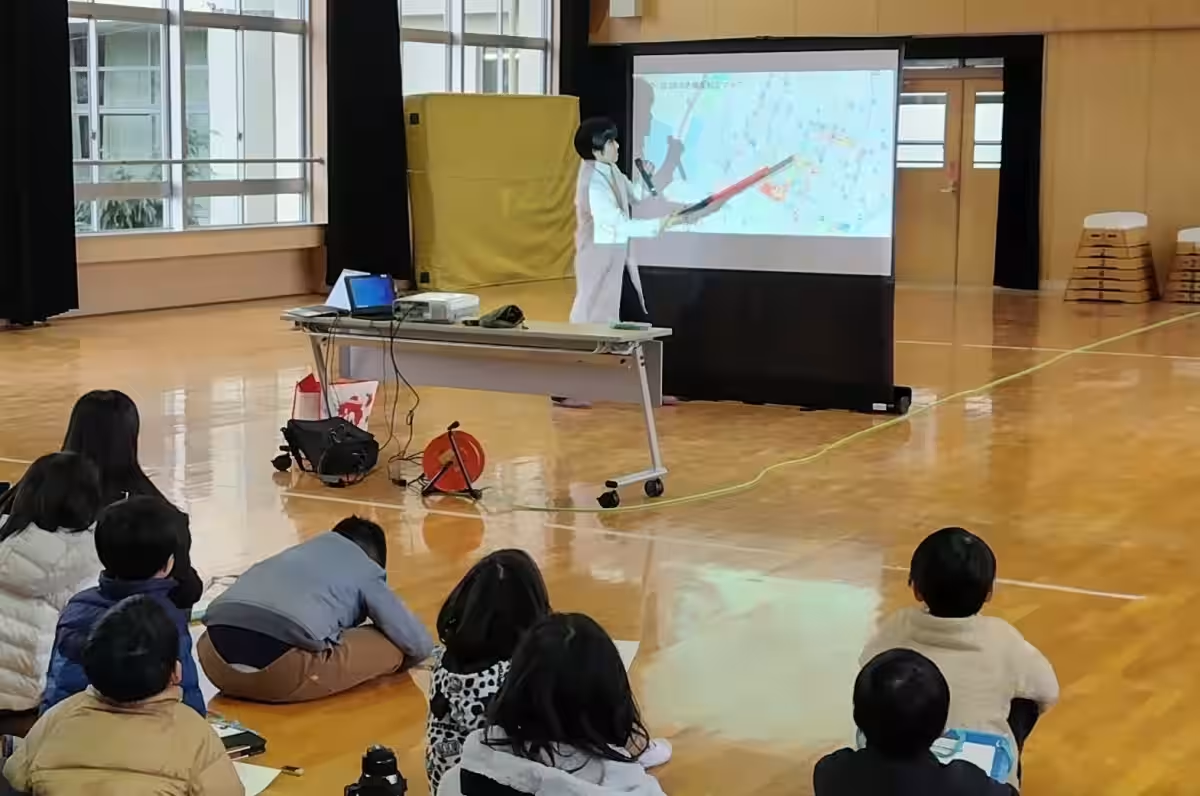
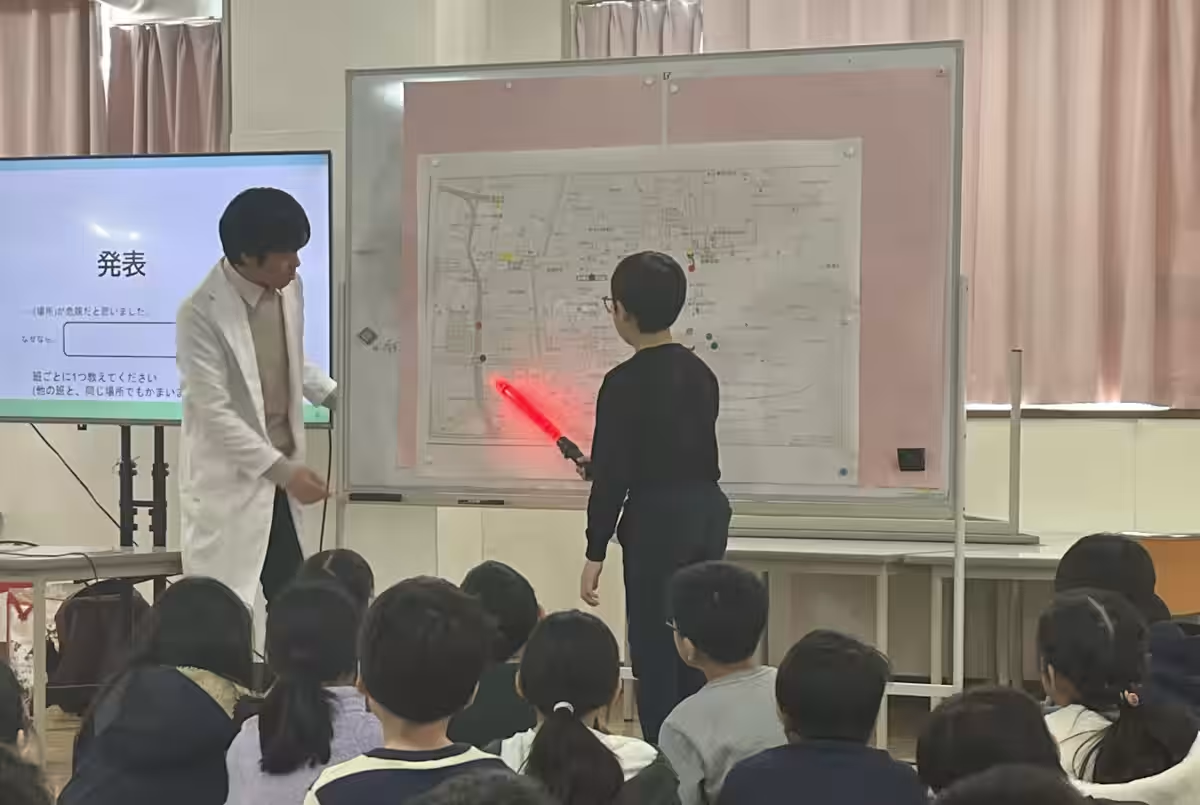
This program encourages students to become researchers of their local traffic safety by investigating dangerous areas on their commutes or playgrounds. Conducted in collaboration with 11 schools nationwide, it supports scientific approaches to enhance safety consciousness through hands-on learning.
Implementation of Safety Services
Riding on its successful studies and practical implementations, the APAS Platform will facilitate new safety services in collaboration with various industry stakeholders.
1. Collaboration with Sompo Japan
Beginning February 2026, the safety class program implemented by Sony will be expanded nationally in conjunction with Sompo Japan’s traffic safety initiatives, targeting elementary school students and their communities to create next-generation traffic safety maps.
2. Holistic Support for Nishitokyo City
Starting in the 2026 fiscal year, Nishitokyo City will receive comprehensive traffic safety support through APAS Platform analyses and tailored educational resources.
3. Joint Research with Experts
From February 2026, a collaborative examination with experts focusing on Active School Travel (AST) will take place, aiming to enhance safety for children commuting actively by foot or bicycle.
Background of Development
The rise of advanced driver-assistance systems (ADAS) and automated vehicles have raised expectations for reducing traffic accidents. However, limitations in these systems still persist, necessitating a more holistic approach to road safety. Beginning in 2019, Sony has researched pedestrian safety enhancement systems to develop the APAS Platform, reflecting its commitment to optimizing safety in urban environments.
Future Vision
Looking ahead, Sony will collaborate with municipalities, enterprises, and educational institutions interested in leveraging the APAS Platform and its offerings for enhanced traffic safety. Through data and technology, the goal is to contribute to a society free of traffic accidents.

Topics Consumer Technology)
【About Using Articles】
You can freely use the title and article content by linking to the page where the article is posted.
※ Images cannot be used.
【About Links】
Links are free to use.