



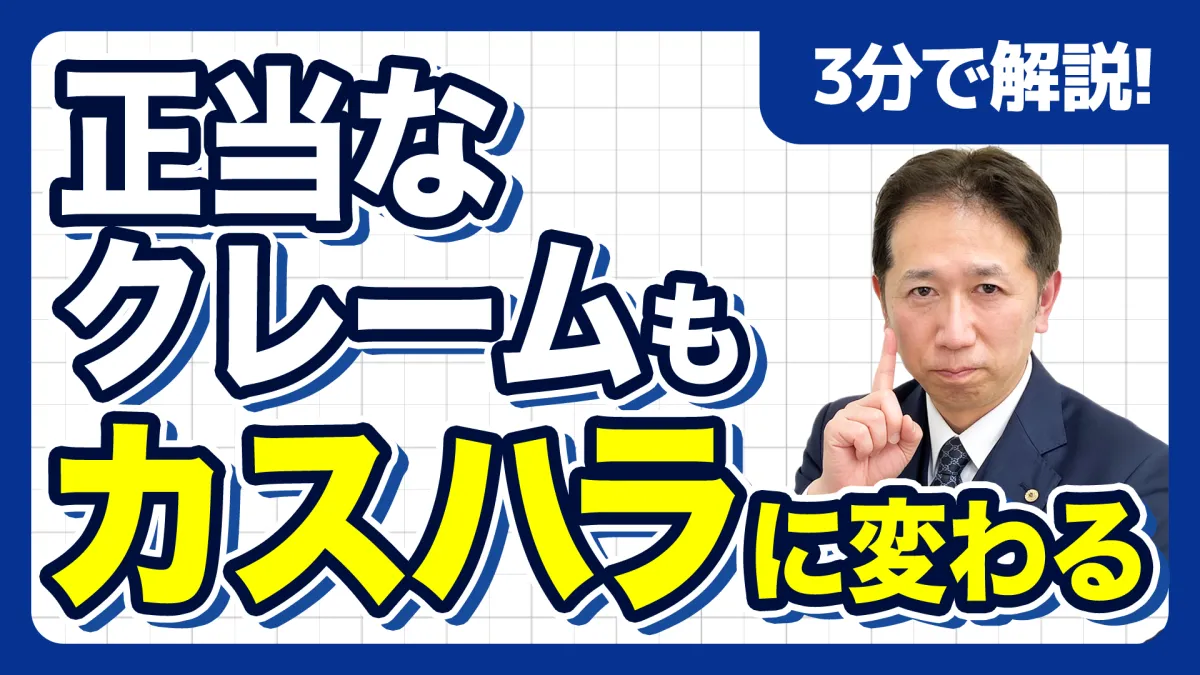
Understanding the Fine Line Between Legitimate Complaints and Customer Harassment
The Fine Line Between Legitimate Complaints and Customer Harassment
In the business landscape, customer satisfaction is paramount. However, distinguishing between legitimate complaints and instances of customer harassment, often termed 'カスハラ' (Kasu-hara), has become a critical challenge. The advent of laws to address this issue highlights the need for clear guidelines for employees. On October 28, 2026, the Kura Human Resource Development Association will implement measures to help employees navigate this complex situation, ensuring their dignity and safety while maintaining customer service.
Understanding the Concepts
A legitimate complaint arises when a customer seeks remedies—such as explanations, apologies, refunds, or exchanges—after experiencing a product defect or service error. These situations require a professional response from businesses. Conversely, customer harassment occurs when the nature of these complaints escalates beyond reasonable expectations. For instance, if a restaurant offers to rectify an order mistake but the customer insists on demands like receiving a public apology or threatening legal action, the situation ceases to be a mere complaint.
This change is not solely based on the initial cause of the complaint; it requires a broader evaluation of the demands made:
- - Content of the Demands: Are they reasonable?
- - Manner of Delivery: Is the communication respectful, or does it involve insults or threats?
- - Duration: Is the customer prolonging the engagement unreasonably?
With the rise of social media, threats of public backlash add another layer of complexity. Businesses cannot simply acquiesce to all demands for fear of negative publicity, as this could lead to a cycle of escalating harassment.
Practical Guidelines for Employees
Understanding how to transition from handling legitimate complaints to recognizing harassment is crucial. As Jun Ono, a specialized labor consultant at the Kura Association, emphasizes, clarity in defining these boundaries protects both employees and the integrity of customer service. He has outlined a set of guidelines to assist employees in identifying when a customer has crossed the line into harassment. This framework not only empowers frontline staff but also reinforces the company's commitment to respectful customer interaction.
Video Resources and Training
To empower organizations further, the Kura Human Resource Development Association has released a video summarizing these concepts, accessible on YouTube. This resource is designed for media personnel and corporate stakeholders, giving a succinct overview of the impending regulations on customer harassment.
Interactive Q&A Session
For businesses and media representatives seeking further clarification, an interactive Q&A session is scheduled for August 28, 2026. Jun Ono and other experts will be available to answer inquiries related to this evolving topic, ensuring comprehensive understanding. This session aims to address practical concerns and intricacies that may not be thoroughly covered in videos.
Registration Information
The session will be hosted via phone and online platforms, allowing for flexible participation. Those interested in attending can register for free by reaching out to the office at [email protected].
Key Questions Addressed
- - What objective indicators separate severe customer feedback from harassment?
- - Can businesses terminate responses to abusive demands when they stem from their own errors?
- - How far must a company go to fulfill generic demands for 'demonstrating sincerity'?
- - What are effective phrases to communicate to customers when shifting from complaint handling to harassment management?
About Jun Ono
Jun Ono, a specialized labor consultant at the Kura Association, brings extensive experience with over 400 training sessions on harassment and labor issues. Recognized for his practical approach, he focuses on translating legal expectations into everyday practices that benefit workplaces.
About the Kura Human Resource Development Association
Founded in 2023 as part of the SA Group, the Kura Association is dedicated to training and certifying over 750 professionals as Employment Clean Planners. Through this initiative, they actively contribute to harassment prevention and labor relationship enhancement across various sectors in Japan.
For more information about the Kura Association, visit koyo-clean.com.
Topics People & Culture)
【About Using Articles】
You can freely use the title and article content by linking to the page where the article is posted.
※ Images cannot be used.
【About Links】
Links are free to use.