



Toray Research Center Launches High-Precision Perovskite Solar Cell Analysis Service
Toray Research Center's Innovative Service for Solar Cell Analysis
The Toray Research Center (TRC), based in Chuo Ward, Tokyo, has unveiled a revolutionary new analysis service that promises to aid in the research and development of perovskite solar cells, a technology that is garnering significant attention as a next-generation solar power solution. This new service was developed through a collaboration with Professor Atsushi Wakamiya from Kyoto University's Institute for Chemical Research, enabling high-precision analysis of the structure of perovskite solar cells at varying depths.
A Game-Changer for Solar Power Technology
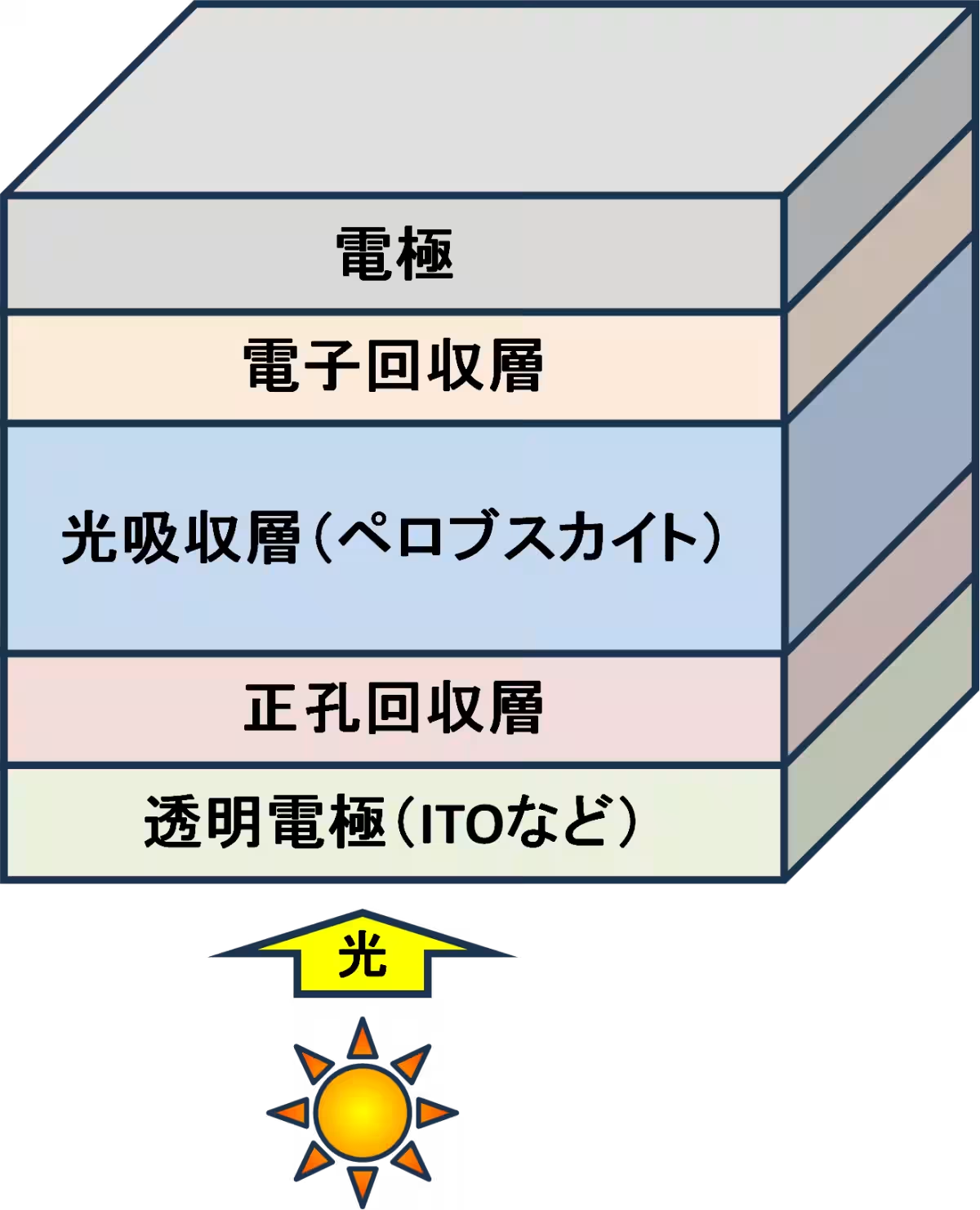
Perovskite solar cells utilize a unique crystal structure known as the perovskite structure (ABX3 type) that includes organic-inorganic hybrid materials. Compared to traditional silicon-based solar cells, perovskite solar cells offer considerable advantages: they can be fabricated more easily and affordably, as the manufacturing process is less complex, and they can be produced in flexible and lightweight formats.
Despite these benefits, the organic components in perovskite materials pose challenges related to stability. These materials are susceptible to degradation when exposed to moisture or heat, which can significantly affect their lifespan and reliability. Therefore, ensuring long-term stability is a chief concern for ongoing development. High-precision depth analysis is critical, especially when assessing the component distributions and structural layers that directly influence device performance.
Advanced Analytical Techniques
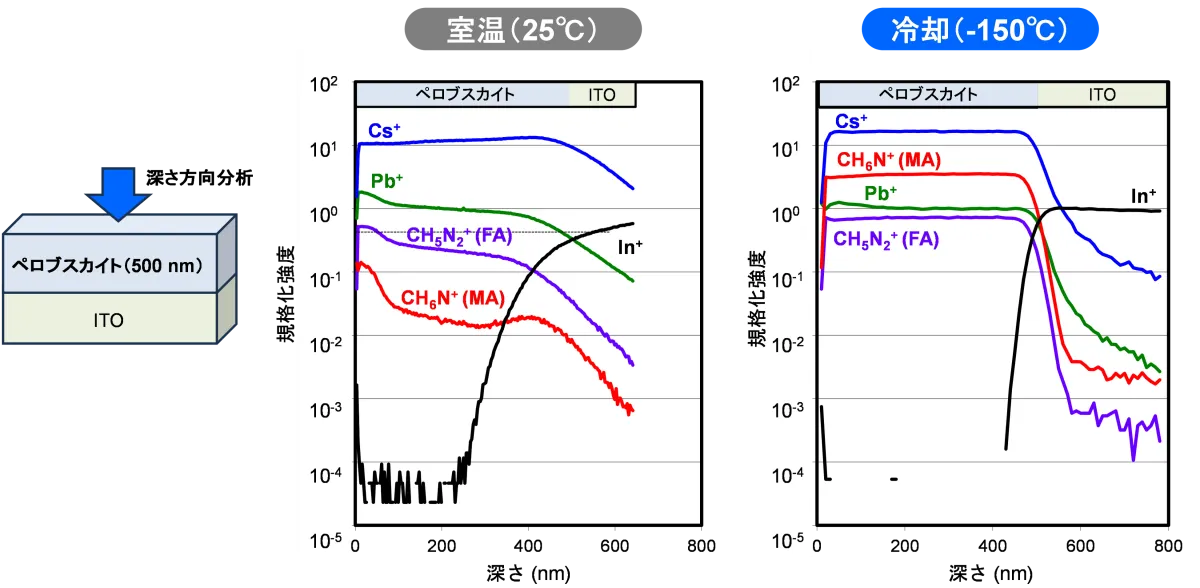
The newly developed analytical technique utilizes GCIB-TOF-SIMS (Gas Cluster Ion Beam Time-of-Flight Secondary Ion Mass Spectrometry) under controlled cooling conditions. This method allows for the sensitive and high-resolution measurement of elemental and molecular distributions in the solar cell structure, addressing previous challenges such as the volatility of organic components and the material transformation during analysis. By keeping the samples cool, TRC has been able to suppress the volatility of low-molecular weight components, such as formamidinium (FA) and methylammonium (MA), resulting in a more stable secondary ion intensity and a faithful representation of the depth profile of the perovskite layers.
Collaboratively advanced with insights from Kyoto University, this innovative approach ensures more accurate reliability for perovskite solar cell evaluations, paving the way for improved material design, interface control, and reliability assessments across various stages of development.
A Bright Future for Renewable Energy
The implementation of this high-precision analysis service is expected to significantly contribute to the advancement of perovskite solar cell technology, enhancing both material development and product assessment. TRC aims to leverage this service to aid researchers and developers in addressing challenges related to material design, interface control, and reliability evaluation. Special emphasis is placed on quantitatively analyzing the segregation and distribution of components at interfaces, a crucial factor for stabilizing device performance and longevity.
As the demand for sustainable energy solutions intensifies globally, Toray Research Center is committed to pushing the boundaries of analytical technology and expanding its practical applications in solar energy. This initiative aligns with the broader objectives of achieving carbon neutrality and advancing the adoption of renewable energy sources in efforts to combat climate change.
Conclusion
In summary, TRC's new high-precision analysis service for perovskite solar cells represents a crucial step forward in the reliable development of renewable energy technologies. With a focus on detailed material characterization, this service stands to be indispensable in enhancing the performance and longevity of solar energy solutions, ultimately fostering a transition to a more sustainable energy future.
Related Resources
For those interested in the detailed research outcomes, the findings have been published in the Journal of the American Chemical Society, highlighting the materials used for optimal performance in perovskite solar cells. For more information, check this link.
Topics Consumer Technology)

【About Using Articles】
You can freely use the title and article content by linking to the page where the article is posted.
※ Images cannot be used.
【About Links】
Links are free to use.