



CEC Pioneers Physical AI Implementation for the Manufacturing Sector
CEC Pioneers Physical AI Implementation for the Manufacturing Sector
Introduction
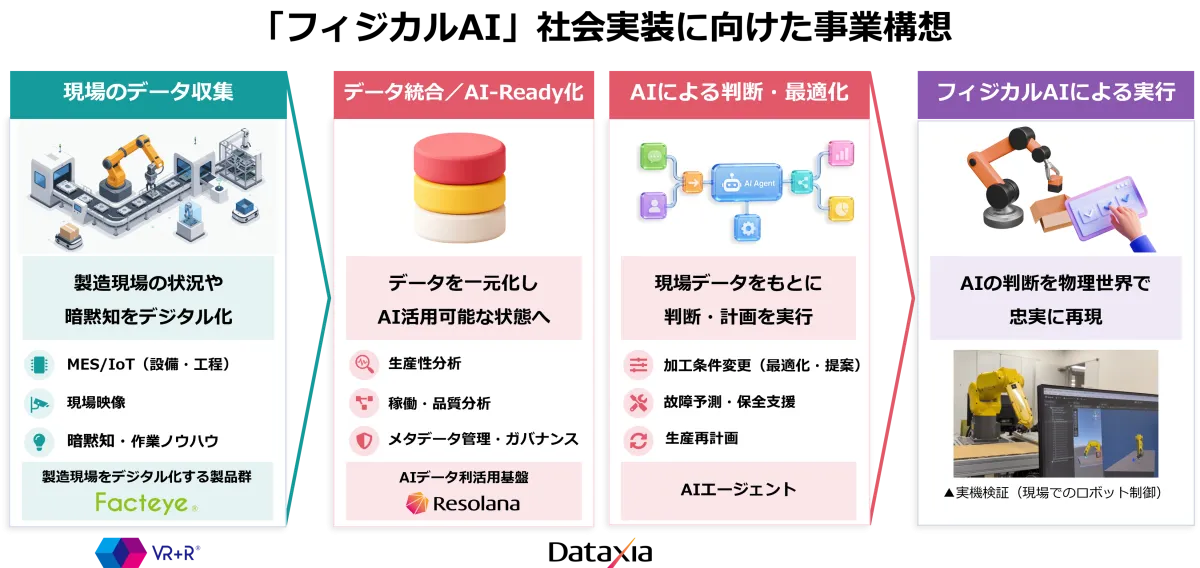
As the manufacturing industry faces challenges from labor shortages and the increasing demand for automation, CEC (Shibuya, Tokyo) is stepping up with a groundbreaking initiative that seeks to introduce 'Physical AI' into manufacturing. On September 9, 2026, CEC announced the opening of its 'Physical AI Demonstration Lab' at the Sagamihara System Laboratory. This lab is set to explore the practical applications of vertical AI tailored for the manufacturing sector and integrate real-time data connections with their cutting-edge data utilization platform, Resolana.
The Need for Physical AI
In recent years, the demands for automation and efficiency within manufacturing and logistics have skyrocketed, driven by demographic challenges and the need for mass customization. In this context, Physical AI, capable of perceiving and executing tasks in real environments, has emerged as a game changer. However, for robots to operate reliably in varied settings, there is a crucial need for robust learning models, operational expertise, and high-quality data to guide AI decision-making.
The demand for AI that comprehends manufacturing processes, quality standards, and safety requirements has never been more pronounced. As such, the combination of general-purpose large-scale AI and industry-specific vertical AI strategies is essential for delivering insights tailored to unique operational contexts within manufacturing facilities.
CEC’s Unique Strengths
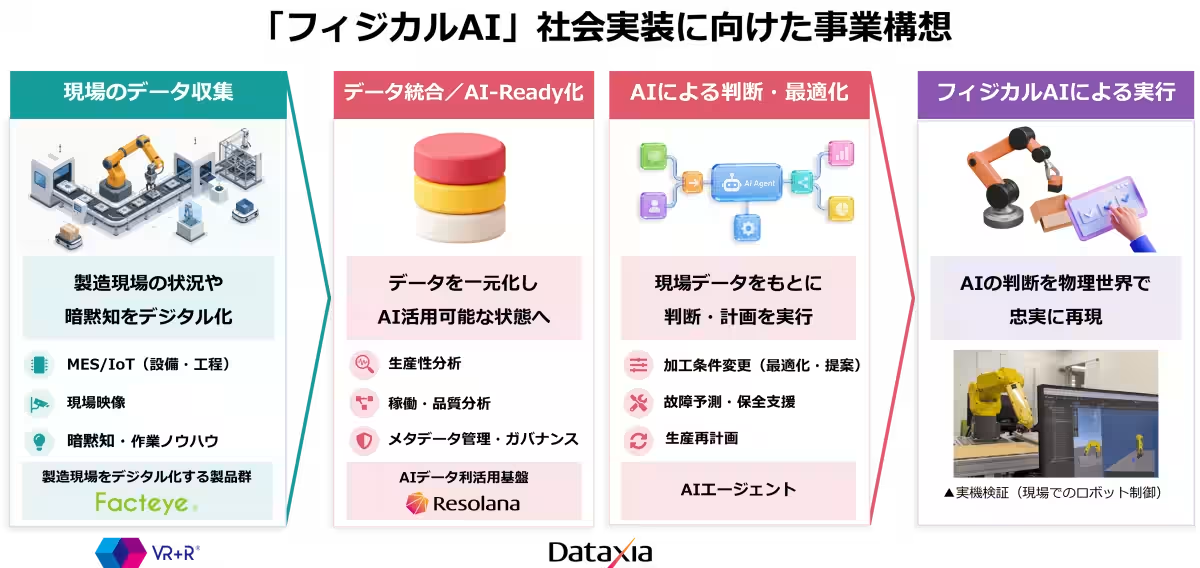
CEC's primary strength lies in its expertise in manufacturing-focused vertical AI. Building on years of experience in manufacturing digital transformation (DX), CEC utilizes the Resolana platform to organize and prepare data, enabling AI utilization for real-time production planning and quality anomaly detection. By combining these achievements, CEC aims to provide comprehensive solutions for Physical AI, facilitating everything from observation and data assessment to decision-making and safety protocols.
Key Areas of Expertise
1. OT Data Collection: Utilizing the VR+R solution, Facteye, CEC monitors production equipment in real time, gathering detailed data on processing performance and operations.
2. Data Preparation and Management: Through Resolana, CEC effectively organizes and manages data to make it suitable for AI, facilitating its readiness for use.
3. Manufacturing-Specific Vertical AI: By structuring the implicit knowledge of seasoned workers, CEC enables enhanced decision-making in production re-planning and identification of quality issues.
4. Safety Assurance: Implementing immediate abnormality detection and emergency stop features ensures safety during autonomous operations by continuously logging decision-making processes, significantly reducing operational risks.
The Role of the Demonstration Lab
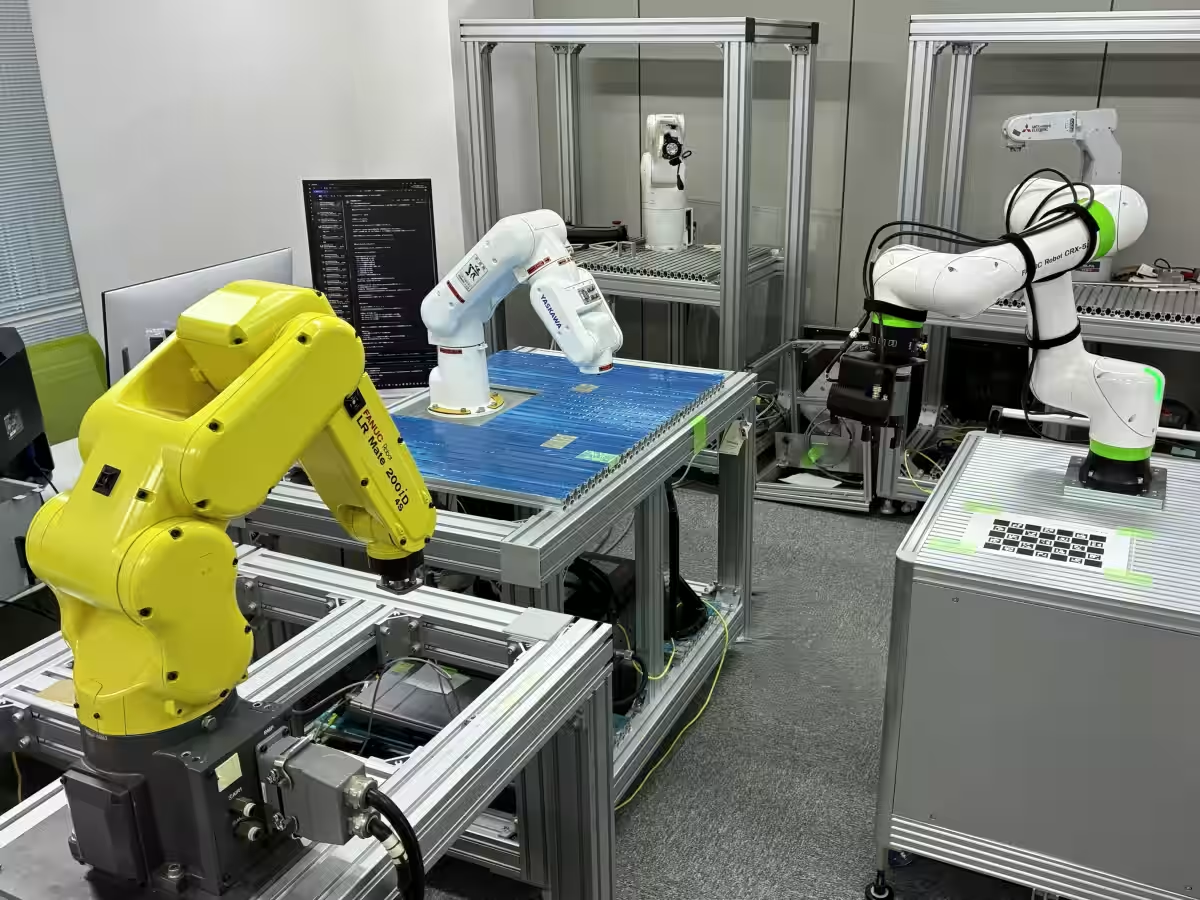
The newly established lab combines data, AI, and physical robots to create an experimental environment aimed at systematically evaluating interoperability, control, and safety across multiple vendor systems. Collaborations with robot user companies and major component manufacturers are already underway, reflecting significant interest in this innovative project.
Focus Areas for Demonstration
This year, the lab will concentrate on two main themes: automating the generation of teaching programs (TP) and applying learning models in practical settings (Sim2Real). Each initiative will be tested in an environment that accurately reflects the real-world conditions of manufacturing, ensuring both operational efficacy and safety.
1. Teaching Program Automation: Using AI for the automated design of robot behaviors, the lab will rigorously assess the generated programs for safety and effectiveness, thereby reducing manual burdens and enabling quicker transitions to mass-customized production runs.
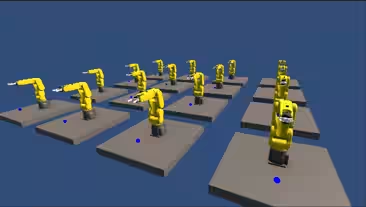
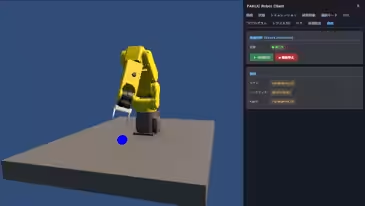
2. Simulated Learning Model Application: This validates the application of AI models developed in a simulation environment to real machinery, scrutinizing operational metrics such as uptime, error rates, and occurrence of safety incidents.
Future Collaboration and Development
CEC plans to further its Physical AI endeavors in collaboration with user companies of machine tools and industrial robots. By leveraging their extensive history with IoT implementations and security solutions, CEC aims to connect upper-level systems with machine control effectively and safely.
As part of this initiative, CEC will participate in the 33rd Japan International Machine Tool Fair, scheduled from October 26 to 31, 2026, at Tokyo Big Sight, showcasing their innovative verification methodologies.
Conclusion
With the focus on deploying vertical AI and connecting operational data and machinery, CEC is set to revolutionize the manufacturing landscape. The development of Physical AI not only aims to enhance operational efficiency but also contributes significantly to the broader adoption of autonomous systems in manufacturing practices. For more information, visit Resolana.

Topics Consumer Technology)








【About Using Articles】
You can freely use the title and article content by linking to the page where the article is posted.
※ Images cannot be used.
【About Links】
Links are free to use.