



How a First-Year Engineer Overcame Challenges and Excelled in 3 Companies with 5 Programming Languages
Overcoming Challenges in an Engineering Career
Entering the world of software engineering can be daunting, especially for fresh graduates or those without prior experience. OM Network, a prominent player in system development, offers an impressive training program to equip new engineers with the necessary skills for success.
The story of one first-year engineer is a prime example of how dedication and support can lead to rapid growth and accomplishment. In just one year, this engineer was able to navigate complex projects across three different companies, utilizing five programming languages.
Rapid Training Process
At OM Network, the training process is structured to allow new hires to engage in actual projects in a remarkably short time frame. The training consists of three main phases:
1. Month 1: Acquiring foundational knowledge of the IT industry through classroom instruction.
2. Months 2-3: Participating in on-the-job training (OJT) that involves hands-on programming practices.
3. From Month 4 onwards: Being assigned to live projects that contribute directly to the company’s goals.
This practical approach emphasizes real-world applications, allowing newcomers to gain relevant experience early on. With strong foundational knowledge, engineers can confidently tackle real tasks as they progress through their training. Additionally, they are often paired with more experienced colleagues, providing a supportive environment for initial project assignments.
Diverse Project Experience
Over the course of the year, the engineer undertook various customization projects in the transportation and retail sectors. These included:
- - Transportation: Developing a data linkage feature involving four new screens.
- - Retail: Creating login and logout features for smartphones and adjusting functionalities based on version requirements.
- - Retail: Implementing Android-specific screen transition functionalities.
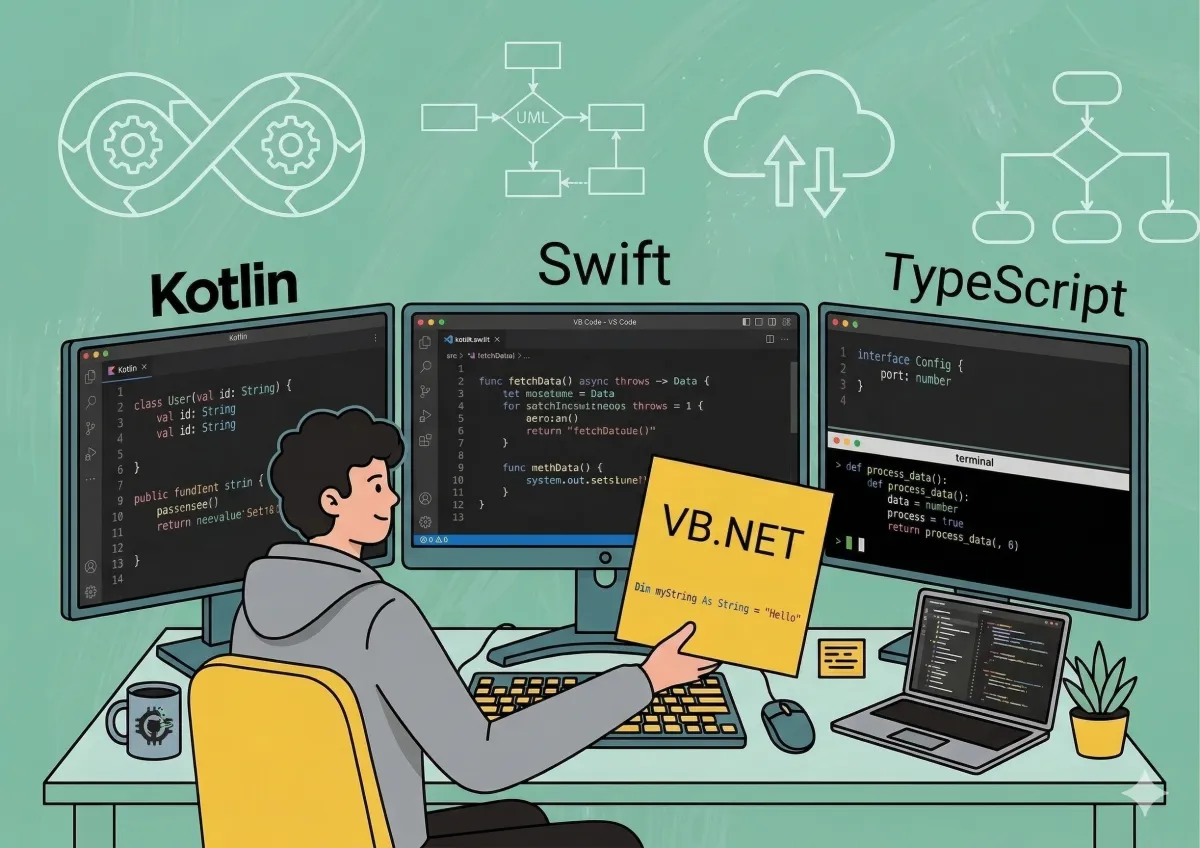
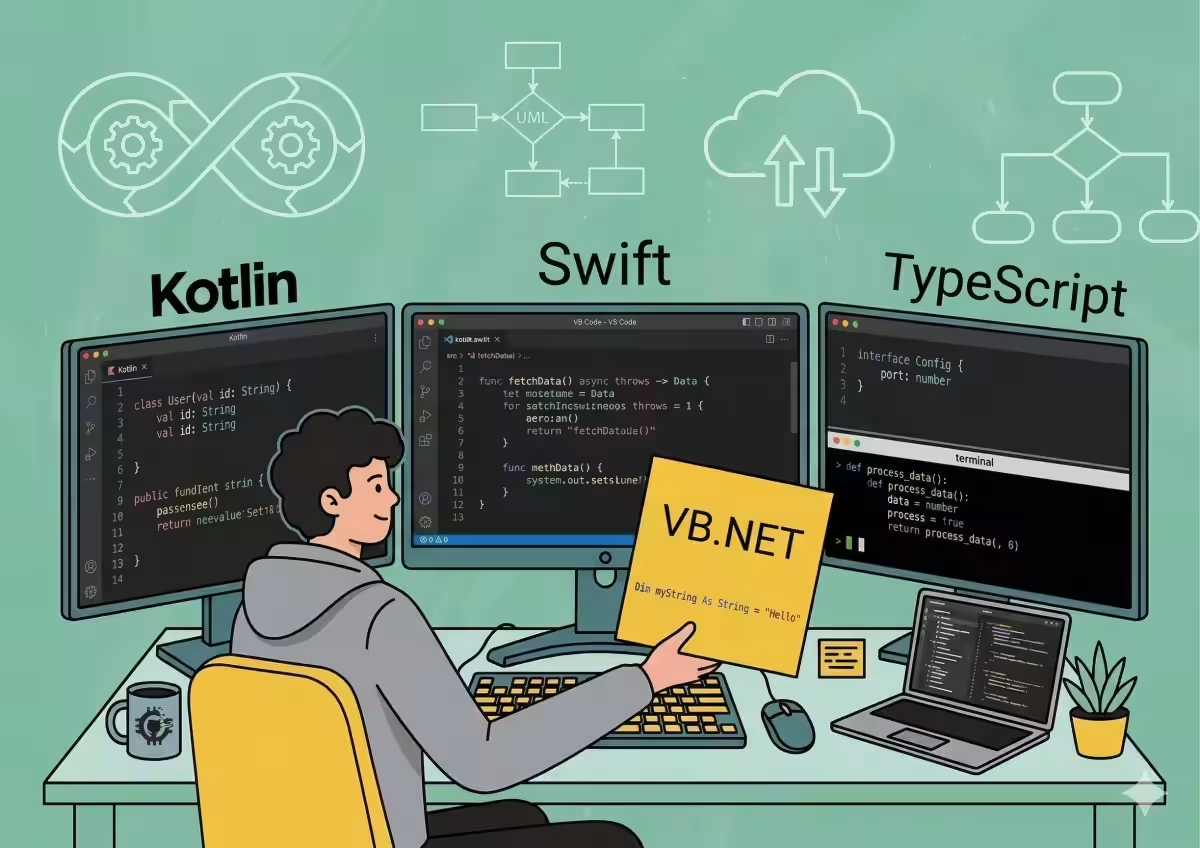
The complexity of these assignments led the engineer to gain proficiency in multiple programming languages, specifically Swift, Kotlin, TypeScript, Python, and VB.NET. However, this journey was not without its hurdles.
Facing Challenges
Despite achieving impressive milestones, the first-year engineer faced significant challenges along the way:
Challenge 1: Switching Programming Languages
Working on various projects meant constantly adapting to different programming languages. With only four months of programming education, the engineer found themselves struggling to transition smoothly between languages. Each language comes with its own syntax, conventions, and structure, making it feel like starting from scratch with every new assignment.
Challenge 2: Understanding Domain-Specific Terminology
In addition to technical language, the engineer had to familiarize themselves with industry-specific jargon, particularly in logistics. Terms such as 'supplier,' 'depositor,' 'inventory,' 'stock-in,' and 'stock-out' became significant obstacles. A solid understanding of these concepts was crucial for deciphering business specifications and successfully executing project tasks. Guidance from senior engineers was vital in obtaining this necessary industry knowledge.
Strategies for Success
To overcome these challenges, the engineer implemented two key strategies:
Utilizing AI as a Learning Tool
AI became an invaluable resource, serving as a translator for understanding different programming conventions. When faced with questions like, “How should I define a variable in this language?” or “What are the differences in syntax between Kotlin and Swift?” AI provided clear, comparative solutions that greatly assisted the engineer. By leveraging AI, the engineer could ease their way through language differences and focus on building a strong foundation.
Support from Experienced Colleagues
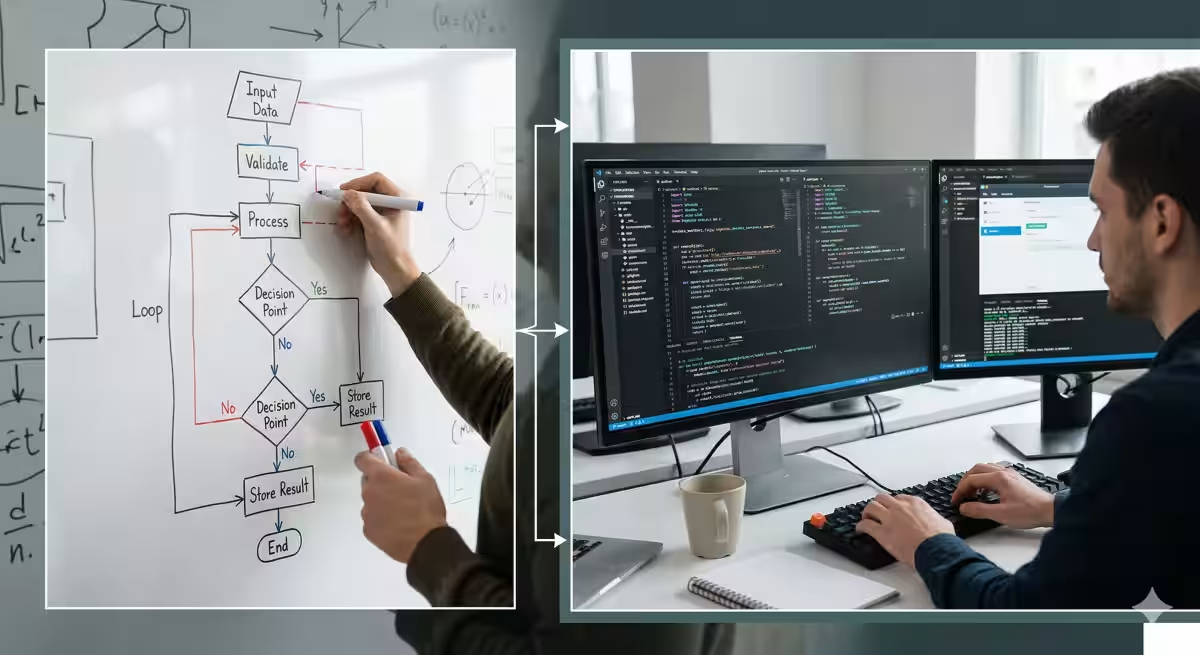
When it came to mastering advanced techniques and knowledge, senior engineers played an indispensable role. Their insights and practical advice, derived from years of experience, proved to be more valuable than anything found online. Visual aids and diagrams were instrumental, making complex concepts easier to grasp and understand.
By effectively combining AI support with mentoring from colleagues, the engineer accelerated their learning process tremendously.
The Evolution of AI Interaction
Throughout the year, the engineer's relationship with AI evolved significantly:
- - Months 1-4: A focus on direct coding without AI assistance.
- - Month 6: Gradual integration of AI as a supplementary aid.
- - At the one-year mark: AI now assists in about half of the development tasks.
- - Currently: AI takes on approximately 80% of development efforts using Claude Code.
This progression highlights a shift in the role of software engineers, as AI increasingly handles programmable tasks; engineers now focus more on quality control and managing outputs produced by AI. However, a thorough understanding of programming knowledge remains essential for effectively directing AI and ensuring project quality.
Reflections from a First-Year Engineer
As AI tools like ChatGPT and Gemini become more ingrained in daily life, it's clear that their application in development is also on the rise. The pace of AI advancement shows no signs of slowing down compared to just a year ago. Concepts of fully AI-driven project specifications and testing are emerging as common discussion points.
As the role of engineers continues to evolve, it is crucial to embrace flexibility and adaptability. Partnering with AI technology, I aim to deliver greater value to our clients and ensure that our engineering practices keep pace with the evolving technological landscape.
Company Overview
OM Network Inc.
Location: Niigata, Niigata Prefecture
CEO: Shinya Yamagishi
Business Focus: Business systems development, Shift management system “R-Shift”
Website: OM Network




Topics Consumer Technology)

【About Using Articles】
You can freely use the title and article content by linking to the page where the article is posted.
※ Images cannot be used.
【About Links】
Links are free to use.