



Discovery of a Novel Transport Protein for Cyclic β-1,2-Glucans: Unraveling Unique Substrate Recognition Mechanisms
Unveiling a New Transport Protein for Cyclic β-1,2-Glucans
Recent breakthroughs in the field of molecular biology have led to the discovery of a new transport protein that binds specifically to cyclic and linear β-1,2-glucans. This research, conducted by a team of scientists from Tokyo University of Science and Niigata University, promises significant implications for the medical field due to the unique properties of cyclic sugars that can encapsulate other molecules.
Overview of the Research
The research team, comprising Associate Professor Masahiro Nakajima from the Department of Life Science and Biology at Tokyo University of Science, Professor Hidetaka Torigoe from the Department of Applied Chemistry, and Associate Professor Hiroyuki Nakai from Niigata University, has made an unprecedented discovery in recognizing β-1,2-glucans—sugar chains with a unique binding style crucial in various biological processes, including bacterial pathogenicity and symbiosis.
Cyclic β-1,2-glucans are particularly noteworthy for their potential applications as encapsulating compounds in pharmaceuticals and food science. While previous studies have looked into the enzymes breaking down these sugars, the mechanisms by which β-1,2-glucans are transported into cells have remained largely enigmatic—until now.
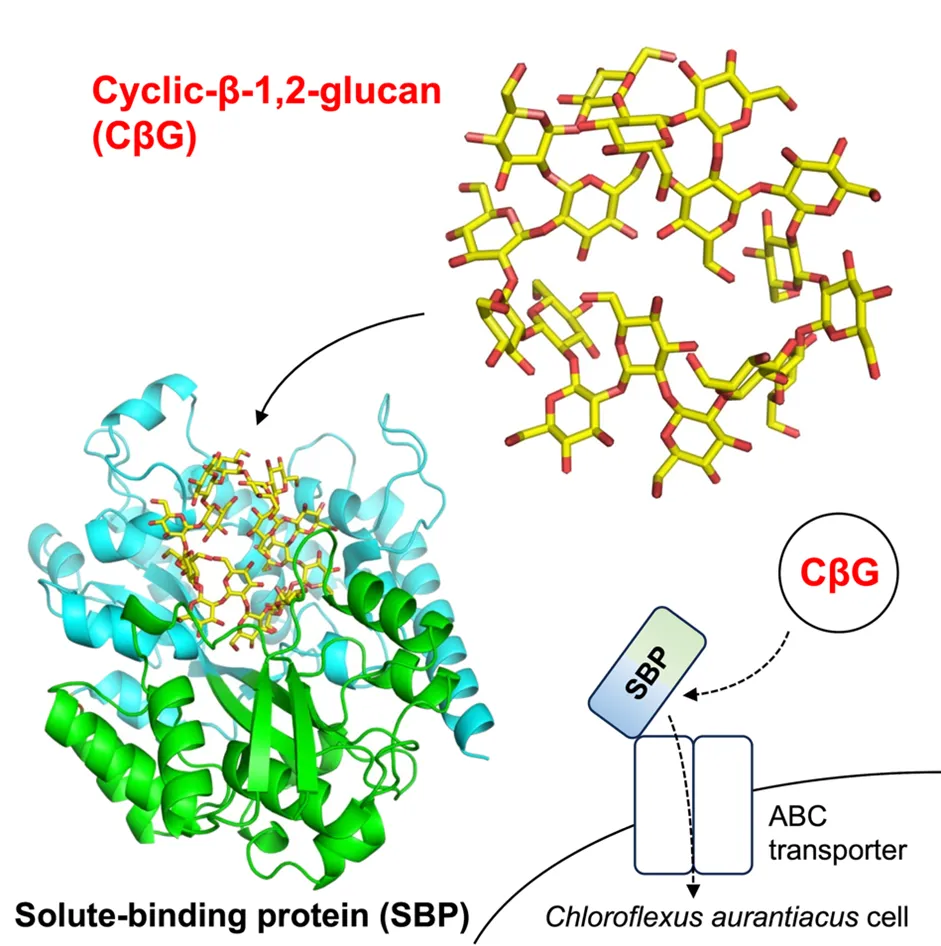
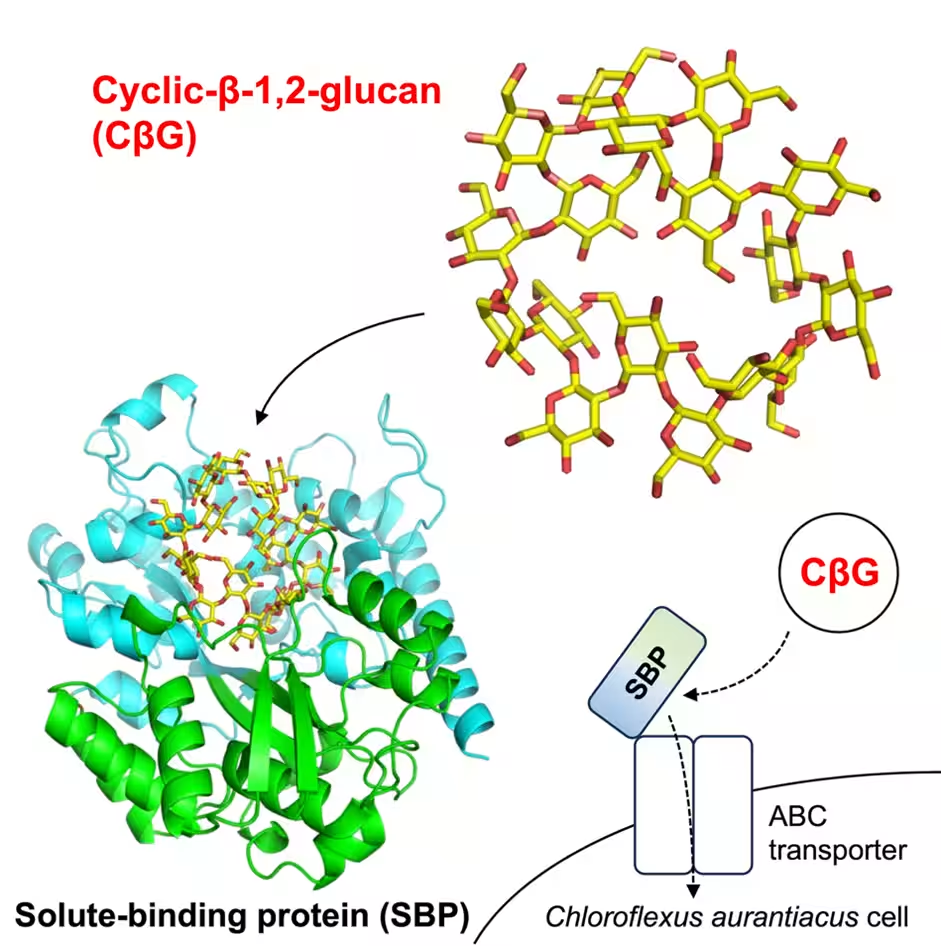
In their study, the researchers investigated the genome of Chloroflexus aurantiacus, a species of filamentous photosynthetic bacteria, to identify a candidate protein named Chy400_4166. Using functional analysis and X-ray crystallography, they established that this protein exhibits a high affinity for both cyclic and linear β-1,2-glucans, diverging fundamentally from any known β-1,2-glucan transport proteins recognized previously.
Structural Insights and Functional Analysis
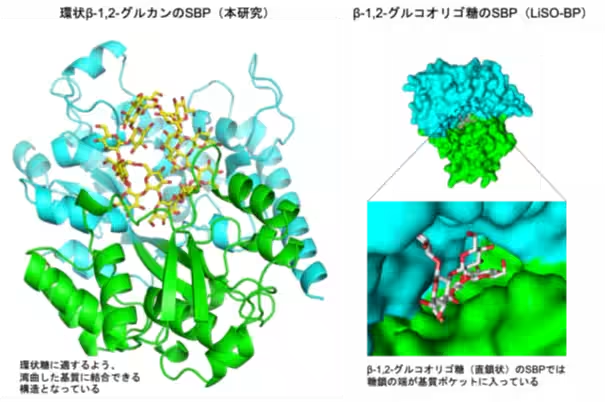
The structural analysis revealed that Chy400_4166 binds its substrates uniquely—specifically at the curved midsection of the glycan. This finding hints at its evolutionary adaptation to efficiently capture cyclic forms of sugar, differing even from linear-based binding mechanisms seen in other proteins. The study indicated that Chy400_4166 does not merely recognize the terminal ends of sugar chains but interacts with the mid-structure of the glycan itself, lending insight into its unique binding mode.
Using isothermal titration calorimetry (ITC), researchers quantitatively assessed Chy400_4166's binding affinity, confirming its specific interaction with cyclic β-1,2-glucans over other β-glucans derived from barley, emphasizing its specialized role in β-1,2-glucan transport.
Implications of the Findings
This discovery is groundbreaking, not only shedding light on the transport mechanisms of β-1,2-glucans but also providing critical insights into the general behaviors of cyclic sugars within biological systems. Understanding the transport protein's role enables researchers to form a clearer picture of bacterial pathogenicity and the mechanisms of symbiosis.
The implications for medical science are vast, as the findings can potentially influence future applications in drug delivery, food technology, and biomedical research. The research team is optimistic that their work lays the groundwork for further exploration into the roles of cyclic sugars and their interactions within living organisms.
As Professor Nakajima stated, "This discovery provides a basis for investigating the dynamics of cyclic sugars in biological environments, and we hope it leads to significant developments in future research applications."
Future Directions
Moving forward, the researchers plan to delve deeper into exploitation of the metabolic pathways involved in the uptake of β-1,2-glucans, particularly exploring the ensemble of enzymes encoded along with Chy400_4166 that facilitate breaking these sugars down post-uptake. Such studies could enhance our understanding of how β-1,2-glucans contribute to ecological systems and their potential as therapeutic agents.
With the study published online in the international journal FEBS Journal, the scientific community eagerly anticipates the ripple effect this discovery will have on both fundamental research and practical applications in the medical field.

Topics Health)




【About Using Articles】
You can freely use the title and article content by linking to the page where the article is posted.
※ Images cannot be used.
【About Links】
Links are free to use.