



Exploring the State of Corporate Vision Integration: Insights from Imagina's Survey
Understanding the Current State of Corporate Vision Integration
Introduction
In a recent survey conducted by Imagina Inc., a Tokyo-based consulting firm specializing in organizational development and human resource training, responses from 784 executives and HR managers highlighted significant challenges and awareness surrounding the integration of corporate vision within organizations. This article delves into the key findings and implications of the survey.
Survey Overview
The survey targeted Imagina's email magazine subscribers, gathering insights over a period from August 28 to September 4, 2025, through an online research format. The demographics of the respondents included a significant proportion of executives (37.2%), with department heads, HR managers, and personnel officers making up smaller portions of the responses. The majority of the companies represented had employee counts from 101 to 300, primarily from manufacturing, retail, and various other sectors.
Key Findings
High Awareness of Integration Challenges
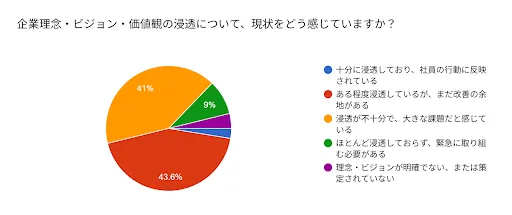
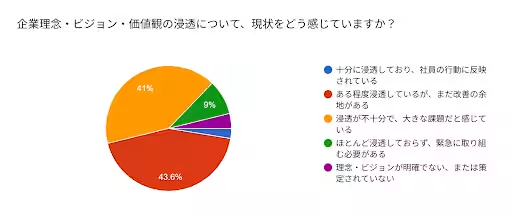
The survey revealed that approximately 85% of participating companies recognize various challenges related to the integration of their corporate ideologies, values, and visions. Specifically, 43.6% of respondents indicated that their company has seen a degree of integration but acknowledges room for improvement, while 41.0% feel that integration is insufficient and presents a major challenge. Furthermore, 9% reported that integration is lacking to the point of needing immediate attention.
Management as a Crucial Factor
Among the reported organizational challenges, 'insufficient management capabilities among supervisors' topped the list at 75.6%. Other notable concerns included difficulties in talent recruitment and a lack of autonomy among employees, each cited by 50.0% of respondents. A significant 39.7% also recognized the inadequate integration of corporate values as a pressing issue. This highlights a crucial focus area for companies striving to enhance their organizational culture.
Understanding Gaps in Leadership
The most prominent barrier to effective integration of corporate vision was identified as 'insufficient understanding among management,' noted by 47.4% of respondents. This underlines the necessity for greater emphasis on improving managerial comprehension regarding the importance of corporate ideologies. Additionally, 43.6% indicated that a disconnect exists between corporate values and HR evaluations, while 42.3% recognized a lack of ongoing integration strategies, spotlighting weaknesses in current systems and structures.
A Demand for Tailored Support
When it comes to external training sessions and seminars to promote vision integration, about 90% expressed openness to participation. While 44.9% indicated a conditional willingness based on program content, 26.9% were interested if time permits, and 14.1% expressed a definitive interest in attending. Significant themes of interest included transforming organizational culture, supervisor-oriented integration training, and improving employee engagement strategies.
Expectations for Customized Assistance
Respondents revealed a strong desire for customized external consultancy and training solutions. The need for 'tailored support' topped the list at 19.2%, followed closely by requests for assistance in changing management viewpoints and ongoing engagement strategies. Companies are evidently seeking individualized, not one-size-fits-all, support to foster true organizational change.
Imagina's Response and Future Directions
In light of the findings, Yoshiaki Sekino, President of Imagina, commented on the critical role management plays in recognizing and implementing necessary changes for vision integration. The company is actively expanding its bespoke support programs to address these challenges.
Upcoming Initiatives
- - Specialized Training for Management: Developing and enhancing programs focused on improving managerial capabilities and understanding regarding vision integration.
- - Consulting on HR Frameworks: Offering consultancy to align corporate ideologies with evaluation and compensation systems.
- - Long-term Partnership Programs: Providing services that support sustainable organizational change through ongoing partnerships.
- - Industry-specific Seminars: Sharing successful case studies of vision integration tailored to distinct industry characteristics.
Conclusion
The survey conducted by Imagina has brought to light the pressing need for improved understanding and integration of corporate vision across many organizations. By addressing management capabilities and fostering customized support, companies can work towards meaningful cultural transformation, ensuring their core values are effectively woven into everyday operations.
Contact Information
For more detailed information on how Imagina can provide support tailored to your organization, please reach out to:
- - Name: Minami Aoe
- - Phone: 03-3511-5525
- - Email: [email protected]
- - Website: Imagina Inc.
Topics People & Culture)
【About Using Articles】
You can freely use the title and article content by linking to the page where the article is posted.
※ Images cannot be used.
【About Links】
Links are free to use.