



Exploring the Impact of Physical AI on Industrial Transformation in 2026
Seminar on The Impact of Physical AI on Industrial Transformation
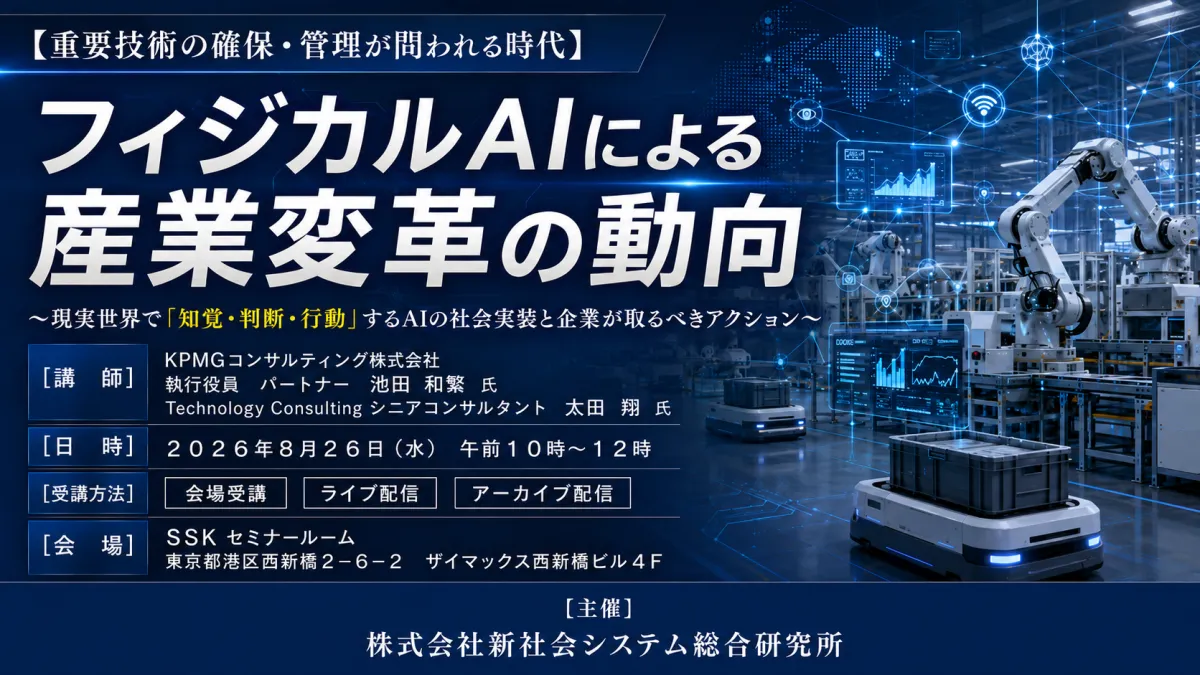
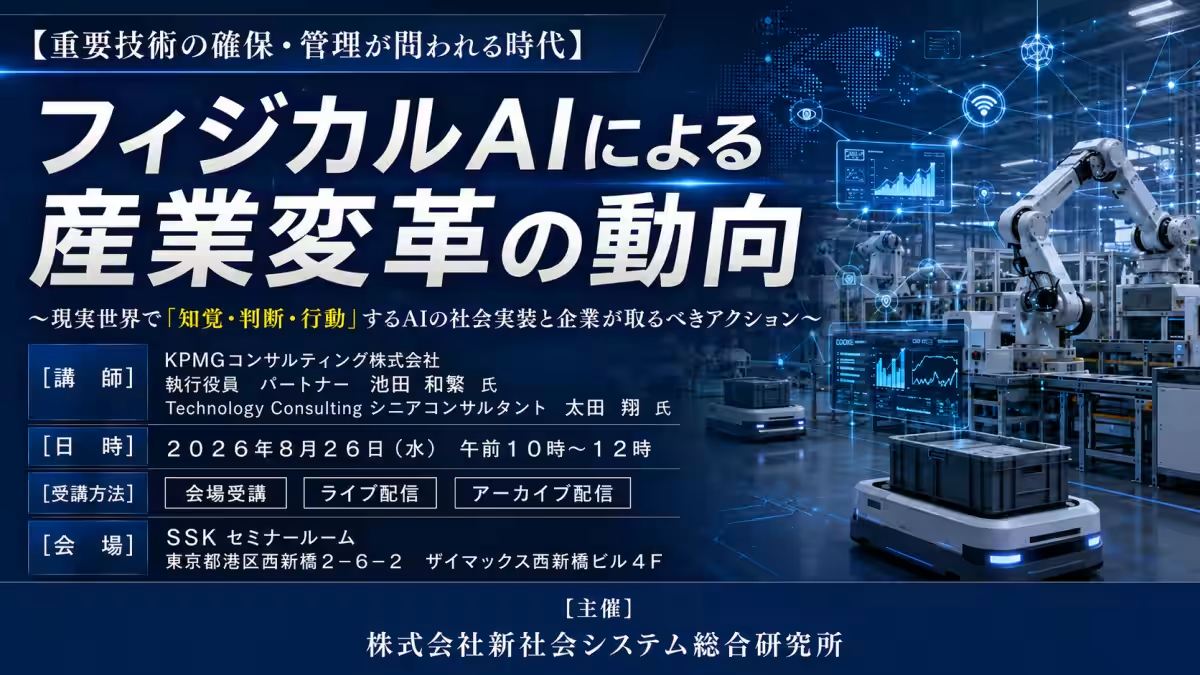
On August 26, 2026, KPMG Consulting will host an engaging seminar exploring the transformative role of Physical AI in industry. Experts Kazushige Ikeda, Executive Officer and Partner, and Sho Ota, Senior Consultant from the Technology Consulting division, will lead discussions on how Physical AI, which interacts with the physical world through perception, judgment, and action, is reshaping various sectors.
Seminar Details
- - Date & Time: August 26, 2026, 10 AM - 12 PM (JST)
- - Venue: SSK Seminar Room, 4F, Zaimax Nishi-Shinbashi Building, 2-6-2 Nishi-Shinbashi, Minato-ku, Tokyo
- - Attendance Options: On-site participation, live Zoom webinar, and archived viewing available for two weeks.
Key Topics Covered
In recent years, AI has evolved from digital processing tasks such as text generation and image recognition to Physical AI, which incorporates sensors, robots, vehicles, and industrial machinery. This evolution addresses several significant industry challenges, including labor shortages, skill transfer, hazardous work tasks, and productivity improvement. The seminar will cover:
1. Understanding Physical AI
- Definition & Significance: A comprehensive explanation of Physical AI, which not only analyzes data but also interacts with the real world.
- Background & Challenges: Discussion on labor shortages and the necessity for skilled labor in the industry that propelled the relevance of Physical AI.
- Distinction from Traditional AI: A detailed comparison between conventional AI and Physical AI that collaborates with robots and machinery.
2. Technologies Enabling Physical AI
- Core Technologies: An overview of foundational models, semiconductors, sensors, actuators, edge devices, and robotics essential for implementing Physical AI.
- Functional Elements: Examine six foundational elements necessary for Physical AI to operate effectively in real-world environments: embodiment, sensory perception, motor abilities, learning capacity, autonomy, and context sensitivity.
- Geopolitical Risks: Insights into the economic security implications regarding supply chain risks for critical components underpinning Physical AI technology.
3. Application in Manufacturing
- Use Cases: Examples of how industries have begun to integrate Physical AI in workplace restructuring, skill acquisition, and maintenance tasks.
- Implementation Challenges: Practical issues around infrastructure models, architecture, security, governance, and procurement risks that firms need to address when adopting Physical AI.
4. Future Actions for Companies
- Strategic Considerations: Guidelines for businesses on how to progress with the societal implementation of Physical AI, including use case development, technology foundation enhancement, data governance, and risk management regarding supply chains.
5. Q&A Session & Networking
Participants will have the opportunity to engage in an interactive Q&A session and network with experts and peers in the field.
For inquiries, please contact:
SSK (Shin Shakai System Sogo Kenkyusho)
Address: 4F, Zaimax Nishi-Shinbashi Building, 2-6-2 Nishi-Shinbashi, Minato-ku, Tokyo
Email: [email protected]
Phone: 03-5532-8850
Website: SSK Official Site
SSK has been providing business seminars and information services since its establishment in December 1996, organizing approximately 500 seminars annually. The organization aims to deliver high-level strategies, marketing insights, and technological information to foster business opportunities and support corporate growth and success. SSK continues to be a strategic partner for clients, always sharing cutting-edge information in a rapidly evolving business landscape.
Topics Business Technology)
【About Using Articles】
You can freely use the title and article content by linking to the page where the article is posted.
※ Images cannot be used.
【About Links】
Links are free to use.