



Unlocking the Digital Legacy: How Families Are Accessing Deceased Loved Ones' Smartphones
The Challenge of Unlocking a Deceased's Smartphone
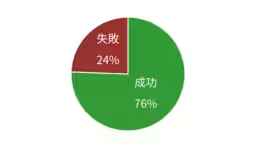
In an age where smartphones and cloud services store vast amounts of personal information, accessing a deceased loved one's digital assets has become a significant concern. A recent study conducted by GOODREI highlights that 76% of families attempting to unlock their loved ones' smartphones were successful, emphasizing the importance of proactive digital legacy planning.
Background: The Rise of Digital Assets
The proliferation of smartphones has resulted in a significant amount of personal information being categorized as digital assets. Following the death of an individual, families often face the frustrating challenge of accessing crucial information such as photos, contacts, and financial data, particularly when passwords are unknown.
GOODREI's investigation into the complexities surrounding digital inheritance aims to shed light on this pressing societal challenge, raising awareness of the experiences families encounter when attempting to retrieve digital memories after a loved one's passing.
Key Findings
1. Increasing Attempts to Unlock Smartphones
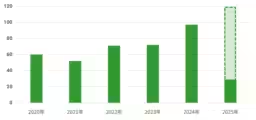
Surveying families who lost close relatives in the past five years revealed a growing number of attempts to unlock deceased smartphones. Specifically, since 2021, there has been a noticeable increase in such attempts, with 2025 showing a potential uptick compared to earlier years. This rise corresponds to the increasing ownership of smartphones and the value of the data they hold.
2. Who Initiates the Unlocking Attempts?
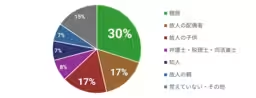
When families were asked who first proposed unlocking the deceased's smartphone, 30% identified other relatives as the initiators. The deceased's spouse and children were also key contributors, indicating that family members often encourage these attempts, with professional input from lawyers or acquaintances being relatively rare.
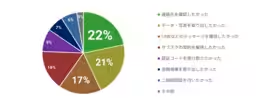
3. Reasons Behind the Unlocking Attempts
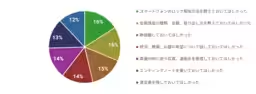
When prompted about their motivations, the predominant reason cited was the desire to retrieve contacts (22%), followed closely by the wish to recover data and photos (21%). This demonstrates a strong connection to the deceased, illustrating that families seek to keep memories alive while handling various logistical matters related to the funeral.
Additionally, practical reasons like the need for subscription cancellations or retrieving financial assets also motivated a segment of respondents, hinting at the growing significance of managing digital finances.
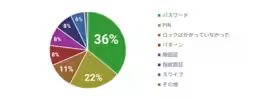
4. Common Unlocking Methods
The study found that passwords (36%) were the most common unlocking method used, with PIN codes following. The relatively low usage of biometric methods such as face or fingerprint recognition indicates that older authentication styles are still prevalent among deceased individuals.
5. Surprising Success Rate
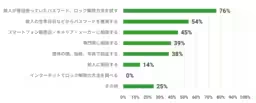
The astonishing 76% success rate in unlocking attempts highlighted the connection between the family member's familiarity with the deceased’s habits and successful unlocking. Most respondents successfully revealed devices using passwords they knew or could reasonably deduce, hinting at the personal relationships that greatly aided this process. However, alternative methods like consulting third-party professionals yielded lesser success rates, underlining the challenges families face when relying on external assistance.
6. Obstacles to Unlocking
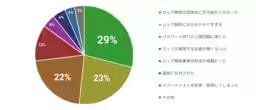
Of those who were unable to unlock the devices, most cited reasons such as “realizing that it was not realistically possible” or “the effort required to unlock was too great,” indicating the inherent difficulties when passwords remain unknown.
7. What Families Wish They Knew
Families expressed a clear desire for better communication prior to a loved one's death, with many wishing they had been informed about the unlocking process in advance. Requests included clear instructions on unlocking methods, important contact lists, and related information necessary for managing personal affairs.
Conclusion: Significance of Digital Legacy Preparation
The findings from this survey underscore the emotional and practical significance of unlocking deceased loved ones' smartphones. With a 76% success rate illuminating the intimate knowledge families have of their deceased, it becomes critical for individuals to discuss and document their digital asset management preferences whilst still alive. GOODREI advocates for families to initiate discussions about smartphone management and digital asset organization, emphasizing that such preparations can significantly alleviate burdens for surviving family members in the future. Being prepared not only preserves memories but can also prevent unnecessary complications regarding ongoing contracts and asset oversight.
In a world where digital assets are rapidly becoming an integral part of personal legacies, proactive planning is essential to ease the journey of those left behind.
Topics Other)
【About Using Articles】
You can freely use the title and article content by linking to the page where the article is posted.
※ Images cannot be used.
【About Links】
Links are free to use.