




WWF Japan's Guide on Collective Action for Watershed Management Released
WWF Japan's Groundbreaking Guide on Collective Action for Watershed Management
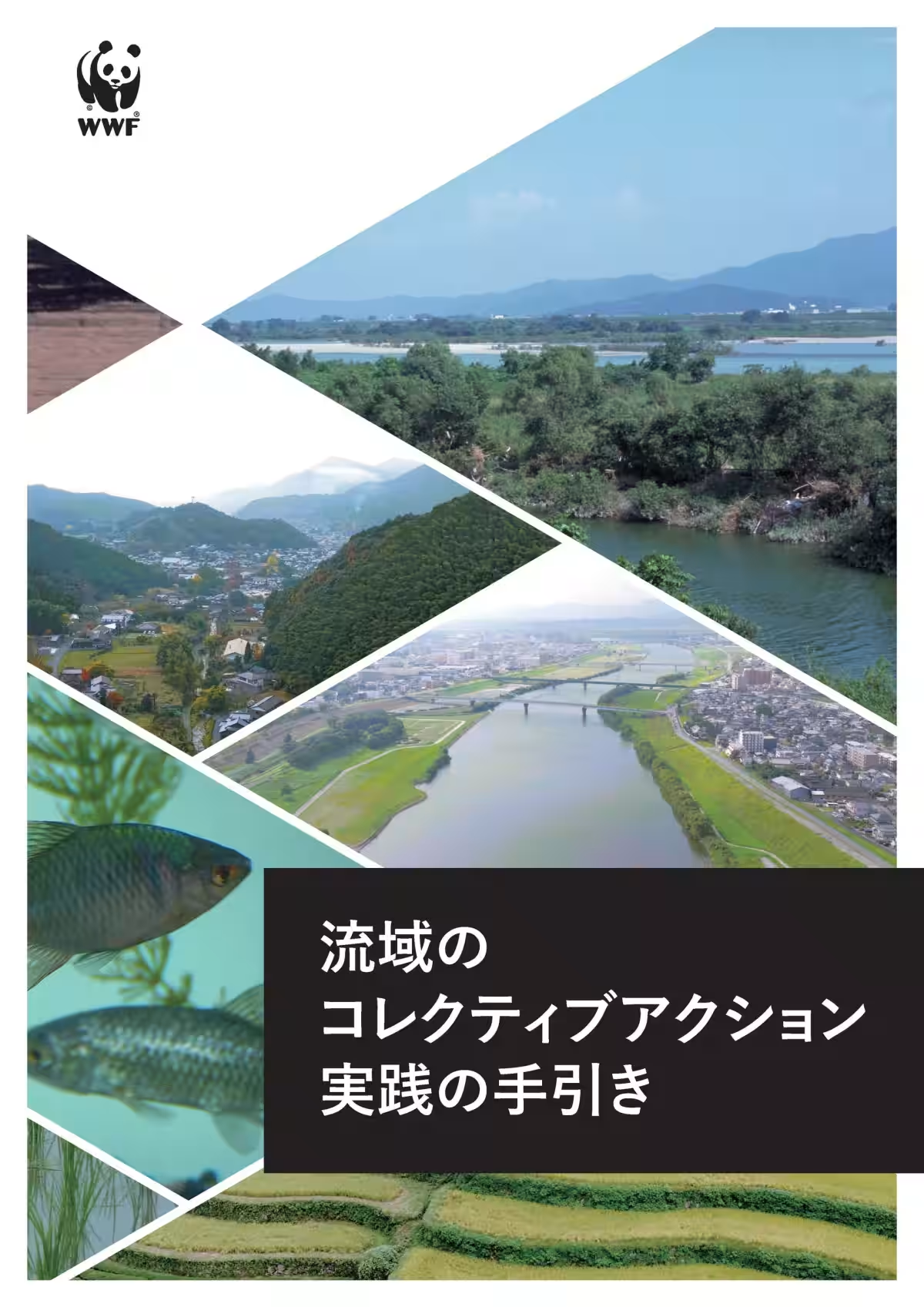
On August 1, 2026, WWF Japan released a pivotal document titled Guide to Collective Action Practices in Watersheds, which aims to support companies, local governments, and other stakeholders in tackling common challenges related to water management. This initiative is a collaboration with Yachiyo Engineering Co., Ltd., a Tokyo-based firm spearheaded by CEO Tsutomu Takahashi, to investigate prior case studies and compile an insightful report.
Understanding Collective Action
Collective action refers to the participation of diverse entities such as businesses, government agencies, and local communities coming together to address pressing issues within a watershed. Given the simultaneous crises concerning climate change and biodiversity, water is vital for sustaining both business operations and shared community resources. Therefore, a comprehensive understanding of water risks across the watershed, rather than just within individual company operations, is essential. The demand for responsible water resource management, termed Water Stewardship, has never been more urgent, placing collective action at its core.
Despite the growing recognition of these issues, there remain relatively few successful case practices in Japan. Since water risks affect multiple users within the same watershed, individual actions often fall short, emphasizing the need for collaborative approaches. This situation has prompted leading international frameworks like TNFD, CDP, SBTN, and AWS to increasingly advocate for collective action among companies.
Highlights of the Guide
WWF Japan's guide outlines the significance of collective action and practical avenues for implementation. The document provides a roadmap for businesses focused on sustainability and water resource management, detailing processes, concepts, and real-world examples. This guidance aims to empower stakeholders in effectively working together for watershed management.
The guide is readily available for download from WWF Japan’s official website: Download Here
WWF Japan's Perspective
WWF Japan emphasizes that collective action cannot merely be conceptual; it must lead to tangible results that benefit natural restoration and community engagement. The guide delineates not just the importance of collective action but also translates these concepts into actionable steps that companies can follow.
Organizations engaging in water stewardship are strongly encouraged to leverage this report to implement effective collective strategies, reinforcing the recovery of water resources and fostering a healthy ecosystem in their respective regions.
Contributions and Future Outlook from Yachiyo Engineering
Yachiyo Engineering contributed to the development of the guide through several core activities:
1. Analysis of Previous Case Studies: We investigated four successful domestic initiatives, such as the Kumamoto Water Positive Action and the Nature Positive Nasu-no-Gahara Alliance, gathering insights from various stakeholders like local governments, businesses, and financial institutions through interviews and research.
2. Best Practices and Implementation Strategies: By analyzing the case studies, we extracted success factors and common challenges, organizing them into a practical format focused on Water Stewardship.
3. Report Development Support: Our team aided in creating visuals, such as concept diagrams linking water, climate change, and biodiversity, along with correlation tables between international frameworks and collective action, enhancing comprehension for professionals.
Yachiyo Engineering offers comprehensive support ranging from information disclosure aligned with frameworks like TNFD and CDP, to the actual implementation on the ground concerning water resources and biodiversity. We remain committed to aiding companies in managing water resources effectively and facilitating collective action within watersheds, striving toward a more sustainable society.
About Sustainability Navi
Sustainability Navi is dedicated to being a partner that fosters growth for companies and communities through sustainable practices. Our main themes include climate change, water risks, and biodiversity, providing tailored support through research, assessments, policy formulation, and strategic information disclosure. We focus not only on corporate branding based on research outcomes but also on fostering collaboration among businesses, communities, and governmental organizations to meet current challenges and demands.

Topics Other)
【About Using Articles】
You can freely use the title and article content by linking to the page where the article is posted.
※ Images cannot be used.
【About Links】
Links are free to use.