



The Alarming Reality of Pest Infestations: Understanding the Threats at Home
The Alarming Reality of Pest Infestations: Understanding the Threats at Home
A recent survey conducted by Kujyo Zaurus, a pest control service based in Setagaya, Tokyo, has shed light on a troubling reality: about one in three individuals in urban areas have experienced infestations from pests like raccoons, flying squirrels, and bats in their homes. This issue has raised significant concerns about hygiene and health among respondents, with nearly half reporting feelings of unease.
As urban development and environmental changes continue to evolve, pests such as flying squirrels and raccoons have increasingly infiltrated residential neighborhoods, posing threats to the integrity of homes. However, many residents remain unaware of the severity of these risks, as the actual incidents of infestation are often not well understood.
In this survey, aimed at uncovering the truth behind home pest infestations, individuals in their 20s to 60s, who had encountered pest issues in the past three years, were questioned about their experiences. The survey ran from October 10 to October 14, 2025, and gathered responses from 1,006 participants who had dealt with pests such as raccoons, weasels, bats, and flying squirrels (excluding mouse issues).
Key Findings from the Survey
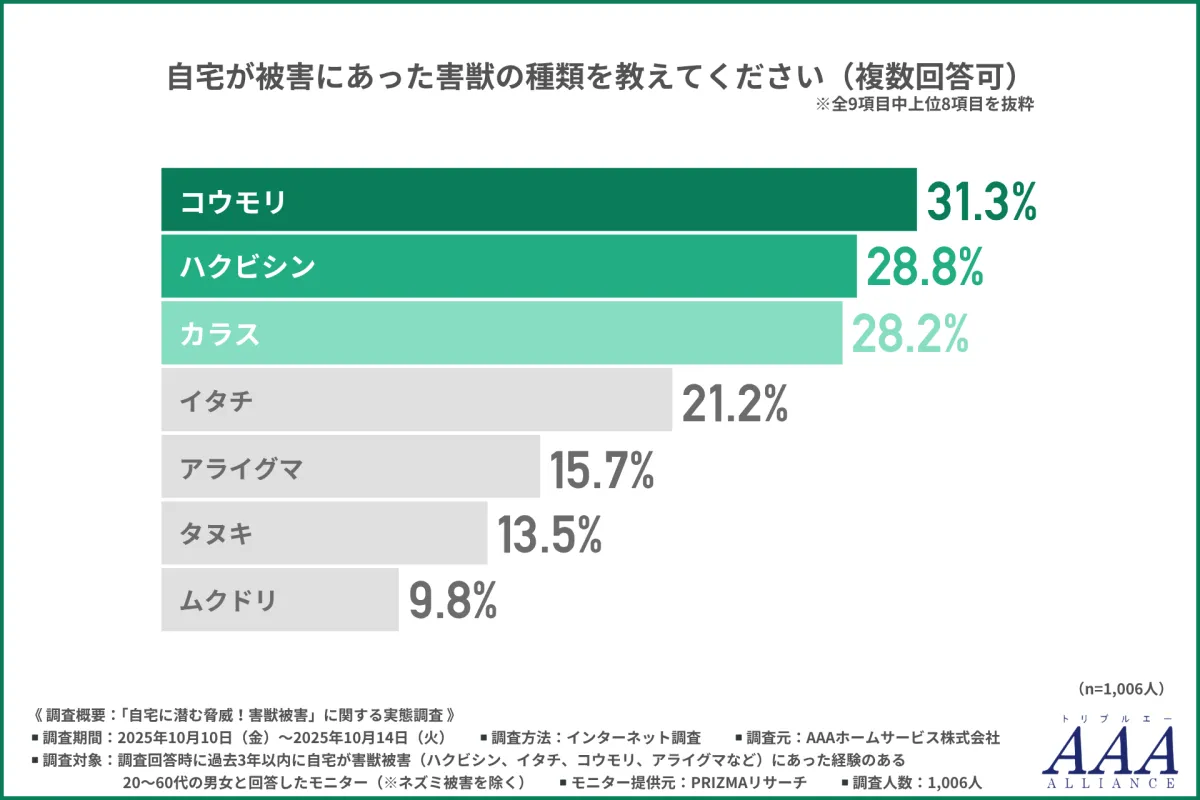
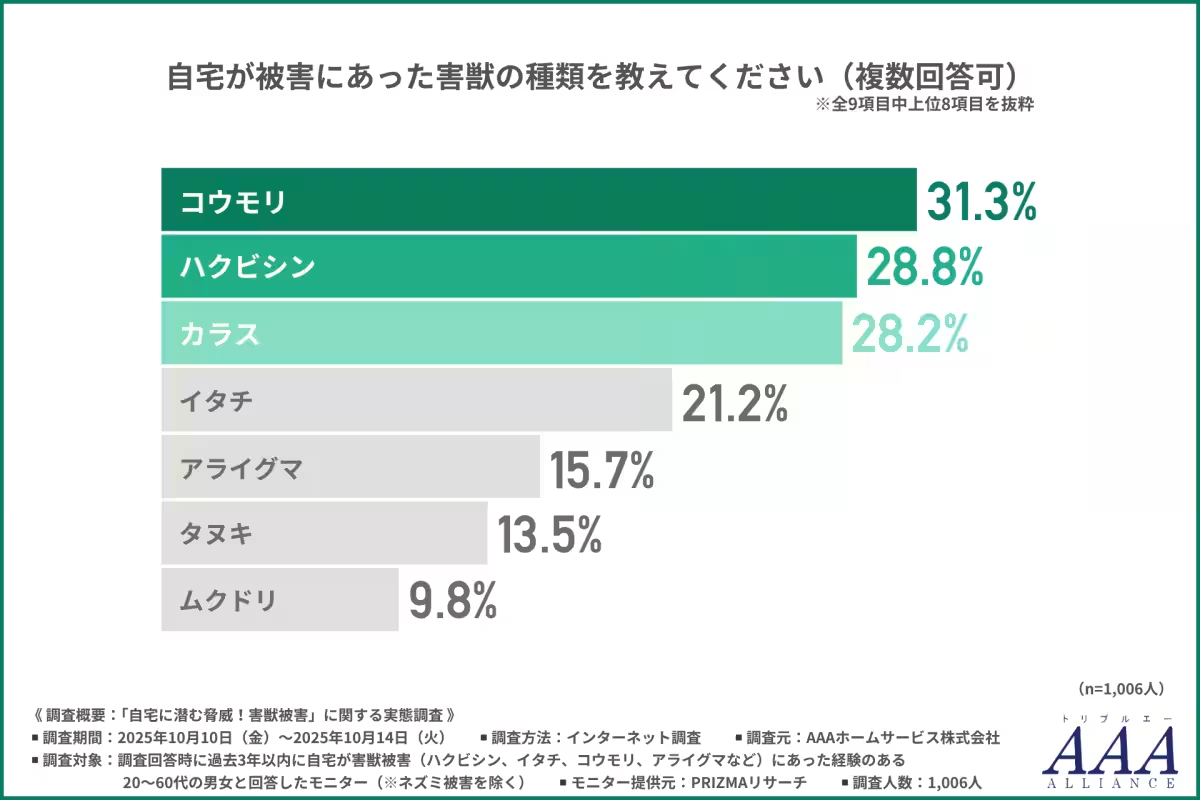
The survey revealed that bats were the most frequently reported pest, with 31.3% of respondents citing them as the culprits behind their infestations. Close behind were flying squirrels at 28.8% and crows at 28.2%. The entry points for these animals are often through attics or vents, making them difficult to detect until significant damage has occurred.
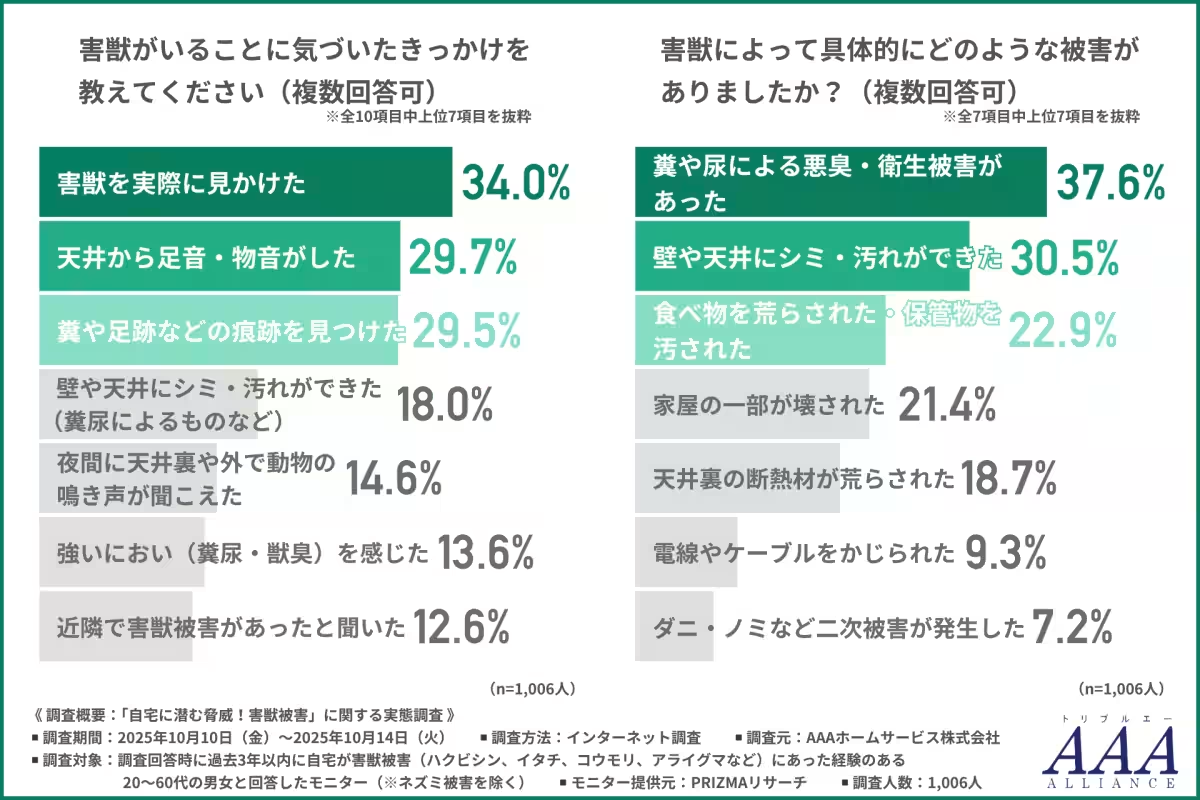
Many individuals realize there is a problem only after they have observed the pests directly, with 34% indicating that they saw the animals themselves. Additionally, others reported hearing noises from the ceiling (29.7%) or discovering droppings and footprints (29.5%) as clues to the problem. This highlights a concerning trend where infestations often go unnoticed until they escalate.
In terms of damages caused, the most common complaint was unpleasant odors and hygiene issues from droppings and urine, affecting 37.6% of respondents. This was followed by marks and stains on walls and ceilings (30.5%) and contamination of food and storage items (22.9%). Such issues not only lead to immediate discomfort but also necessitate expensive cleaning and repairs.
Financial Implications of Infestations
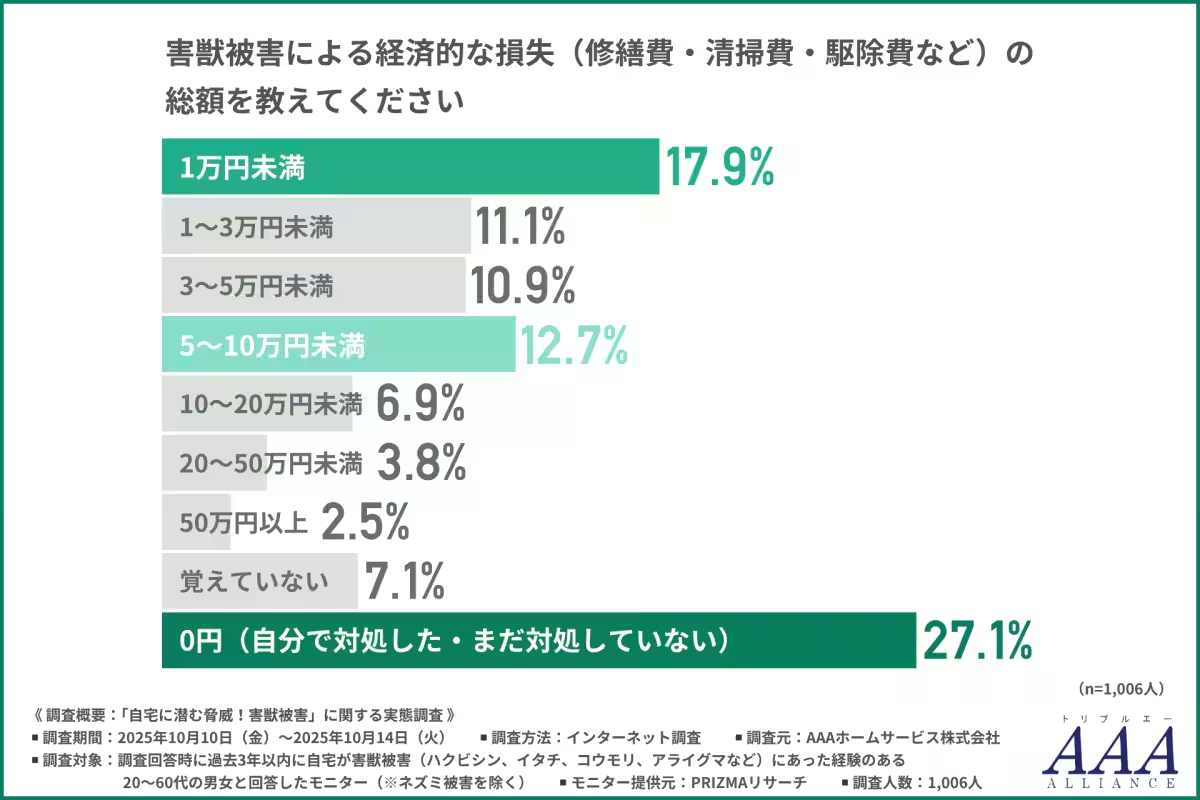
A troubling aspect of the survey findings is the financial burden that comes with pest infestations. When asked about the overall costs associated with damages, repairs, and clean-up, respondents reported varying amounts:
- - Less than 10,000 yen (17.9%)
- - Between 10,000 and 30,000 yen (11.1%)
- - Between 30,000 and 50,000 yen (10.9%)
- - Between 50,000 and 100,000 yen (12.7%)
- - Between 100,000 and 200,000 yen (6.9%)
- - Over 500,000 yen (2.5%)
- - Not remembering the amount (7.1%)
- - No costs incurred (27.1%) due to self-addressing the issue or inaction.
It appears that individuals often attempt to handle these problems themselves due to financial concerns, which can lead to further complications down the line, such as recurrences or deterioration of infrastructure. A clear need emerges for residents to weigh the costs of professional extermination services against the risks of prolonged infestations.
The Emotional Toll of Pest Issues
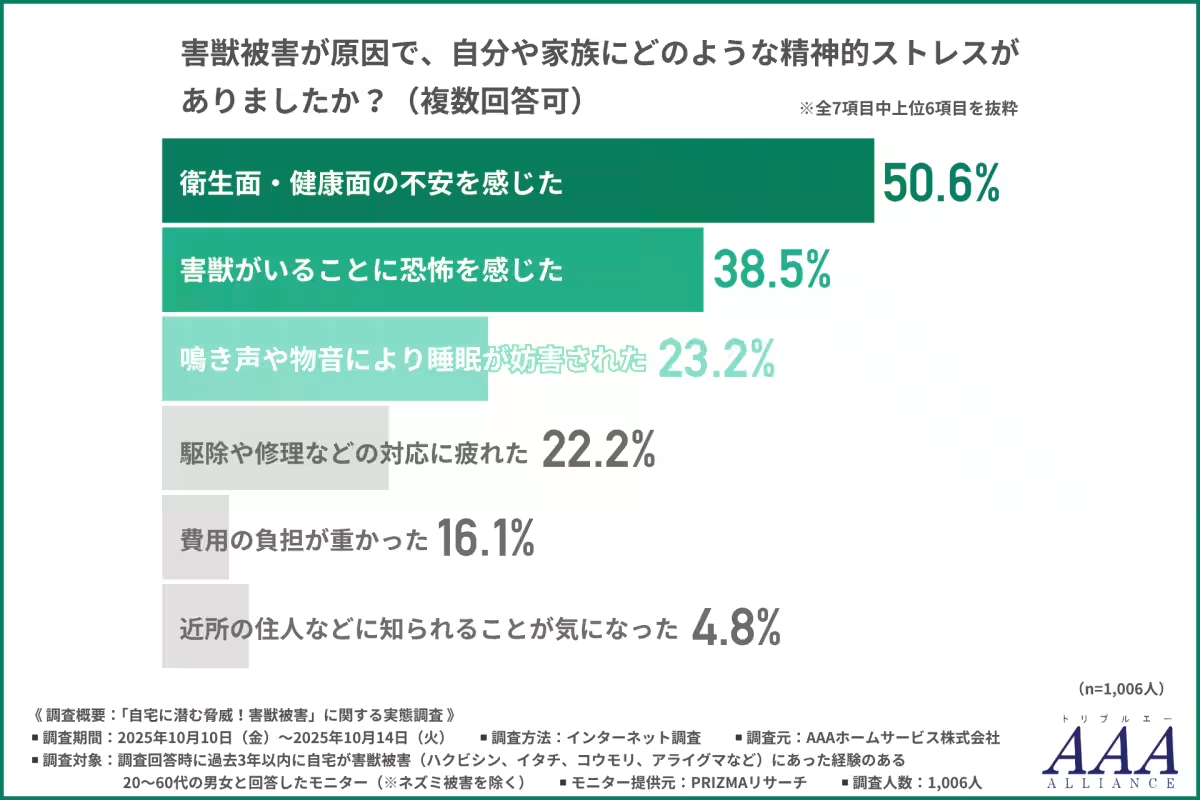
Along with financial strains, pest infestations also take a significant emotional toll on those affected. When surveyed about the mental stress associated with infestations, 50.6% reported anxiety regarding hygiene and health. 38.5% indicated they felt fear from the presence of pests, while 23.2% stated that noise and disturbances from the pests disrupted their sleep. This connection between pest presence and psychological distress underscores the broader implications pest infestations have on quality of life.
Response Strategies: DIY vs. Professional Help
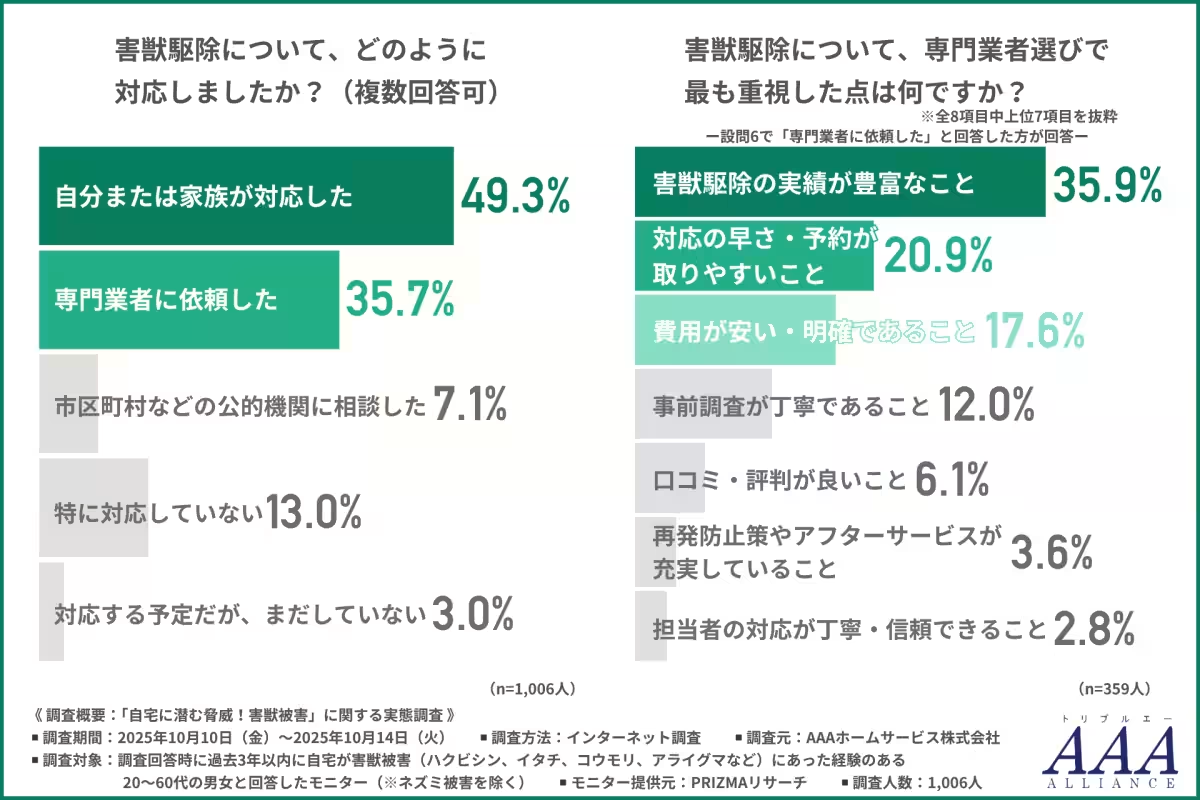
A noteworthy finding from the survey was that nearly half of respondents (49.3%) opted to tackle pest issues themselves or through family efforts, while 35.7% sought assistance from professional exterminators. The reliance on self-remediation suggests that many are hesitant to incur costs or lack trust in available services. However, given the complexities of pest management, collaboration with professionals often becomes essential for effectively mitigating these issues.
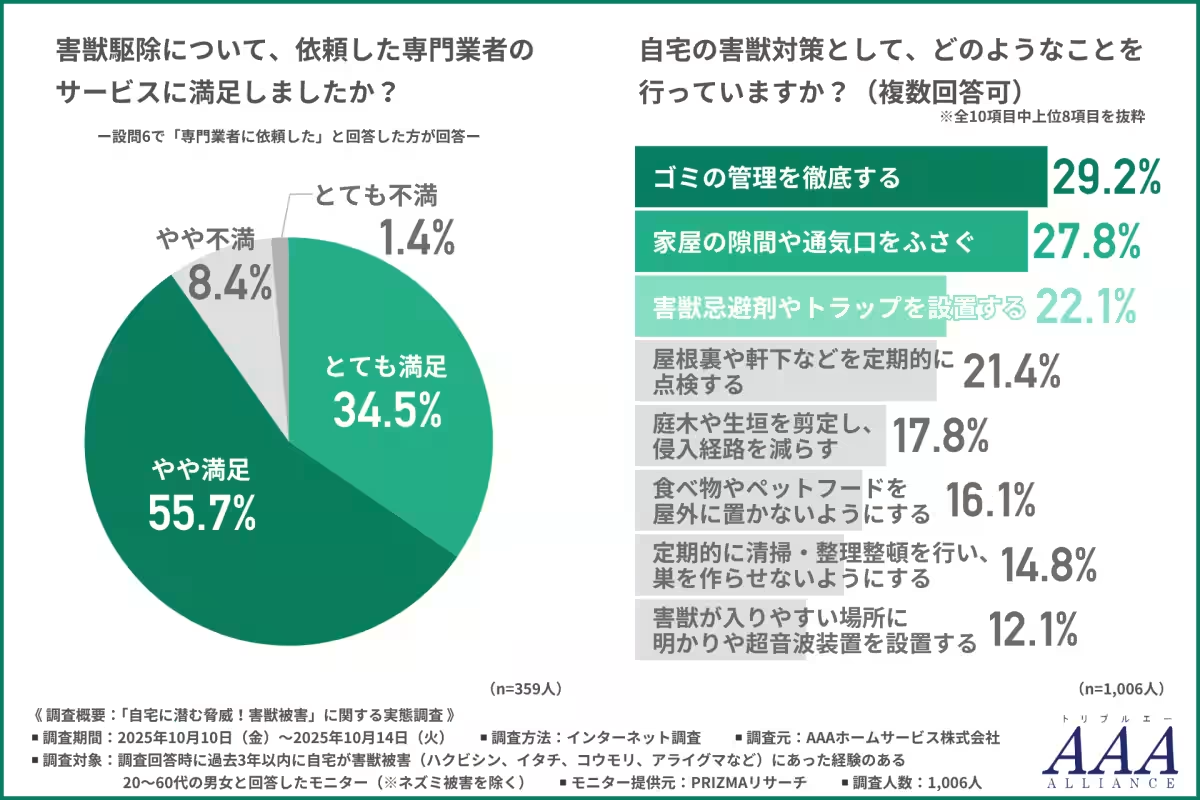
Among those who hired exterminators, the most emphasized criteria included their track record in pest control (35.9%), quick response times (20.9%), and transparent pricing (17.6%). Interestingly, satisfaction rates were high, with nearly 90% of users expressing contentment with the services received.
Preventive Measures Taken by Households
Preventive measures taken by households included managing waste effectively, like using lidded trash bins and not leaving garbage outside (29.2%), sealing gaps and vents in houses (27.8%), and installing repellent and traps (22.1%). These proactive strategies reveal a growing awareness among residents regarding the importance of maintaining a pest-free environment.
Conclusion: Tackling the Growing Pest Infestation Issue
This survey clearly indicates that pest infestations are not merely an inconvenience, but a substantial threat to living conditions and mental well-being. As urban environments increasingly provide habitats for these pests, residents must adopt a multi-faceted approach of prompt detection, professional intervention, and ongoing preventive practices. By doing so, they can safeguard both their homes and their health.
For those facing pest infestations, Kujyo Zaurus offers specialized pest control services designed to address these issues comprehensively. Providing thorough inspections, effective eradication, and preventive strategies, they are dedicated to ensuring that homes remain pest-free. Consider consulting with them for effective pest management solutions.

Topics Consumer Products & Retail)
【About Using Articles】
You can freely use the title and article content by linking to the page where the article is posted.
※ Images cannot be used.
【About Links】
Links are free to use.