



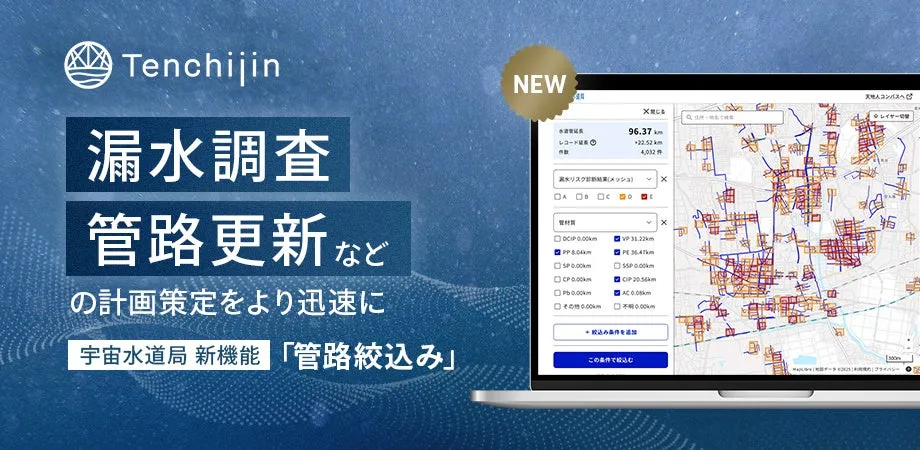
Revolutionizing Water Infrastructure Management with Pipeline Filtering Functionality
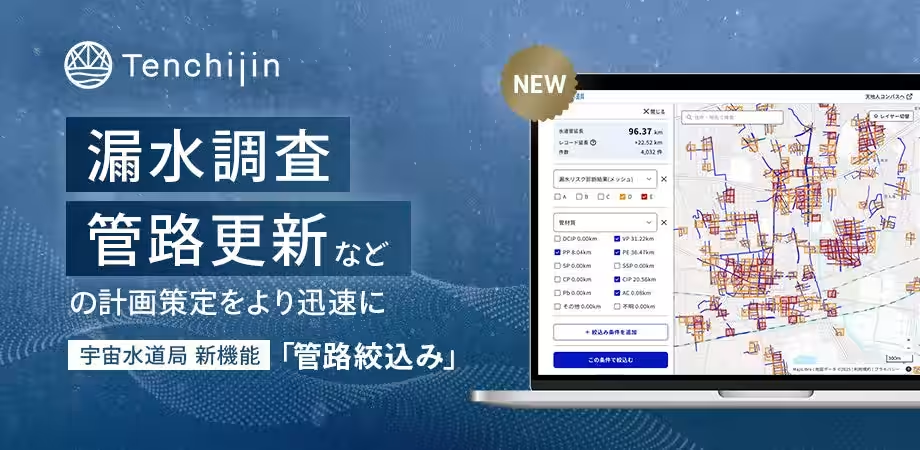
In an era where efficient water resource management is crucial for urban sustainability, Tenchijin Inc., a JAXA-certified space venture, has unveiled a significant advancement in its water management solution, the 'Space Water Bureau'. This initiative harnesses satellite data to facilitate sustainable water supply systems. The latest enhancement, termed the 'Pipeline Filtering' functionality, aims to improve the speed and precision of selecting candidates for leak investigations and pipeline renewals.
Historically, planning for the assessment and replacement of water pipelines has faced several challenges:
1. Identification of At-Risk Pipes: It has often been difficult to determine which pipeline attributes—such as purpose, material, installation year, or diameter—are linked to higher leak risks.
2. Complexity of Data Integration: Although leak risk diagnostics provide crucial insights, integrating these results with pipeline attributes to extract actionable estimates has been cumbersome and time-consuming.
Due to these challenges, achieving an accurate understanding of existing conditions and efficiently planning necessary investigations and updates has proven difficult. The newly introduced 'Pipeline Filtering' feature accelerates the selection process for leak assessments and pipeline updates, promoting more effective discussions and quicker decision-making. Water service providers can now prioritize their limited budgets more effectively.
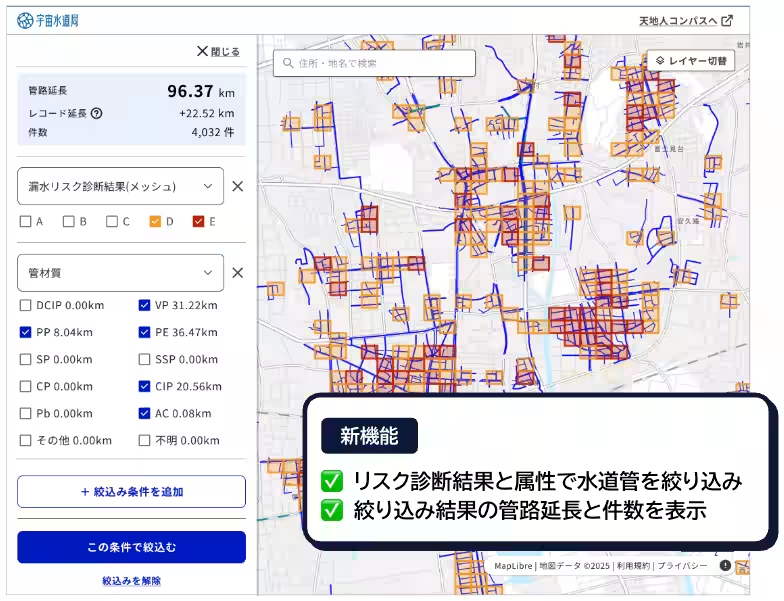
The 'Pipeline Filtering' feature allows for streamlined assessments based on five different criteria:
1. Leak Risk Diagnosis Results: Users can filter based on the leak risk assessment results, classified into mesh units across values A through E.
2. Pipeline Purpose: It enables users to specify the type of pipeline—whether it's for water supply, distribution, or use in other applications—from a selection of ten categories.
3. Pipeline Material: The filtering also includes the material types used in pipelines, allowing selection from ten materials plus others and unspecified.
4. Diameter: Users can narrow down pipelines based on diameter specifications, detailed to millimeter precision.
5. Installation Year: Filtering by the year of installation from 1950 to the present aids in prioritizing older pipelines for updates.
Future enhancements are planned, which will include filtering based on leak risk diagnosis by pipeline unit and material specifications, with results displayed for meter lengths, helping to alleviate hesitance in decision-making.
The implementation of this feature rests on Tenchijin's ongoing commitment to standardizing pipeline data. It is common for one water utility to have multiple names or documentation methods for the same type of pipe, given that records have accumulated over decades, reflecting various historical contexts. As such, when calculating or excluding specific materials, a comprehensive understanding of all naming conventions in maintained records or geographic information systems is vital, posing significant hurdles in the digital transformation process.
To address this, Tenchijin has pioneered 'data standardization' within the Space Water Bureau. This systematic approach enables automatic groupings and harmonizations of naming discrepancies, allowing accurate estimates without confusion in attribute specifications. The initiative refers to official and industry-standard classification systems laid out by bodies such as the Japan Water Works Association (JWWA) and the Japanese Industrial Standards (JIS), expanding these classifications based on on-ground data.
The development team has expressed enthusiasm about the added functionality, noting that precise information scrutiny is critical for investigation planning. By enabling users to independently select criteria, they aim to kickstart scenariographic inquiries, such as evaluating with how many meters of pipeline should be investigated. Ambitions are rooted in making this a bridge to future actions in fieldwork.
The Space Water Bureau, an innovative initiative promoting sustainable water utilities, leverages satellite data to empower various aspects of waterworks management:
1. Assistance in Leak Risk Diagnosis: High-resolution evaluations based on satellite data facilitate understanding potential water leak risks, enabling effective prioritization.
2. Pipeline Renewal Planning: The newly implemented feature helps create multiple scenarios for pipeline updates, considering infrastructure impacts on both everyday life and emergency circumstances, allowing flexibility in planning based on regional challenges.
The true innovation of the Space Water Bureau lies in merging extensive local data with cutting-edge satellite technology, leading to insights into leak risk management that refine the traditional approaches to leak audits and pipeline renewal planning.
- LinkedIn
- note
For inquiries related to leak investigation projects:
Background Issues
Historically, planning for the assessment and replacement of water pipelines has faced several challenges:
1. Identification of At-Risk Pipes: It has often been difficult to determine which pipeline attributes—such as purpose, material, installation year, or diameter—are linked to higher leak risks.
2. Complexity of Data Integration: Although leak risk diagnostics provide crucial insights, integrating these results with pipeline attributes to extract actionable estimates has been cumbersome and time-consuming.
Due to these challenges, achieving an accurate understanding of existing conditions and efficiently planning necessary investigations and updates has proven difficult. The newly introduced 'Pipeline Filtering' feature accelerates the selection process for leak assessments and pipeline updates, promoting more effective discussions and quicker decision-making. Water service providers can now prioritize their limited budgets more effectively.
Features of the New Filtering Functionality
The 'Pipeline Filtering' feature allows for streamlined assessments based on five different criteria:
1. Leak Risk Diagnosis Results: Users can filter based on the leak risk assessment results, classified into mesh units across values A through E.
2. Pipeline Purpose: It enables users to specify the type of pipeline—whether it's for water supply, distribution, or use in other applications—from a selection of ten categories.
3. Pipeline Material: The filtering also includes the material types used in pipelines, allowing selection from ten materials plus others and unspecified.
4. Diameter: Users can narrow down pipelines based on diameter specifications, detailed to millimeter precision.
5. Installation Year: Filtering by the year of installation from 1950 to the present aids in prioritizing older pipelines for updates.
Future enhancements are planned, which will include filtering based on leak risk diagnosis by pipeline unit and material specifications, with results displayed for meter lengths, helping to alleviate hesitance in decision-making.
Commitment to Standardization
The implementation of this feature rests on Tenchijin's ongoing commitment to standardizing pipeline data. It is common for one water utility to have multiple names or documentation methods for the same type of pipe, given that records have accumulated over decades, reflecting various historical contexts. As such, when calculating or excluding specific materials, a comprehensive understanding of all naming conventions in maintained records or geographic information systems is vital, posing significant hurdles in the digital transformation process.
To address this, Tenchijin has pioneered 'data standardization' within the Space Water Bureau. This systematic approach enables automatic groupings and harmonizations of naming discrepancies, allowing accurate estimates without confusion in attribute specifications. The initiative refers to official and industry-standard classification systems laid out by bodies such as the Japan Water Works Association (JWWA) and the Japanese Industrial Standards (JIS), expanding these classifications based on on-ground data.
Team Insights on Product Development
The development team has expressed enthusiasm about the added functionality, noting that precise information scrutiny is critical for investigation planning. By enabling users to independently select criteria, they aim to kickstart scenariographic inquiries, such as evaluating with how many meters of pipeline should be investigated. Ambitions are rooted in making this a bridge to future actions in fieldwork.
About the Space Water Bureau
The Space Water Bureau, an innovative initiative promoting sustainable water utilities, leverages satellite data to empower various aspects of waterworks management:
1. Assistance in Leak Risk Diagnosis: High-resolution evaluations based on satellite data facilitate understanding potential water leak risks, enabling effective prioritization.
2. Pipeline Renewal Planning: The newly implemented feature helps create multiple scenarios for pipeline updates, considering infrastructure impacts on both everyday life and emergency circumstances, allowing flexibility in planning based on regional challenges.
The true innovation of the Space Water Bureau lies in merging extensive local data with cutting-edge satellite technology, leading to insights into leak risk management that refine the traditional approaches to leak audits and pipeline renewal planning.
Company Overview
- - Company Name: Tenchijin Inc.
- - Location: 1-4-1 Nihombashi, Chuo-ku, Tokyo, 5F Nihombashi 1-Chome Mitsui Building
- - CEO: Yasuto Sakuraba
- - Business Focus: Land valuation consulting utilizing satellite data
- - Website: Tenchijin Inc.
- - Space Water Bureau Website: Space Water Bureau
- - Social Media Links:
- note
Contact Information
For inquiries related to leak investigation projects:
- - Personnel: Shirasaka, Uemura, Itoh, Kawase
- - Contact Email: [email protected]
Topics Consumer Technology)
【About Using Articles】
You can freely use the title and article content by linking to the page where the article is posted.
※ Images cannot be used.
【About Links】
Links are free to use.