




Is Bright Light Enough? Five Essential Points for Choosing Car Lights
Is Bright Light Enough?
Selecting the right car lights requires more than just focusing on brightness. Many drivers tend to believe that opting for the brightest lights will enhance their safety; however, this assumption may not hold true in every situation. In this article, we will discuss five key points you should consider when choosing car lights, as advised by Sancton Japan, a leading provider of automotive lighting solutions.
1. Lumen Levels Can Be Misleading
When you explore product specifications for car lights, the term "lumens (lm)" frequently appears. Lumens measure the total light emitted from a source, suggesting that higher numbers equate to brighter lights. However, in the context of headlamps, the focus should not just be on total light output but also on the distribution of that light.
For instance, a light producing significant lumens may not effectively illuminate the road if it does not distribute light correctly. If the distribution is wrong, it can barely light the necessary areas, potentially blinding oncoming traffic by dispersing too much light upward.
💡 Key Point: Rather than comparing just the lumens, look at how well the design directs light exactly where it's needed.
2. White Light Doesn’t Always Equal Better Visibility
Another aspect to consider while choosing car lights is the “color temperature,” typically measured in Kelvin (K). Lower Kelvin values produce yellower light, while higher values lead to bluer or whiter light. While a sharp, white beam might enhance the visual appeal of a car, it doesn’t necessarily guarantee improved visibility.
The situation can vary greatly based on driving conditions like rain, fog, or snow, so selecting light color should stem from understanding one's typical driving environment rather than mere aesthetics.
💡 Key Point: Look for lights that suit your typical environmental conditions, not just those that look the trendiest.
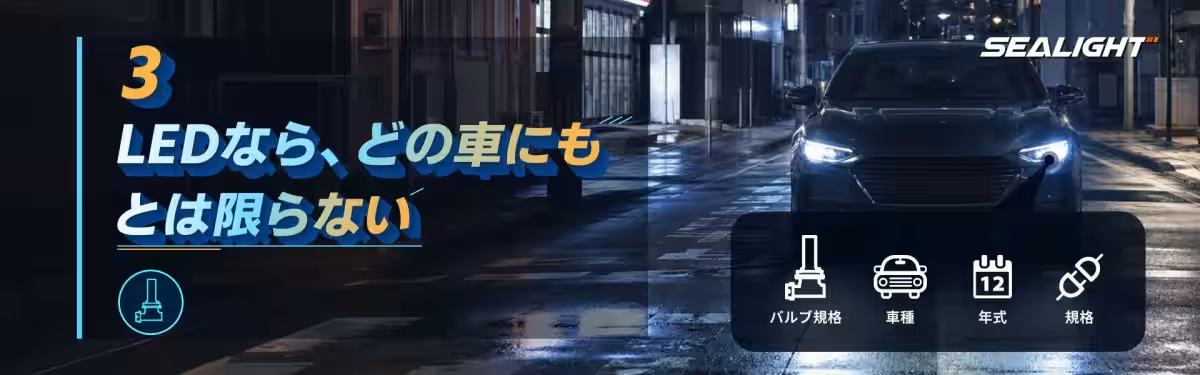
3. Compatibility with Your Vehicle is Crucial
When opting for LED bulbs, some drivers mistakenly believe that any bulb will fit as long as it matches in shape. That's not always true, as compatibility can depend on various factors including vehicle make, model, and the specifications of the original light setup.
Prior to making a purchase, it’s essential to verify aspects such as:
- - Bulb Standards: Ensure it meets vehicle specifications.
- - Installation Space: Confirm that there’s adequate room for bulbs and cooling components.
- - Power Specifications: Match with the vehicle’s electrical system.
- - Cooling Structure: Ensure there’s space for fans or heat sinks.
- - Water Resistance: Compatibility with headlight unit for moisture prevention.
- - Electronic Control: Check compatibility with your vehicle’s control system.
💡 Key Point: Always check your vehicle type, model year, and specifications before making a choice.
4. Don’t Just Look for “Inspection Compliance”
Many users prioritize the “inspection compliance” aspect when considering light replacements. While it is indeed important to meet safety regulations, it's equally necessary to examine proper alignment and light distribution when installing headlamps.
Headlights should not only illuminate necessary areas but also avoid glaring other road users. Issues like misalignment after installation can result in improper light coverage, affecting both visibility and safety for surrounding motorists.
💡 Key Point: Focus on correct illumination, not just brightness. Adjustments may be needed to ensure proper alignment after replacement.
5. Match Lights to Your Driving Environment
Lastly, factors like driving locations—urban versus highway conditions—should influence the lighting choice. Different environments necessitate varying capabilities in lights.
- - Urban Settings: Here, you should focus on surrounding visibility and light distribution for pedestrians.
- - Highways: Brightness that allows for clear viewing of long stretches ahead is crucial here.
- - Wet Conditions: You may need lights that perform well on slippery surfaces.
- - Rural or Mountain Roads: Adequate consideration of the surrounding areas and terrain is essential.
💡 Key Point: Shift your criteria from purely brightness to matching the light with your driving conditions for better results.
Recap of the Five Key Points
Here's a quick summary of the essential considerations:
1. Don’t judge visibility solely by lumen levels.
2. Avoid solely selecting lights based on their whiteness.
3. Confirm compatibility with your vehicle’s specifications.
4. Check both inspection compliance and light distribution.
5. Tailor your choice based on your driving environment.
Conclusion
Selecting car lights isn't just about brightness; it's about understanding the broader picture. Evaluating visibility, compatibility, driving conditions, and their potential impact on other drivers are all vital concerns. Adjusting your selection criteria can lead to safer and more comfortable experiences during nighttime driving.
Through initiatives to share accurate knowledge on automotive lighting, Sancton Japan aims to help drivers choose lights compatible with their vehicles and their typical driving experiences.






Topics Consumer Products & Retail)








【About Using Articles】
You can freely use the title and article content by linking to the page where the article is posted.
※ Images cannot be used.
【About Links】
Links are free to use.