



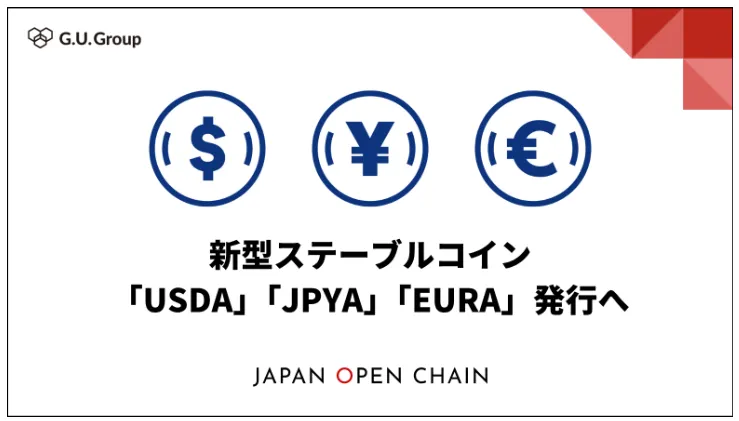
The Launch of New Stablecoins USDA, JPYA, and EURA Through DAO Governance
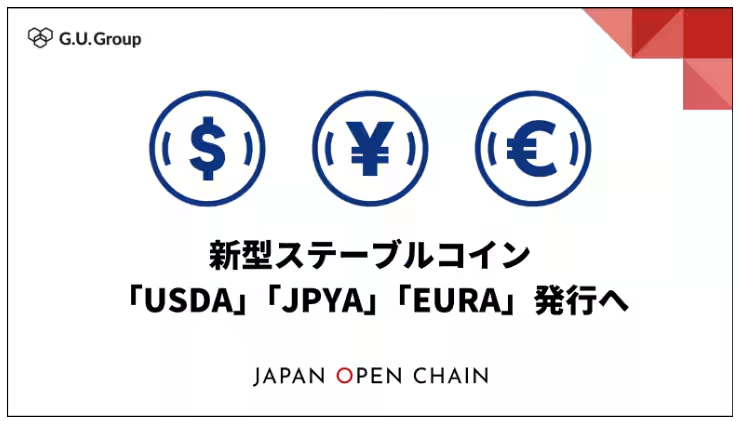
In a significant announcement, G.U.Group Inc. based in Shibuya, Tokyo, has revealed plans to launch three new stablecoins: USDA, JPYA, and EURA. Set to be issued and circulated within ten blockchains, including Ethereum and the Japan Open Chain, these stablecoins will be managed through a Decentralized Autonomous Organization (DAO), providing a unique, community-driven DeFi model that eliminates reliance on central authorities.
The new stablecoins are supported by collateral assets that will be managed on-chain, enabling minting and burning similar to established stablecoins such as USDC and USDT. This innovative approach promises more reliable management than traditional algorithmic stablecoins like DAI, which are vulnerable to the volatility of their collateral assets.
A standout feature is the cross-chain capabilities introduced, allowing users to transfer assets directly between over ten different blockchain networks. The asset management will take place on both Ethereum and Japan Open Chain, ensuring that the deployment is both effective and expansive. G.U.Group is committed to providing ongoing technical and operational support for this ambitious project, aiming to secure further trademark acquisitions while paving the way for future fiat-collateralized stablecoins.
As we enter 2025, the stablecoin market is experiencing explosive growth, with issuance surging past ¥45 trillion and projections estimating this will reach several hundred trillion yen within just a few years. However, existing stablecoins come with challenges such as lack of transparency from issuing entities, legal uncertainty, risks of freezing due to political decisions in particular countries, and limitations in usability stemming from lack of cross-chain function. In Japan, the limited circulation of yen-based stablecoins has been a significant barrier for local web3 businesses.
In response to these challenges, G.U.Group and the community DAO have developed a new stablecoin system that combines transparency, security, and usability. Initially, the system will secure decentralization through DAO operations, with plans for subsequent compliance with legal frameworks across Japan, the United States, Europe, and other regions to achieve a multipolar financial infrastructure. With the completion of trademark applications for USDA, JPYA, and EURA across multiple countries, G.U.Group is ready to make this important announcement.
The USDA, JPYA, and EURA are created using a stablecoin-backed asset model, differentiating them from conventional algorithmic stablecoins reliant on cryptocurrency collateral such as ETH. The management structure of these new coins directly holds stable assets tied to fiat currencies, akin to maintaining stablecoins like USDC and USDT, thus ensuring stability that is not influenced by the price fluctuations common within the crypto market.
Leveraging the LayerZero protocol, these stablecoins will support seamless cross-chain transactions, with users able to burn tokens on any chain and redeem collateral assets at their convenience. Additionally, a blacklisting mechanism is in place, mirroring the security protocols of major stablecoins like USDC, which reflects a commitment to preventing illicit financial activity.
The names USDA, JPYA, and EURA are designed to be intuitive, resonant with major stablecoins in the market. By employing the leading alphabet A, these designations are not only easy to remember but also align with globally recognized names like USDT and USDC, fostering user comprehension and brand recall.
With native support for over ten major EVM-compatible chains including Ethereum, Japan Open Chain, Base, Avalanche, Arbitrum One, Polygon, BNB Chain, Optimism, Unichain, and Gnosis Chain, the structure is designed for multi-chain circulation. There are plans to expand the network to include non-EVM chains such as Solana in the future.
The USDA, JPYA, and EURA stablecoins will be the first to be natively issued on the Japan Open Chain, supported by 14 leading Japanese companies like Dentsu, Pixiv, and TV Asahi Group as validators. Notably, JPYA, being yen-denominated, will serve as a key currency within the Japan Open Chain ecosystem, encouraging the adoption of web3 technologies among individuals and businesses.
The compatibility with both Ethereum and Japan Open Chain allows for rapid and inexpensive transfers (within five seconds and at a cost of less than ¥0.5), facilitating affordable transactions worldwide.
The backing assets will be permanently recorded in an auditable manner on the blockchain, enabling transparent audits by anyone, with future possibilities of transitioning to a trust-based stablecoin model. DAO governance ensures ongoing transparency throughout the process.
Initially, these stablecoins may qualify as either the second or fourth electronic payment methods in Japan. G.U.Group plans to secure licenses to facilitate their usage as electronic payment options, with a roadmap aiming to transition toward a third electronic payment method for enhanced usability.
The USDA, JPYA, and EURA will start as community-driven collateral-based stablecoins, initially circulating on DeFi exchanges. The company aims to achieve licenses for trading, facilitating direct exchanges with fiat currencies. Subsequent changes in collateral asset management methods will be considered to align with regulatory frameworks for stablecoins in various countries.
Already, discussions with multiple companies are in progress to prepare JPYA to transition to a third electronic payment method upon receiving regulatory approval. For USDA, the aim is to evolve into a compliant USD-denominated stablecoin under trust regulations with necessary approvals in place. Conversely, EURA will strive to become a MiCA-compliant euro stablecoin following the strict regulatory guidelines of the EU, all while carefully maintaining its utility.
The combination of DAO governance, trademark acquisition for brand protection, and a stablecoin collateral model establishes a robust foundation for a safe and stable stablecoin utilization environment globally. G.U.Group remains dedicated to driving both legal and technological advancements to support the development of next-generation digital financial infrastructures.
For more information on Ethereum, visit: Ethereum
To learn about Japan Open Chain, visit: Japan Open Chain
For details about DAO, see: DAO Overview
For further inquiries, contact G.U.Group at: Contact Us
Email: [email protected]
The new stablecoins are supported by collateral assets that will be managed on-chain, enabling minting and burning similar to established stablecoins such as USDC and USDT. This innovative approach promises more reliable management than traditional algorithmic stablecoins like DAI, which are vulnerable to the volatility of their collateral assets.
A standout feature is the cross-chain capabilities introduced, allowing users to transfer assets directly between over ten different blockchain networks. The asset management will take place on both Ethereum and Japan Open Chain, ensuring that the deployment is both effective and expansive. G.U.Group is committed to providing ongoing technical and operational support for this ambitious project, aiming to secure further trademark acquisitions while paving the way for future fiat-collateralized stablecoins.
Market Context
As we enter 2025, the stablecoin market is experiencing explosive growth, with issuance surging past ¥45 trillion and projections estimating this will reach several hundred trillion yen within just a few years. However, existing stablecoins come with challenges such as lack of transparency from issuing entities, legal uncertainty, risks of freezing due to political decisions in particular countries, and limitations in usability stemming from lack of cross-chain function. In Japan, the limited circulation of yen-based stablecoins has been a significant barrier for local web3 businesses.
In response to these challenges, G.U.Group and the community DAO have developed a new stablecoin system that combines transparency, security, and usability. Initially, the system will secure decentralization through DAO operations, with plans for subsequent compliance with legal frameworks across Japan, the United States, Europe, and other regions to achieve a multipolar financial infrastructure. With the completion of trademark applications for USDA, JPYA, and EURA across multiple countries, G.U.Group is ready to make this important announcement.
Key Features of the New Stablecoins
The USDA, JPYA, and EURA are created using a stablecoin-backed asset model, differentiating them from conventional algorithmic stablecoins reliant on cryptocurrency collateral such as ETH. The management structure of these new coins directly holds stable assets tied to fiat currencies, akin to maintaining stablecoins like USDC and USDT, thus ensuring stability that is not influenced by the price fluctuations common within the crypto market.
Leveraging the LayerZero protocol, these stablecoins will support seamless cross-chain transactions, with users able to burn tokens on any chain and redeem collateral assets at their convenience. Additionally, a blacklisting mechanism is in place, mirroring the security protocols of major stablecoins like USDC, which reflects a commitment to preventing illicit financial activity.
User-Friendly Naming
The names USDA, JPYA, and EURA are designed to be intuitive, resonant with major stablecoins in the market. By employing the leading alphabet A, these designations are not only easy to remember but also align with globally recognized names like USDT and USDC, fostering user comprehension and brand recall.
Cross-Chain Compatibility
With native support for over ten major EVM-compatible chains including Ethereum, Japan Open Chain, Base, Avalanche, Arbitrum One, Polygon, BNB Chain, Optimism, Unichain, and Gnosis Chain, the structure is designed for multi-chain circulation. There are plans to expand the network to include non-EVM chains such as Solana in the future.
Japan's First Native Stablecoin on the Open Chain
The USDA, JPYA, and EURA stablecoins will be the first to be natively issued on the Japan Open Chain, supported by 14 leading Japanese companies like Dentsu, Pixiv, and TV Asahi Group as validators. Notably, JPYA, being yen-denominated, will serve as a key currency within the Japan Open Chain ecosystem, encouraging the adoption of web3 technologies among individuals and businesses.
Cost-Effective and Fast Transfers
The compatibility with both Ethereum and Japan Open Chain allows for rapid and inexpensive transfers (within five seconds and at a cost of less than ¥0.5), facilitating affordable transactions worldwide.
Security and Transparency
The backing assets will be permanently recorded in an auditable manner on the blockchain, enabling transparent audits by anyone, with future possibilities of transitioning to a trust-based stablecoin model. DAO governance ensures ongoing transparency throughout the process.
Distribution Model
Initially, these stablecoins may qualify as either the second or fourth electronic payment methods in Japan. G.U.Group plans to secure licenses to facilitate their usage as electronic payment options, with a roadmap aiming to transition toward a third electronic payment method for enhanced usability.
Future Roadmap
The USDA, JPYA, and EURA will start as community-driven collateral-based stablecoins, initially circulating on DeFi exchanges. The company aims to achieve licenses for trading, facilitating direct exchanges with fiat currencies. Subsequent changes in collateral asset management methods will be considered to align with regulatory frameworks for stablecoins in various countries.
Already, discussions with multiple companies are in progress to prepare JPYA to transition to a third electronic payment method upon receiving regulatory approval. For USDA, the aim is to evolve into a compliant USD-denominated stablecoin under trust regulations with necessary approvals in place. Conversely, EURA will strive to become a MiCA-compliant euro stablecoin following the strict regulatory guidelines of the EU, all while carefully maintaining its utility.
Conclusion
The combination of DAO governance, trademark acquisition for brand protection, and a stablecoin collateral model establishes a robust foundation for a safe and stable stablecoin utilization environment globally. G.U.Group remains dedicated to driving both legal and technological advancements to support the development of next-generation digital financial infrastructures.
References
For more information on Ethereum, visit: Ethereum
To learn about Japan Open Chain, visit: Japan Open Chain
For details about DAO, see: DAO Overview
For further inquiries, contact G.U.Group at: Contact Us
Email: [email protected]
Topics Financial Services & Investing)
【About Using Articles】
You can freely use the title and article content by linking to the page where the article is posted.
※ Images cannot be used.
【About Links】
Links are free to use.