



Huawei Digital Power's System Achieves Top Rating for Battery Safety Evaluation
Huawei Digital Power Achieves Highest Rating for Battery Safety Evaluation
In a significant advancement for battery storage technology, Huawei Digital Power has successfully completed a stringent technical assessment conducted by the China Electricity Council (CEC). This evaluation focused on the company's quantitative evaluation system for the safety of Battery Energy Storage Systems (BESS) over their entire lifecycle. Partnering with leading industry players, Huawei has managed to set a benchmark for safety standards not just in China, but globally.
Background of the Evaluation
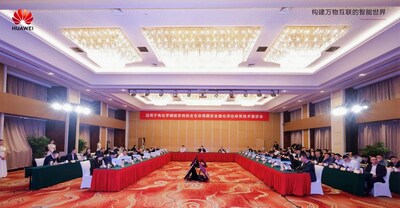
The assessment involved a thorough review by a committee comprising experts from esteemed institutions such as Tsinghua University, China Southern Power Grid, and various other organizations within the energy sector. They scrutinized Huawei's project proposal, evaluated extensive documentation, and conducted detailed investigations, leading to a unanimous agreement on the innovative and practical applications of the developed safety evaluation system for BESS.
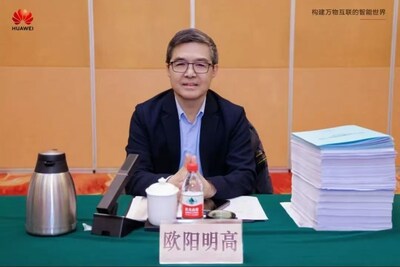
Professor Ouyang Minggao of Tsinghua University noted that the methodology established in this project is unprecedented in the industry. It aims to address critical safety vulnerabilities that arise during the large-scale implementation of energy storage systems. With its advanced probabilistic evaluation model, the system quantifies and scientifically assesses safety risks associated with battery storage.
Security Risk Classification
Huawei's evaluation system categorizes safety risks into three levels: A (unacceptable), B (to be mitigated), and C (acceptable). Each category outlines specific requirements based on the probability of failure. For instance:
- - Level A: Represents extremely high risks that are uncontrollable and can lead to severe safety incidents.
- - Level B: Indicates high risks that necessitate continual product design optimization and the integration of innovative technologies.
- - Level C: Suggests that safety risks are manageable, thus effectively preventing serious consequences, such as fires.
Through this systematic approach, the project identifies critical risk factors and enhances product safety using key technologies developed in-house by Huawei.
Key Safety Technologies Implemented
The evaluation framework includes the following pivotal safety technologies:
1. High-Precision Intelligent Active Safety Warning Technology: This system utilizes a multi-frequency hierarchical architecture with dual decoders to improve operational condition coverage, ensuring a recovery rate of at least 95% during fault warnings.
2. Oxygen-Blocking Architecture with Overpressure and Discharge Features: It introduces a high-safety battery block capable of withstanding heat with a design that prevents ignitions or fault propagation, even under extreme conditions.
3. Innovative Dual-Level Architecture for Intelligent Energy Storage: This technology prevents current backflow during voltage fluctuations, maintaining the necessary functionality to safeguard entire systems.
4. High-Temperature Resistant Insulation with Real-Time Detection Technologies: This feature maximizes compatibility with electrolyte leak scenarios, further mitigating potential ignition risks.
These advancements ensure that the achievements noted in the project can be leveraged in large-scale initiatives both within China and internationally, such as the ZDI energy storage facility in Ngari Prefecture and a renewable energy microgrid project in Saudi Arabia’s Red Sea region.
Implications for the Energy Sector
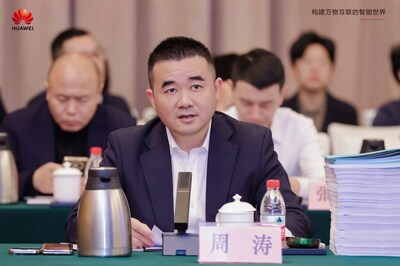
The significance of this project extends beyond technical innovations. As Steven Zhou, president of Huawei's Smart PV ESS Product Line, remarked, the next few years will be critical for transitioning photovoltaics, wind energy, and energy storage into primary energy sources. It is imperative for industry stakeholders, from authorities to enterprises, to collaborate in establishing standards, sharing technologies, and building supportive ecosystems.
Huawei Digital Power is committed to partnering with industry actors to foster sustained, standardized, and high-quality development within the energy sector. The continued evolution of energy storage safety technologies will not only help bridge these gaps but also ensure that communities worldwide have access to resilient, affordable, and green energy solutions. As safety and efficiency become paramount in combating the global energy divide, Huawei's innovations stand at the forefront, promising a brighter, safer energy future.
Topics Energy)
【About Using Articles】
You can freely use the title and article content by linking to the page where the article is posted.
※ Images cannot be used.
【About Links】
Links are free to use.