



Redefining Dominance: How Physical AI is Transforming the Display Industry's Future
Redefining Dominance: The Transformation of the Display Industry
The display industry is undergoing a radical transformation as we move into the era of Physical AI. On May 7, 2026, CMC Research will publish a pivotal new book titled "Physical AI and the Structural Transformation of the Display Sector" that delves into the shifting dynamics of this vital market. With many companies reevaluating their positions, the emphasis is no longer on traditional panels but on optical technologies, materials, and integration strategies that define the future of displays.
The Rise of Physical AI
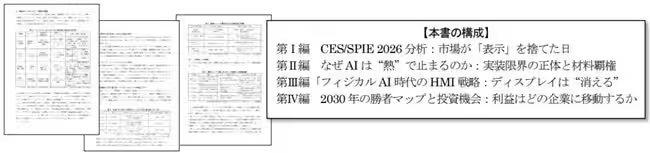
The application of AI in physical devices is not just about enhanced functionality; it’s fundamentally altering our understanding of display technology. This shift can be traced back to critical events, such as CES and SPIE 2026, where the reality of implementation limitations surfaced. The industry's transition from mere display outputs to perception-based technologies signals a formidable change in investment foundations and market leaders.
Key to this transition is the insight that the next frontier in displays lies in recognizing the growing importance of understanding over displaying. The resulting market, driven by advanced sensing technologies and augmented reality, is poised to reach staggering dimensions, potentially generating more than $5 trillion by 2030. With vision-enhancing devices evolving rapidly, companies focusing on perceptual infrastructure will hold significant competitive advantages.
Navigating Challenges: Material Security and Heat Management
While the potential for Physical AI is vast, challenges loom, particularly concerning material security and thermal management. The looming regulations on gallium and antimony demonstrate the geopolitical intricacies affecting the supply chain of strategic materials. As companies scramble to adapt to these material constraints, the advent of innovative optical materials and advanced thermal management is vital.
The book highlights crucial worries surrounding heat management. As AI functionalities expand, the heat generated by intensive computational processes compels designers to rethink device architectures. Many devices, like the latest AI-driven smart glasses presented at CES 2026, faced critical limitations due to thermal management challenges. The convergence of optical architectures with advanced heat dissipation technologies is essential for actualizing the potential of Physical AI.
The Evolution of Displays: From Operations to Perception
As we progress into the future, displays are anticipated to shift from interfaces requiring user interaction toward systems that can intuitively perceive and enhance user experience. This concept of understanding technologies defines the next stage of Human-Machine Interaction (HMI).
Devices that were once confined by screens are now conceptualized to project meaning into real-world contexts, resulting in a seamless integration of digital layers into reality. The shift from operational displays to perceptive environments signifies a monumental leap, supported by investments in solutions that facilitate user contexts more naturally and effectively.
2030: The Winners and Losers in the New Display Economy
As the display landscape evolves, the book encourages readers to visualize what the victor’s map of 2030 might look like. It emphasizes the necessity for companies, especially Japanese firms, to adapt to these changes. Establishing robust connections between material strengths and AI infrastructures will be paramount for those wishing to thrive in the upcoming era.
Through analysis rooted in the critical trends from CES and SPIE, the book poses essential questions - who will triumph and who will fall behind? Understanding the economics of materials, production capabilities, and predictive market trends is essential in anticipating where the profit pools will shift.
Conclusion
The path ahead is complex yet filled with potential. As Physical AI redefines the boundaries of the display industry, navigating the intricacies of materials, heat, and technology will dictate who emerges as a leader. The 2026 publication by CMC Research is not just a guide; it’s an essential resource for stakeholders seeking to comprehend and harness the transformative power of Physical AI in the display market. Embrace this pivotal moment in display technology and secure a front-row seat in the unfolding narrative of Physical AI.
Topics Consumer Products & Retail)
【About Using Articles】
You can freely use the title and article content by linking to the page where the article is posted.
※ Images cannot be used.
【About Links】
Links are free to use.