



Revolutionizing Nursing Education: Understanding Radiation Protection through Augmented Reality
Revolutionizing Nursing Education: Understanding Radiation Protection through Augmented Reality
In the healthcare sector, radiation plays a crucial role, yet its safe and effective usage requires a firm grasp of knowledge and protective measures. One significant hindrance in training nursing students has been the traditional reliance on theoretical classroom learning, which often fails to adequately impart practical understanding. This article explores a recent initiative where augmented reality (AR) was integrated into nursing education, enhancing students' manipulation of radiation-related risks and protective strategies.
Overview of the Study
The research comprised a detailed 90-minute lecture coupled with a hands-on AR exercise, where students utilized tablets to visualize scattered radiation in a real-world environment. Engaging 80 nursing students, the study sought to assess the effectiveness of this blended learning format. The results were striking: students showed a significant improvement in their mastery of the subject matter, with test scores dramatically higher than both their pre-lecture evaluations and those from a separate control group (p<0.05). Additionally, the students' risk perception regarding nuclear energy and X-rays showed a shift towards a more balanced viewpoint, dropping by one degree on a seven-point scale.
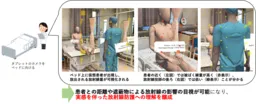
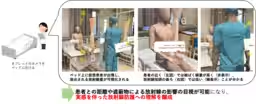
The AR component offered a unique opportunity to visualize 3D models of patients and devices, allowing students to interact directly with radiation concepts such as time, distance, and shielding in a tangible way. By merging theoretical knowledge with practical experiences, the initiative aimed to bolster both comprehension and appropriately rationalize the perceived dangers of radiation.
This program was implemented as part of Tokyo’s strategy for a “Future Tokyo,” aimed at innovating university education through digital advancements.
Key Insights
- - Limitations of Traditional Learning: The conventional educational approach of passive learning through lectures makes it challenging for students to cultivate practical understandings of radiation protection.
- - Impact of AR: By employing a proprietary AR application, the study has illustrated that practical education grounded in augmented reality can significantly enhance students' understanding of radiation protection while positively influencing their risk perception.
- - Ease of Implementation: With AR technology being tablet-compatible, the integration of radiation protection education into nursing programs has become more feasible, suggesting grounds for standardization across educational institutions.
Background of the Research
Radiation is an indispensable component in modern medicine; however, opportunities for nursing students to systematically learn about radiation protection remain limited. Traditional lectures often lack the necessary engagement required for practical application. AR presents a unique solution; by overlaying information onto real environments, it facilitates an intuitive grasp of complex concepts. Despite this potential, prior studies lacked rigorous quantitative investigations into AR's effectiveness within nursing radiation protection education.
The research under discussion sought to close this gap by evaluating how effectively the combination of lectures and AR can enhance knowledge while calibrating risk perception among nursing students.
Research Methodology
Targeting second-year students at Tokyo Metropolitan University’s Health Sciences Department, the study employed a pre-and post-intervention evaluation to assess knowledge gains alongside shifts in risk perception. Participants, who were first-time recipients of structured radiation protection training, underwent a combined session consisting of a 90-minute lecture followed by practical AR exercises.
During the lecture, foundational concepts such as the principles of radiation exposure and the three core elements of protection—time, distance, and shielding—were covered. The AR exercise recreated scenarios involving portable X-rays, utilizing 3D models of patients, operators, and devices, with color-coded representations displaying the levels of scattered radiation to be interpreted within a real-world context. The experiential learning aimed to provide insights into how changes in distance and shielding materials can impact radiation exposure risk.
The assessment involved two components: first, a self-evaluation of radiation knowledge across 50 subjects, and secondly, a ranking of perceived risks related to 30 topics, including nuclear energy and X-ray implications. Findings revealed that post-intervention knowledge scores significantly surpassed pre-intervention results and those from the control group in 45 out of 50 evaluated items, particularly in areas requiring spatial comprehension.
Significance and Broader Implications
This educational program demonstrates the potential of situational visualization to enhance comprehension in nursing students regarding the distribution of invisible radiation and improving safety practices. It addresses the shortcomings of predominantly theoretical curricula by providing firsthand experiences that reflect real-world dynamics and consequent actions.
Expected ripple effects include: 1) Standardizing radiation protection education in nursing training, 2) Expanding training to both nursing students and professionals engaged in emergency, home care, or disaster scenarios dealing with portable X-rays, and 3) Improving risk communication through better calibration of public perception about radiation exposure. Upcoming research will focus on tracking knowledge retention over time, objectively assessing behavioral indicators related to positioning, shielding, and enhancing simulation capabilities to continue bridging education and practical application.
Topics Health)

【About Using Articles】
You can freely use the title and article content by linking to the page where the article is posted.
※ Images cannot be used.
【About Links】
Links are free to use.