




Is AI Role-Playing Truly Effective for Training? A Case Study by Cognitee
Investigating AI Role-Play as a Training Tool
Cognitee Inc., headquartered in Shinagawa, Tokyo, has conducted an independent study to evaluate the effectiveness of AI role-playing (AI role-play) in training, particularly in comparison to human interactions. This research utilizes Cognitee’s proprietary technology, "CogStructure," to analyze and quantify qualitative data from various AI role-playing services. The analysis looks into six commercially available AI role-playing platforms and assesses variations in conversation techniques and skill development outcomes compared to traditional human interactions.
Understanding AI Role-Play Effectiveness
The research aimed to answer critical questions: How close can AI role-playing come to human interaction? What inherent tendencies does AI role-play exhibit? And which skill levels benefit most from this training format? Since the last survey in 2023, AI role-play has shown improvements in mimicking human-like conversation patterns. Nonetheless, it tends to provide information without thorough questioning, suggesting it could be viewed as an excessively helpful entity that might undermine critical listening skills required in real-life dialogues.
Key Findings: AI vs. Human Interaction
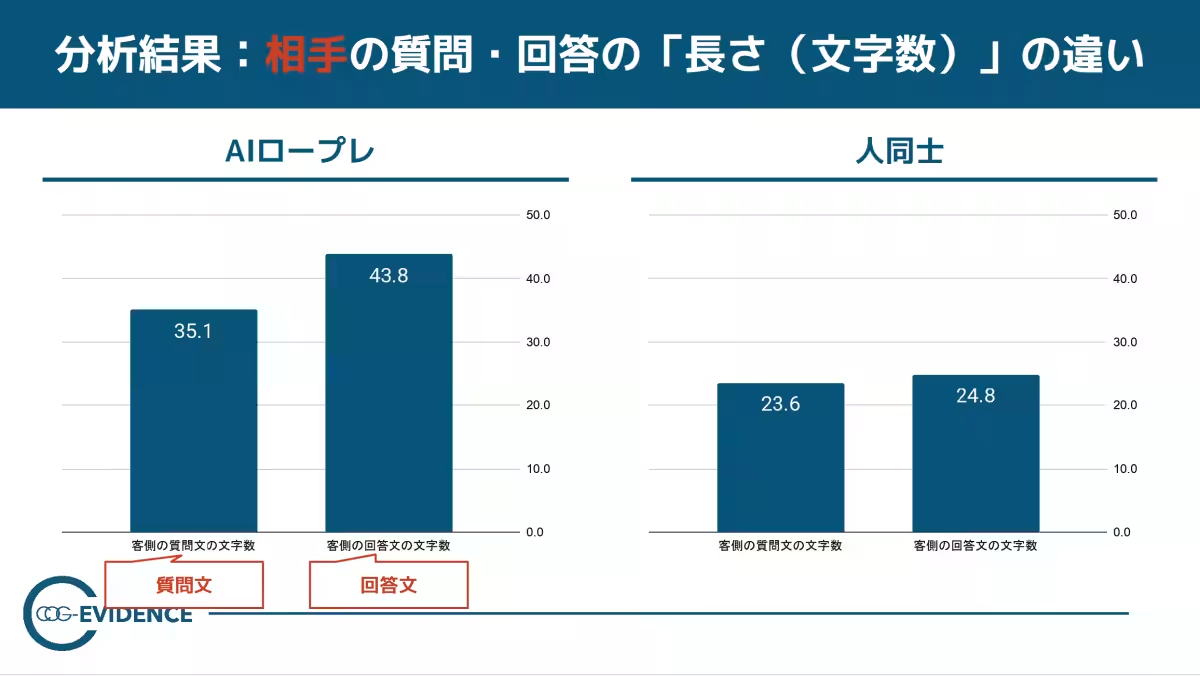
Cognitee’s analysis revealed marked differences between AI role-play and human interactions. In essence, while AI responses have evolved to be more human-like, they still differ significantly in style. For instance, AI responses averaged 43.8 characters compared to 24.8 characters for human conversations—indicating that AI responses are 77% longer. Moreover, AI's information delivery is often excessive, providing answers that employees might not have sought, potentially distorting the training experience.
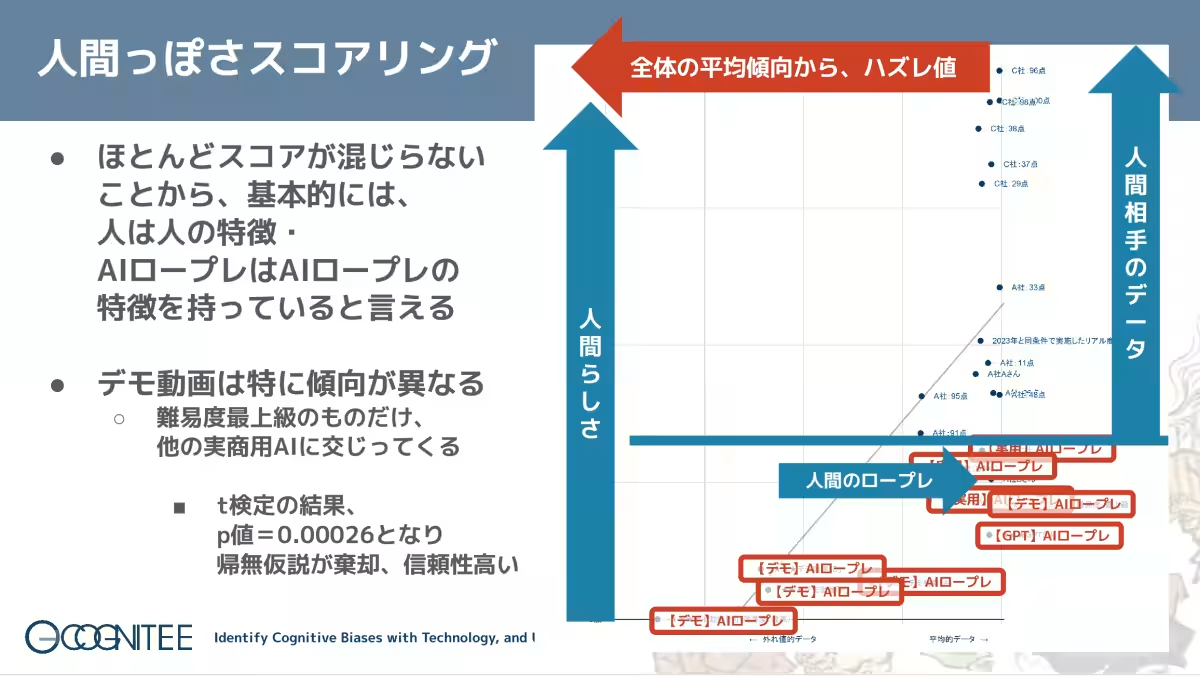
Scorecard: Human-Likeness vs AI
The AI's approach often dives deeply into single topics while presenting multiple open-ended questions, thereby providing substantial information without requiring substantial input from the trainees. This can lead to an illusion of successful dialogue, where employees believe they are engaging effectively, even if they are not honing their skills as intended. The implications of this could mislead organizations into believing that their personnel have improved when essential skills may still be lacking.
Evaluating Performance: A Double-Edged Sword
Interestingly, when analyzing internal evaluation data from companies using AI role-play, it became evident that the overall assessment leaned towards higher ratings. However, this elevated perception may not accurately reflect the actual skill levels of employees, particularly among those with intermediate skills. The AI's expansive responses were artificially inflating the perceived effectiveness of conversations, masking the real gaps in their conversational capabilities.
Conversely, highly skilled professionals encountered new challenges, as the AI's tendency to control dialogue led to a loss of opportunities for deepening conversation and guiding discussions naturally. If organizations rely on performance ratings from AI role-play sessions alone, they risk falling into the trap of misjudging their employees’ actual skill development.
Tailoring AI Role-Play to Suit Employees
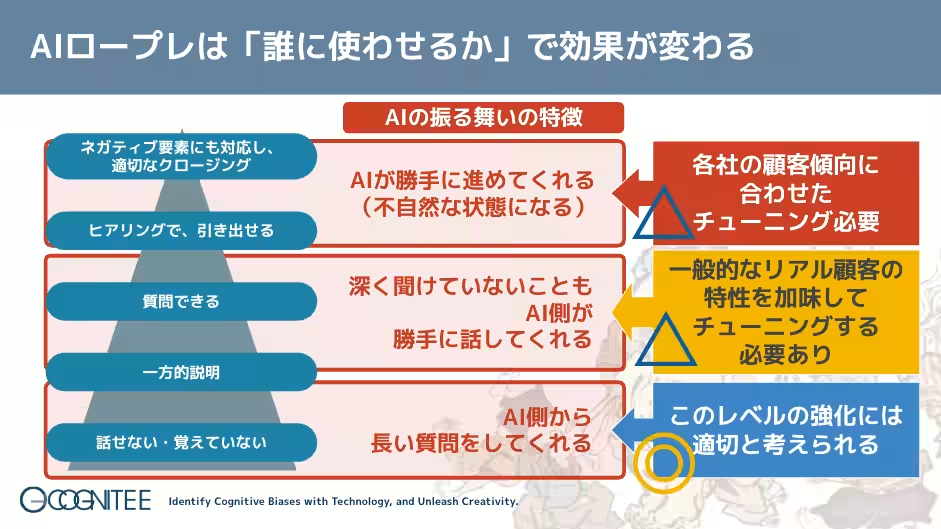
The study also indicates that the effectiveness of AI role-play varies by employee skill levels. Beginners may find the practice beneficial for reinforcing basic conversational techniques. However, employees at more advanced levels require different kinds of training to refine their abilities—specifically in extracting information from conversations or adapting to unexpected dialogues. Thus, organizations must consider how AI transfers skills through its patterns to avoid endorsing potentially ineffective training practices.
Necessary Adjustments for Enhanced Learning
With its findings, Cognitee emphasizes that corporations must evaluate and adapt the difficulty levels of AI role-play scenarios based on their employees' actual skillsets. While the machine can manage realistic dialogues under one lens, it must also align with the specific training needs that facilitate genuine skill enhancement. Simply tracking usage and evaluating AI-generated assessments might not provide an accurate portrayal of growth.
Moving Forward: The Future of AI in Training
The detailed results of this study will be revealed in Cognitee's upcoming free online seminars, scheduled for August 19 and August 31, 2026. These sessions aim to shed light on how to utilize AI role-play effectively for training and the particularities learned from this unique analysis. Participants will gain insight into the nuances of AI interactions, the inherent flaws in AI role-play, and how businesses can create more engaging, tailored training environments.
In conclusion, while AI role-playing has achieved significant strides toward approximating realistic human interactions, it is vital that organizations exercise caution in approach and implementation. By thoroughly understanding the unique characteristics of AI role-play and aligning training methodologies, companies can cultivate a more effective and skill-enhancing training regimen for their workforce.
Join Us for Our Insights
Don't miss the detailed findings and discussions at our free webinar on "AI Role-Play: An Analysis of Effectiveness for Real Training" and dive into practical applications of the research findings.

Topics Business Technology)
【About Using Articles】
You can freely use the title and article content by linking to the page where the article is posted.
※ Images cannot be used.
【About Links】
Links are free to use.