



Childhood Experiences Shape Teachers' Commitment to Biodiversity Education
Exploring the Impact of Childhood Nature Experiences on Biodiversity Education
In recent years, the significant decline in biodiversity has posed a pressing global issue, and education plays a vital role in fostering a deeper understanding and appreciation of nature among children. A new study focusing on Japanese educators highlights how early experiences in nature can influence the quality and effectiveness of biodiversity education in schools.
Key Findings
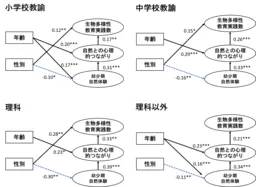
The research surveyed 662 public school teachers from elementary and middle schools in Hachioji, Tokyo. It aimed to examine the connection between childhood nature experiences (CNE), emotional ties to nature (Nature Relatedness, NR), and their current practices in teaching biodiversity education. Notably, it found a consistent relationship: teachers with richer nature experiences in their childhood had stronger emotional connections to nature, which in turn led to a broader implementation of biodiversity education practices.
However, the study also identified several challenges that teachers face. These include the pressures of preparing for other disciplines, a lack of knowledge about flora and fauna, and insufficient teaching materials. This indicates that merely addressing educational curriculum and materials is not enough; fostering a personal connection to nature among teachers is equally crucial.
The Importance of Nature in Education
As the loss of biodiversity becomes a global concern, schools are seen as an essential platform for engaging children with biodiversity and environmental issues. Teaching staff, who hold a central role in facilitating this learning, must be equipped with both knowledge and passion for nature.
The research utilized Structural Equation Modeling (SEM) to analyze the relationships between CNE, NR, and the implementation of biodiversity education practices among different groups of teachers. The findings showed that regardless of their subject specialization or school level, teachers who had extensive childhood interactions with nature exhibited a more significant emotional relationship with nature. This emotional connection directly correlated to a greater engagement in diverse biodiversity education practices.
Analyzing Educational Practices
The survey, conducted from June to July 2022, also revealed a difference in biodiversity education practices between elementary and middle school teachers. Elementary teachers averaged about 3.6 biodiversity education activities, while middle school teachers averaged only 2.2. Hands-on activities like nature observation and species cultivation were prevalent among elementary teachers, whereas middle school educators tended to focus on discussions regarding human impact on ecosystems and global environmental issues.
Overcoming Educational Barriers
Despite the promising link between CNE, NR, and effective biodiversity education, the study highlighted critical barriers that hinder teacher engagement in this field. Over half of the respondents noted that their busy schedules, filled with other subject preparations, limited their capacity to engage in biodiversity education. Additionally, many teachers acknowledged a lack of knowledge regarding plants, animals, and natural environments, which impacted their ability to teach effectively.
Moreover, many elementary teachers cited inadequate teaching materials as a significant hindrance. This lack of resources often correlates with fewer biodiversity education practices among teachers aware of these challenges.
Recommendations for Improvement
The research suggests that for biodiversity education to flourish, attention must not only be given to the content taught but also to the personal experiences and relationships that educators have with nature. Providing accessible and relevant teaching materials that reflect local ecological environments is essential. Furthermore, teacher training should incorporate direct experiences with nature, allowing educators to deepen their personal connections to the environment.
Ultimately, securing opportunities for children to engage with nature from a young age may foster future citizens who value and protect biodiversity, which can also influence how future educators approach the topic in their classrooms.
While this study provides insights into the educational landscape in Hachioji, caution must be exercised in generalizing these results nationwide or internationally. Variations in natural environments, accessibility to green spaces, and institutional support also play significant roles in the effectiveness of biodiversity education practices. Future research should consider urbanization levels, natural settings, and support systems from schools and municipalities to better understand these dynamics.
Conclusion
The study sheds light on the profound impact that childhood nature experiences have on teachers' effectiveness in delivering biodiversity education. It underscores the necessity of enriching educators' connections to nature, which can ultimately enhance the educational experiences of students and contribute to the preservation of biodiversity for future generations.
Research Details
- - Published In: Biodiversity and Conservation
- - Authors: Saki Rikukawa, Ryo Yoshizawa, Yoshiatsu Tanaka, Shinya Numata
- - DOI: 10.1007/s10531-026-03462-1
Topics Other)








【About Using Articles】
You can freely use the title and article content by linking to the page where the article is posted.
※ Images cannot be used.
【About Links】
Links are free to use.