



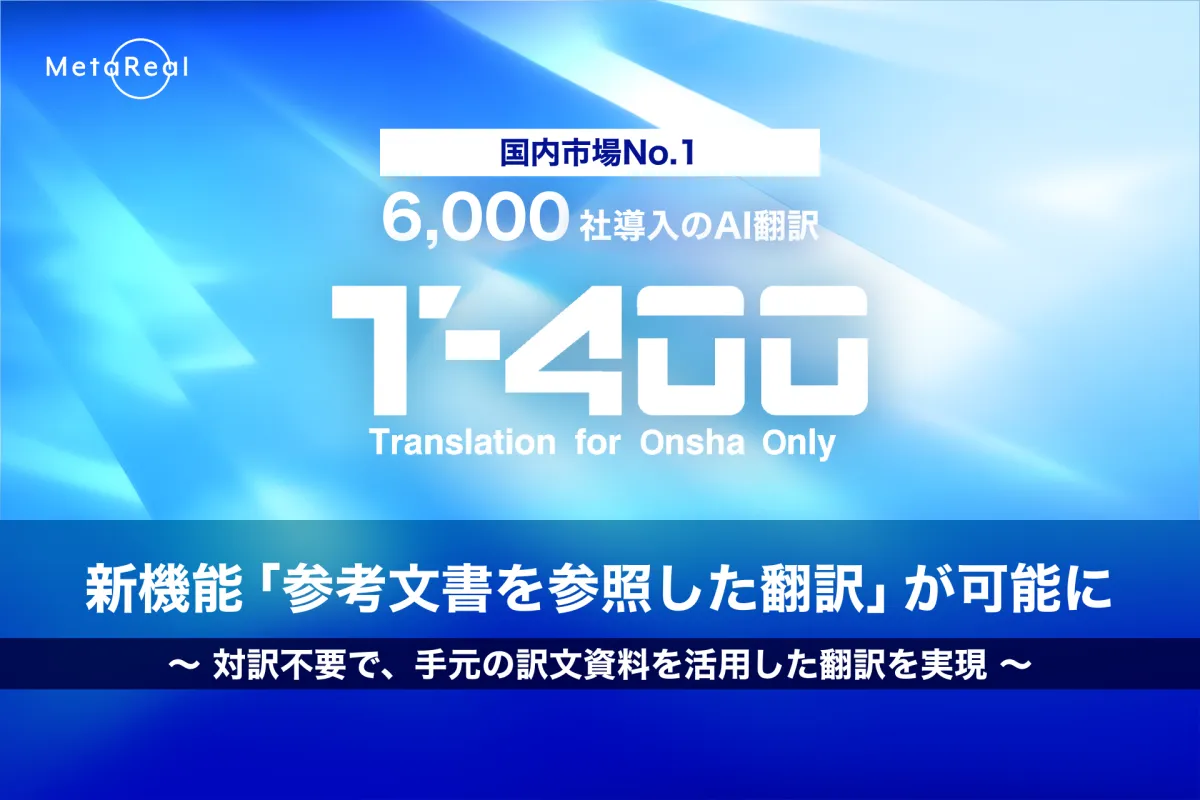
Rosetta Unveils New Feature for High-Precision Translation AI T-400
A Leap in Translation Technology: The New Capabilities of T-400
In a groundbreaking update, Rosetta Corporation, a subsidiary of Metarial Group, has rolled out an innovative feature for its high-precision translation AI, T-400. Announced on June 19, 2026, this new functionality allows users to translate documents using only the reference text in the target language, marking a significant shift in the approach to translation technology.
Streamlined Reference Method
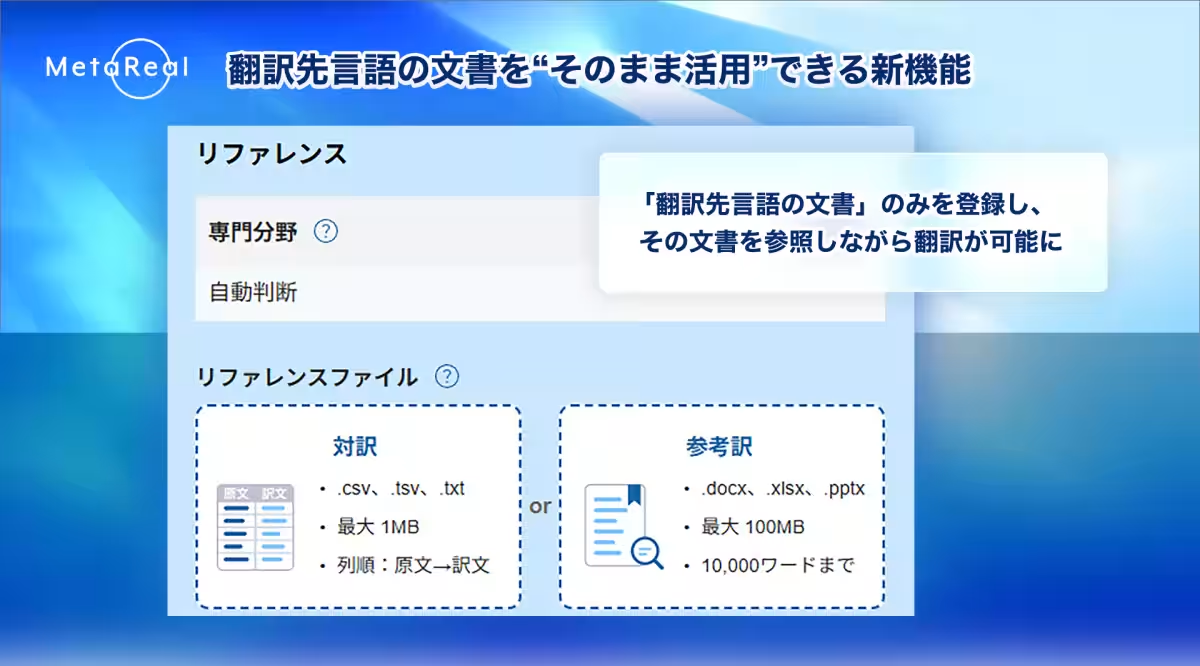
Traditionally, high-precision translation involved using parallel texts—source and translated documents—to ensure consistency and accuracy in translations. T-400 previously had an automatic parallel translation generation feature, which simplified the process but still required time-consuming manual input. The new update eliminates this necessity by enabling users to reference only the target language document for translations.
This is particularly advantageous for organizations that may not have the source language documents readily available. The new modes, 'High Precision' and 'Super High Precision (Thorough Consideration)', allow the incorporation of target language documents, enhancing overall translation quality without the need for source texts.
Increased Efficiency Without Compromising Quality
While there may be a slight decrease in the reflection rate when only the target language documents are utilized compared to parallel text references, the benefits are evident:
- - Immediate usability without the need for parallel documents.
- - Optimal use of existing in-house paperwork.
- - Enhanced translation accuracy coupled with improved work efficiency.
These features are designed to significantly enhance users' operational productivity, addressing feedback from many of T-400’s users. The tool’s efficiency and adaptability make it an enticing option for businesses looking to streamline their translation processes.
Supported Languages and File Formats
The T-400 AI provides support for a variety of languages:
- - Japanese
- - English
- - Chinese (Traditional/Simplified)
- - Thai
- - Vietnamese
- - Indonesian
- - Burmese
- - German
- - French
- - Italian
- - Portuguese (European/South American)
- - Spanish (European/South American)
Supported file formats include:
- - .docx
- - .xlsx
- - .pptx
The ability to directly utilize existing business documents decreases the barrier to implementation and allows for immediate operational use.
Insights from T-400 Development Leader
Atsunori Shinoda, the head of T-400 development, shared his insights on the recent update: "This enhancement was inspired by user feedback expressing the need for improved translation quality without relying on parallel texts. By limiting references to the target language document, we can maximize the use of existing assets while delivering translations that are more natural and consistent. We will continue to develop features that directly enhance productivity in translation tasks."
About T-400
T-400 stands out as a high-precision industrial translation AI that effectively blends the ability to reproduce specialized documents and corporate terminologies with the fluency offered by generative AI. Unlike traditional industrial and specialized translation systems, T-400 allows users to accurately reflect expressions and styles using their internal translation assets without needing to invest in expensive, proprietary engines. Its 'Super High Precision (Thorough Consideration)' mode, which leverages agentic AI, has also dramatically improved translation accuracy, resulting in a mere 0.05% necessity rate for sentence-level corrections, achieving near-complete automated translation.
To explore more about T-400, visit Rosetta’s website. You can also sign up for a free trial or inquire about becoming a sales partner via their contact page.
Conclusion
As the demand for high-precision translation services continues to rise, advancements like those provided by Rosetta’s T-400 reinforce its standing as a leader in the AI translation industry. Emphasizing the importance of efficiency while maintaining quality assurance, the T-400's latest feature stands to revolutionize how enterprises approach translation tasks across various fields.
Topics Business Technology)
【About Using Articles】
You can freely use the title and article content by linking to the page where the article is posted.
※ Images cannot be used.
【About Links】
Links are free to use.