



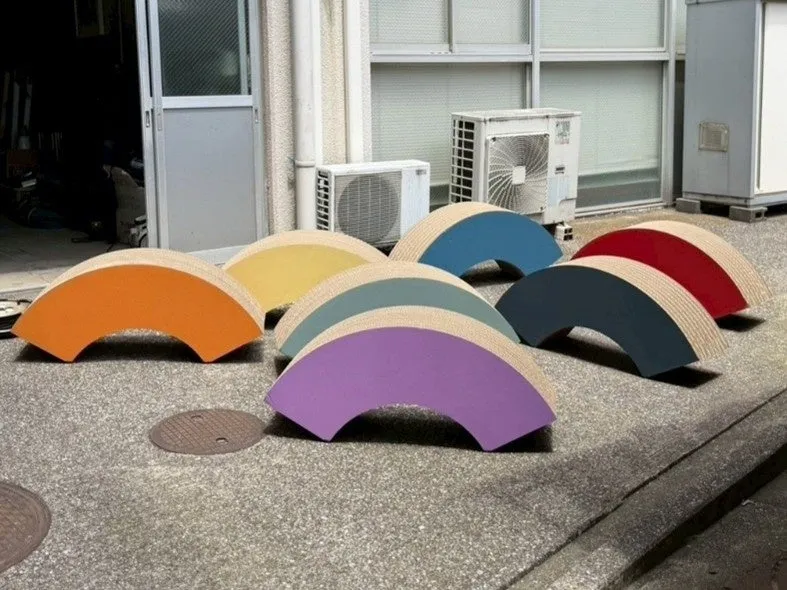
Innovative Cardboard Playground Modules to Transform Parks in Katsushika
Transforming Parks with the 'Nijiblock' Cardboard Playground
Katsushika, a district in Tokyo, is about to witness a transformation in public spaces with the introduction of an innovative cardboard playground module called 'Nijiblock'. Developed through a collaboration between the design firm SaGAS and the specialized cardboard manufacturer Marusho Seihako, this unique play structure will be unveiled during the 'National Green and Flower Fair Katsushika' on May 30-31, 2026, at the Hikifune River Shinsui Park. This event aims to promote local charm and greenery, showcasing how the community can engage deeply with nature.
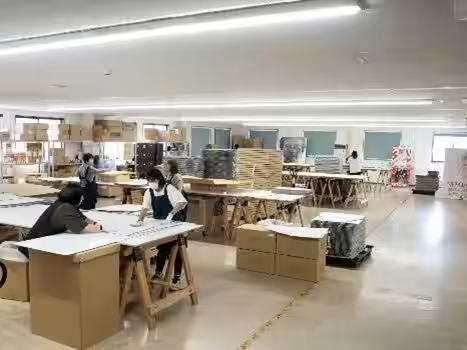
The 'Nijiblock' embodies the ingenuity of international architects and the craftsmanship of seasoned artisans who have worked with cardboard for nearly 80 years. This interactive installation is not merely a plaything; it's a new way of utilizing parks, encouraging people of all ages—from children to the elderly—to become actively involved in their surroundings.
A New Experiment in Public Space
The upcoming fair serves as a platform for innovative experiments within public spaces. The Hikifune River Shinsui Park, located near Ohana Chaya Station, is a beloved green space for locals, yet there has been a growing need to attract more visitors. In response, Jimoken, a local organization aiding vendors, united SaGAS and Marusho Seihako to address this challenge. Their shared vision—to create a park that nurtures children’s creativity and showcases the potential of cardboard—sparked a fresh initiative aimed at reimagining public engagement.
The first prototype of the 'Nijiblock' drew a spontaneous shout of joy from a child who exclaimed, 'It’s a rainbow block!' This reaction perfectly encapsulated the essence of the installation, which aims to attract people like a rainbow appears briefly in the sky. The name 'Nijiblock' reflects the hope that the park will bring people together in joyful, spontaneous exploration.
Unique Features of 'Nijiblock'
1. Limitless Combinations with Simple Design
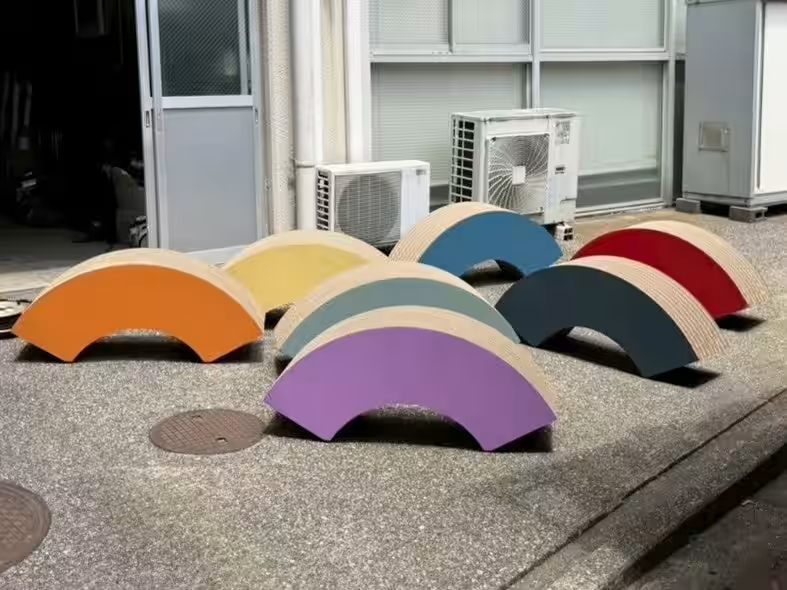
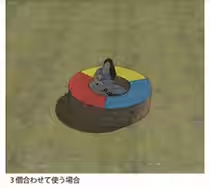
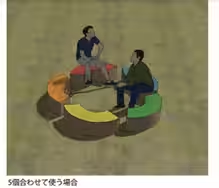
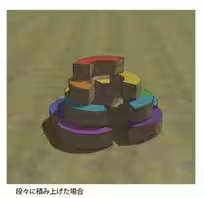
The design philosophy focuses on simplicity while allowing for endless combinations. The module, shaped like a Baumkuchen, can be stacked, tilted, or arranged in various ways, creating different play experiences and landscapes. It comes in seven colors, plus the natural cardboard hue, highlighting its playful yet authentic aesthetic.
2. Collaboration of Craftsmanship and Architecture
Merging the expertise of Marusho Seihako, which has a rich history of working with cardboard, with SaGAS's award-winning architects, this project has been a fruitful collaboration. Through a process that involved extensive prototyping and a mindful consideration of materials, they overcame the restrictions posed by outdoor settings and budget limitations, resulting in a groundbreaking product.
3. Creating Connections Across Generations
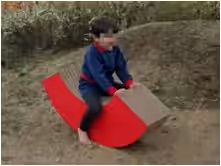
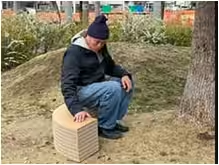
The unexpected presence of the 'Nijiblock' among well-maintained park lawns invites attention and curiosity. Its distinctive design triggers playful encounters, encouraging spontaneous interaction among children and adults alike. By transforming the experience of visiting a park—from a passive act to an engaging one—the 'Nijiblock' helps cultivate visibility and connection among users, fostering a tangible sense of community.
Specifications of the 'Nijiblock'
- - Shape: Circular segment divided into three 120-degree arcs (Outer diameter: 1,200 mm; Inner diameter: 640 mm)
- - Dimensions: Width 280 mm × Height 280 mm (thickness)
- - Weight: Approximately 7 kg per unit
- - Production Quantity: 12 units
- - Material: Cardboard (with some painted sections in seven colors and the natural cardboard color)
Comments from Stakeholders
Asano Makoto, Managing Executive Officer of Marusho Seihako, expressed excitement about utilizing cardboard's potential to create spaces for children to engage physically and creatively. He emphasized the significance of transforming accumulated expertise into a novel form within the setting of a park.
Sugiura Takeru, co-representative of SaGAS, hoped that the park could feel like a home for visitors. With the 'Nijiblock', they aspire to foster a shared connection to public spaces where everyone is encouraged to engage actively, leading to gatherings and fostering relationships across generations.
Onoe Yuno from Jimoken highlighted the project as a new model for community development, bringing together local industry and innovative architecture within a public context.
The launch of the 'Nijiblock' promises to redefine the relationship between people and public spaces, ushering in a new era of interactive and community-focused parks in Katsushika.
Topics Other)



【About Using Articles】
You can freely use the title and article content by linking to the page where the article is posted.
※ Images cannot be used.
【About Links】
Links are free to use.