



Hitachi's New Solution Promises 14% Increase in Dam Power Generation Efficiency
Introduction
Hitachi, a leader in innovation and technology, has recently unveiled a groundbreaking solution aimed at enhancing the operational efficiency of hydroelectric dams in collaboration with Nagano Prefecture. The company utilized its Dam Operations Optimization Solution to analyze 25 years of data from the Susobana Dam and power plant in Nagano City. This significant endeavor highlights the potential for increased energy production without the need for additional capital investments.
Overview of the Optimization Solution
In an era where renewable energy sources are gaining priority, optimizing hydroelectric power generation is a central concern for achieving a carbon-neutral society. Using advanced simulation techniques, Hitachi’s solution can quickly analyze historical operational data to create optimized power generation plans. The results indicate that Susobana Dam could theoretically produce 19% more power than its historical average. Furthermore, even without new facilities, the analysis suggests an average annual energy production increase of 14%.
Technical Details
Theoretical Maximum Generation Calculation
Using Hitachi's DioVISTA/Dams, an advanced dam operation support solution, the maximum theoretical energy generation capacity of the Susobana Dam was estimated. The analysis was based on several key parameters, including water levels, operational rules, and discharge conditions. According to the calculations, the theoretical average annual energy output should be around 63,450 MWh, representing a notable increase of 19% or 10,097 MWh compared to historical figures.
Practical Optimization Strategies
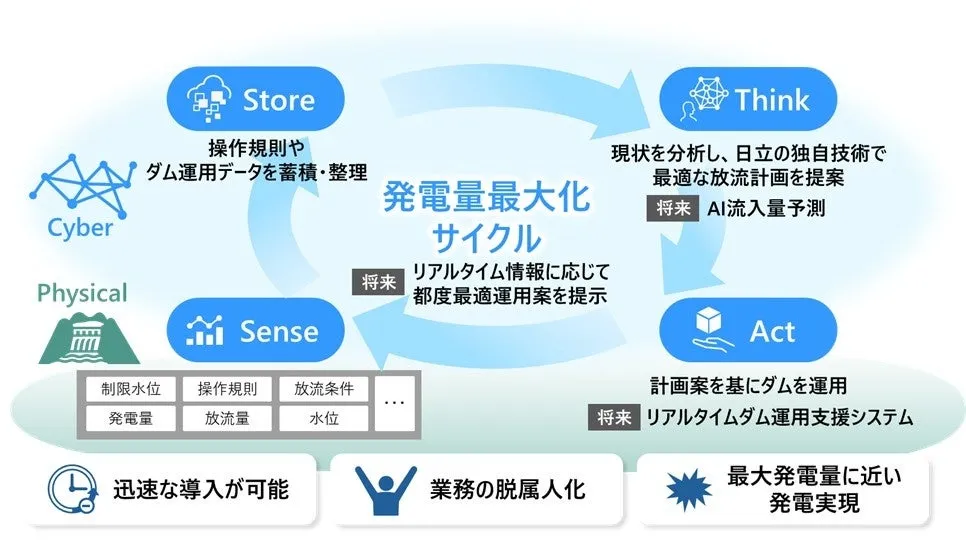
To put these findings into practice, Hitachi's innovative approach also considers challenges associated with accurate inflow predictions. The methodology adopted relies on a three-water level model that focuses on real-time water levels to determine the optimal operational plan without depending on inflow forecasts. Testing this model revealed an average annual generation of 61,059 MWh, which translates to a 14% increase over previous operational data. This suggests that even without predictive modeling, a significant enhancement in power generation is achievable.
Context and Implications
The Japanese government has emphasized the necessity of maximizing renewable energy, particularly in the latest 7th Basic Energy Plan. The optimization of existing dams is a cost-effective method to increase electricity supply without incurring additional investments. Nagano's ambition to establish itself as an energy-independent region by utilizing its natural resources aligns perfectly with Hitachi's solution. The collaboration aims to define the future of dam operations while contributing to energy supply goals.
Future Developments
The ongoing partnership between Nagano Prefecture and Hitachi is set to continue as they work toward practical implementation of the optimized operational methods. By leveraging their accrued knowledge and technology, Hitachi intends to facilitate the expansion of renewable energy across Japan. As part of this strategic vision, the company envisions using advanced AI technologies to further evolve the optimization solution, tailoring operational guidelines to individual dams’ characteristics.
Conclusion
Hitachi’s Dam Operations Optimization Solution not only addresses energy efficiency but also supports the broader goals of sustainable energy practices in Japan. By enhancing operational methodologies, the company aspires to contribute actively to both local and national energy strategies, demonstrating a commitment to innovative solutions that benefit society as a whole.
About Hitachi
Hitachi is committed to achieving a harmonious society through its innovative solutions in various sectors, addressing environmental, economic, and social challenges on a global scale. For more information about Hitachi's endeavors and services, visit Hitachi.
Topics Energy)
【About Using Articles】
You can freely use the title and article content by linking to the page where the article is posted.
※ Images cannot be used.
【About Links】
Links are free to use.