



Huawei Sets New Standards with the First Campus L4 Autonomous Driving Network Solution
Huawei Unveils Revolutionary L4 ADN Solution at MWC 2026
In an impressive showcase at the Mobile World Congress (MWC) 2026 in Barcelona, Huawei has redefined network operations by introducing the industry's first Level 4 Autonomous Driving Network (ADN) solution specifically designed for campus environments. This innovative development promises to streamline network operations and maintain the quality of service through advanced automation and AI capabilities.
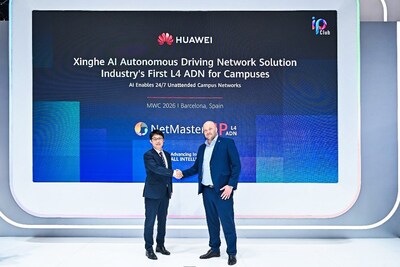
The launch event featured prominent figures including Aleksandr Merkinger, Vice President of Infrastructure from Germany, and Shawn Zhao, Head of Huawei’s Data Communication Product Line for Campus Networks, marking a significant milestone in network technology.
Addressing Network Challenges
As digital transformation reshapes industries, businesses face a series of challenges such as slow service delivery, complex fault diagnosis, delayed assurance of experiences, and frequent security breaches. To tackle these issues, Huawei’s Xinghe AI L4 ADN solution aims to redefine campus operation and maintenance with four zero-capabilities:
1. Zero Error Service Changes: The solution automatically generates configurations based on user objectives, significantly reducing configuration errors during service deployment. It promises to cut time-to-market (TTM) by 75%, allowing for rapid implementation of necessary changes without compromising service quality.
2. Zero Freezing Service Experiences: Backed by Huawei’s intelligent iFlow technology, the solution can proactively detect performance drops in applications, automatically adjusting assurance policies for critical applications. This integration enables a seamless performance of essential services through pre-incident simulations and post-incident assurance reporting.
3. Zero Effective Fault Management: Huawei employs AI-driven algorithms that swiftly diagnose and resolve network faults, achieving resolutions in as little as three minutes. This speed is essential in minimizing service disruptions which can adversely affect user experience in business operations.
4. Zero Intervention Security Defense: Utilizing an Indicators of Attack (IOA) graphical correlation algorithm, the solution collates alarms into a comprehensive response strategy, isolating compromised devices and developing remedial plans using security orchestration, automation, and response (SOAR) methodologies. Continuous learning from past intrusions enhances security measures, building a robust defense against potential threats.
The Future of Autonomous Campus Networks
Huawei’s Xinghe AI L4 ADN solution is structured around principles of self-perception, self-analyses, self-decision-making, and self-management, facilitating around-the-clock autonomous campus network operations and maintenance. This development serves as a foundational element in transitioning from human-to-human connectivity to an era where intelligent agents interact and collaborate using AI.
This innovative solution is not just a leap forward for Huawei but represents a significant shift in how networks will be managed in the future. With the capability of handling complex tasks autonomously and enhancing both efficiency and security, Huawei’s new offering highlights its commitment to leading the charge in intelligent network solutions that adapt to the evolving needs of modern enterprises.
As industries increasingly rely on technology to enhance operations, Huawei's new ADN solution may very well set the standard for autonomous network operations globally, positioning both Huawei and its partners on the cutting edge of network technology.
Topics Consumer Technology)
【About Using Articles】
You can freely use the title and article content by linking to the page where the article is posted.
※ Images cannot be used.
【About Links】
Links are free to use.