



Tokyo Gas and Macnica Team Up for Innovative Solar Panel Project in Residential Facilities
Implementation of Film-Type Perovskite Solar Cells in Residential Facilities
In an exciting development for renewable energy in Japan, the collaboration between Tokyo Gas Co., led by President Shinichi Sasayama, and Macnica, under the guidance of President Kazumasa Hara, has received recognition for their project to implement film-type perovskite solar cells, branded as "Air Solar." The pilot initiative, designed to evaluate the installation and generation performance of these innovative panels on residential walls and balconies, has been officially adopted by Tokyo's "Air Solar Social Implementation Promotion Project."
Overview of the Project
As per the 7th Energy Basic Plan, the direction of Japan's energy policy is focused on maximizing the introduction of renewable energies, with solar power forecasted to contribute 23 to 29% of the energy mix by 2040. Furthermore, Tokyo has set an ambitious policy target for adopting renewable energy, aiming for a total of 3.5 million kilowatts of solar power facilities by 2035 to achieve its vision of a zero-emission city by 2050.
The Air Solar panels are designed to be thin, lightweight, and flexible, which introduces new possibilities for installation in locations where traditional solar panels are challenging to set up, including walls, balconies, and even indoor spaces. This innovation is expected to expedite the adoption of solar energy systems in residential areas across the city.
Practical Implementation of the Air Solar Project
The pilot project will utilize a model house located in Hino City, provided by Iida Group Holdings (Iida GHD). Here, Macnica and Reiko will install Air Solar panels using installation techniques developed by Tokyo Gas. During this pilot, the following key evaluations will take place:
- - Performance assessment based on the installation location
- - Reliability evaluation of installation methods
Tokyo Gas will incorporate its rich experience in solar energy research and project execution into this pilot. Macnica will leverage its extensive technical expertise built through previous demonstration projects involving perovskite solar cells, thus contributing to the successful implementation of this initiative.
Goals and Expectations
Through this pilot project, the team aims to accelerate the social implementation of Air Solar in residential buildings, thereby supporting the Japanese government's objective of achieving "carbon neutrality by 2050."
Pilot Project Details
- - Duration: January 2026 to December 2026
- - Objectives:
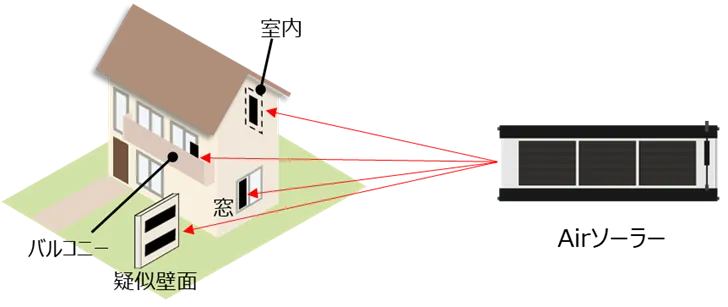
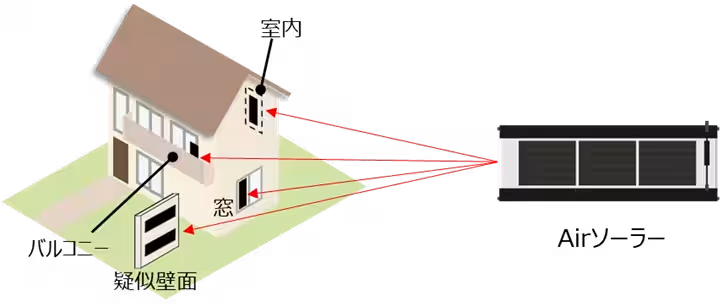
- Vertical wall installations (simulated wall conditions)
- Balcony applications
- Indoor wall placements
- Window installations (adhesive method and frame-fixed method)
- Testing easy replacement techniques for solar panels in residential settings
Roles of Each Partner
- - Tokyo Gas: Overall coordination, on-site installation, data analysis of Air Solar performance, and verification of project contents.
- - Macnica: Development of Air Solar technology and construction of a data measurement system.
- - Iida GHD: Providing the demonstration field.
- - Reiko: Manufacturing of Air Solar panels.
Conclusion
As Japan looks to harness renewable energy efficiently, the collaboration between these forward-thinking companies embodies a tangible step towards sustainable housing solutions. By integrating cutting-edge solar technology into everyday residential environments, the project stands to not only enhance energy efficiency but also contribute significantly to the larger environmental goals set forth by the Tokyo government and the national agenda.
Topics Energy)
【About Using Articles】
You can freely use the title and article content by linking to the page where the article is posted.
※ Images cannot be used.
【About Links】
Links are free to use.